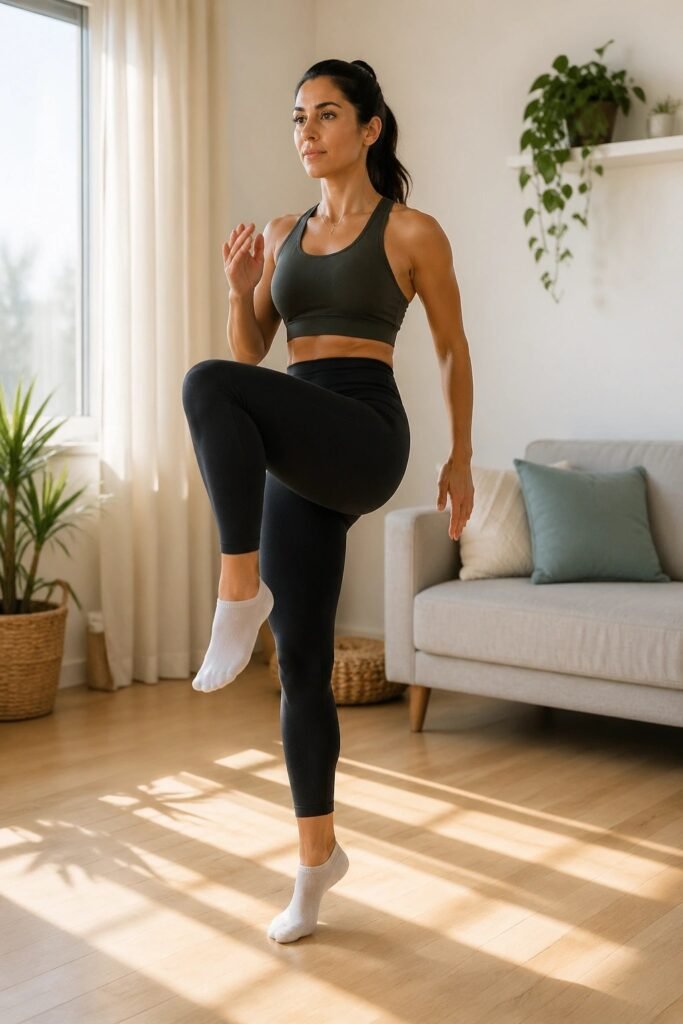
What are the best low-impact exercises for bad knees
Stairs hurt. Squatting to pick something up is a project. Running? Forget it. Your knees ache, pop, or feel unstable — and you’re wondering whether this is just aging, something fixable, or something serious. Bad knees are one of the most common musculoskeletal complaints in America, and the good news is that most knee pain improves with the right approach.
What Should You Do for Bad Knees? First: Understand What’s Going On
Common Causes of Knee Pain
- Osteoarthritis: cartilage wear — the most common cause in adults over 50. Stiffness in the morning, aching after activity, gradual onset.
- Patellofemoral pain (“runner’s knee”): pain around/behind the kneecap, worse with stairs, squatting, or prolonged sitting. Extremely common and very treatable.
- Tendinitis: pain below the kneecap (jumper’s knee) or on the sides — overuse injuries from sudden activity increases.
- Meniscus issues: catching, locking, or giving way — often from twisting injuries.
- Bursitis: inflammation causing swelling and tenderness.
- IT band syndrome: outer knee pain, common in runners and cyclists.
- Referred pain: hip problems and flat feet manifest as knee pain more often than people realize.
Red Flags: See a Doctor Promptly
- Knee gives way or buckles regularly.
- Can’t bear weight or knee locks and won’t straighten.
- Significant swelling within hours of injury.
- Deformity or suspected fracture/dislocation.
- Fever with a hot, swollen knee (possible infection — urgent).
- Pain that doesn’t improve after 2–3 weeks of sensible self-care.
The Evidence-Based Approach to Bad Knees
1. Strengthen (The #1 Treatment)
This surprises people: strengthening the muscles around the knee is the most effective treatment for most knee pain — more effective than rest, braces, or supplements. Key targets:
- Quadriceps: straight-leg raises, wall sits, step-ups. Strong quads absorb forces the knee joint would otherwise take.
- Glutes: clamshells, bridges, lateral band walks. Weak glutes are a massive hidden driver of knee pain (knock-kneed mechanics).
- Hip abductors and calves: complete the support system.
- Start gentle, progress gradually. Pain during exercise should stay mild (3/10 or less) and not worsen afterward.
2. Lose Excess Weight (The Multiplier)
Every pound of body weight translates to 4 pounds of force on the knees with each step. Losing 10 pounds removes 40 pounds of force per step — thousands of tons of cumulative load over a year. For overweight individuals with knee osteoarthritis, weight loss is among the most impactful interventions available.
3. Choose Knee-Friendly Activity
- Best: swimming, cycling, elliptical, walking on soft surfaces, rowing.
- Good with care: strength training (proper form), yoga, hiking with poles.
- Temporarily reduce: deep squats, lunges, running on hard surfaces, high-impact sports — until pain improves, then reintroduce gradually.
- Movement beats rest: prolonged inactivity weakens supporting muscles and stiffens joints. Relative rest, not bed rest.
4. What About Braces, Supplements, Injections?
- Braces/sleeves: can help confidence and mild support; don’t substitute for strengthening.
- Glucosamine/chondroitin: evidence is weak-to-mixed. Probably harmless; don’t expect miracles. (See our supplement guide.)
- Cortisone injections: can provide months of relief for inflammatory flares; not a long-term strategy (repeated injections may damage cartilage).
- PRP, stem cells: expensive, evidence still developing. Approach with skepticism and a second opinion.
- Proper footwear: worn-out shoes alter mechanics. Replace athletic shoes regularly; consider orthotics if you have flat feet.
When Surgery Enters the Conversation
Knee replacement is among the most successful surgeries in medicine — but it’s for end-stage arthritis after conservative treatment fails, not a first resort. Arthroscopic “clean-up” for arthritis alone has poor evidence. If a surgeon recommends surgery, get a second opinion and ask: “What happens if I do 3 months of structured physical therapy first?”
The 7 Best Low-Impact Exercises for Bad Knees (Detailed)
- Straight-leg raises: lie on your back, one knee bent, other leg straight. Lift the straight leg to the height of the bent knee, hold 2 seconds, lower slowly. 3 sets of 12. Builds quad strength with zero knee bending — the safest starting point.
- Glute bridges: lie on your back, knees bent, feet flat. Squeeze glutes and lift hips until knees-hips-shoulders form a line. 3 sets of 15. Strong glutes are the #1 protector of knees.
- Clamshells: lie on your side, knees bent, feet together. Open the top knee like a clamshell without rolling your hips. 3 sets of 15 per side. Targets the glute medius — the muscle whose weakness causes knees to cave inward.
- Step-ups: step onto a low platform (6–8 inches to start), drive through the heel, step down slowly. 3 sets of 10 per leg. Functional strength for stairs — the movement that hurts most.
- Wall sits: back against wall, slide down until knees are at 45° (not 90° — be kind to angry knees). Hold 20–30 seconds, build to 60. 3 rounds.
- Swimming / water walking: water unloads ~90% of body weight while providing resistance. The gold standard for arthritic knees.
- Cycling (low resistance): stationary bike with the seat high enough that your knee never fully bends at the bottom. Builds quads through a safe range of motion.
The rule: mild discomfort (3/10) during exercise is okay; sharp pain or pain that worsens the next day means back off. Progress gradually — add reps before adding difficulty.
Exercises to Avoid (For Now)
- Deep squats and lunges: high knee stress. Reintroduce gradually only after pain improves and strength builds — they’re not evil, just premature.
- Running on hard surfaces: switch to soft surfaces, cycling, or swimming until knees calm down.
- High-impact sports: basketball, tennis, and soccer involve cutting and jumping. Pause them; return progressively.
- Knee extensions with heavy weight: the leg extension machine loads the kneecap heavily at full extension. Light, partial-range is fine; heavy full-range is not.
- “No pain, no gain”: the worst philosophy for joints. Discomfort is information — listen to it.
For the broader fitness picture with joint limitations, our AI workout planning guide can build a full knee-friendly program.
Quick Note: Arthritis and Joint Health Resources
For evidence-based guidance on managing knee osteoarthritis and joint pain through exercise, the Arthritis Foundation offers exercise programs and resources specifically designed for people with joint conditions. Their materials complement the strengthening approach above — and their Walk With Ease program is a proven starting point for building activity with bad knees.
The Bottom Line on Bad Knees
What should you do for bad knees? Strengthen your quads and glutes (the most evidence-backed treatment), lose excess weight, stay active with low-impact exercise, and see a doctor for red flags or pain persisting past 2–3 weeks. Most knee pain isn’t a life sentence — it’s a strength and mechanics problem with a strength and mechanics solution. Start the exercises today; your knees in ten years will thank you. (Anxious about the appointment? Our doctor-anxiety guide helps.)