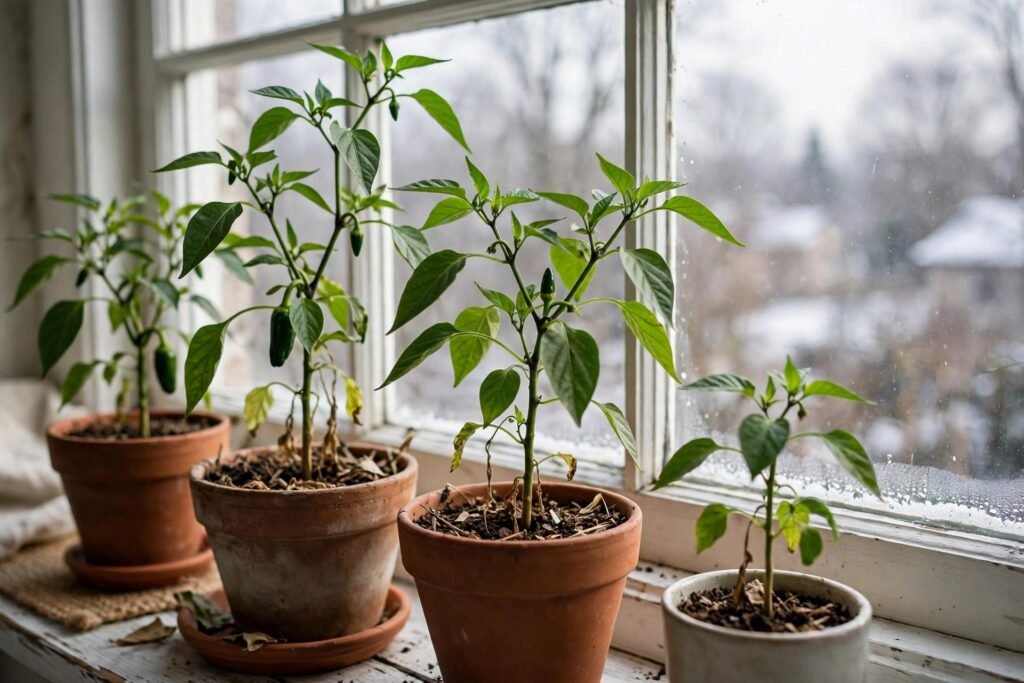
How to Overwinter Pepper Plants Indoors (Two Proven Methods)
Your pepper plants are loaded with green fruits in October, the first frost is coming, and it feels criminal to let them die — especially since peppers are perennials in their native tropics, capable of living and producing for years. Overwintering pepper plants indoors turns annuals into perennials: you skip spring seed-starting entirely, get a massive head start with a mature root system, and often harvest earlier and heavier the second year. It is not hard, but it has specific rules — peppers overwinter very differently from houseplants. Here is the complete method.
Which Peppers Are Worth Overwintering
Prioritize: expensive or rare varieties (that $8 specialty pepper start), super-hots with long seasons (Carolina Reapers, ghost peppers — they barely get going in short summers, and year two is when they explode), and your best producers (proven genetics worth keeping). Common bell peppers overwinter fine too, but the payoff is biggest for varieties where a head start matters most.
Be selective — indoor space is finite. Choose healthy, disease-free plants; a struggling plant will not magically recover indoors and may import problems. Two to four plants is the sweet spot for most people: enough to matter, few enough to manage. Dig them before the first frost (peppers suffer below 50°F and die at 32°F), ideally when nights hit the low 50s — cold stress before the move weakens them for the whole winter.
Two Methods: Dormant Storage vs. Active Growing
Method one — dormant overwintering (easier, less space): prune the plant hard, cutting back to 6–8 inches of main stems, stripping all leaves and fruits. Pot into a 1–3 gallon container with fresh potting mix, water lightly, and place in a cool (50–60°F), dim location — basement, garage, or cool spare room. Water sparingly (monthly — just enough to keep roots alive), no fertilizer. The plant looks dead; it is not. In late winter, move to warmth and light, and it leafs out with explosive vigor.
Method two — active indoor growing (more work, winter harvests possible): keep the plant fully leafed in your brightest south window or under grow lights (14–16 hours daily), at normal room temperature. It will grow slowly, may drop some leaves adjusting, and can even produce small winter peppers with hand-pollination. This method needs real light — a dim windowsill produces a leggy, miserable plant; invest in the grow light or go dormant. Most beginners succeed more with dormancy; experienced growers with good lights prefer active. Either way, the principles of indoor plant care — light first, water second — govern success.
The Pruning Decision
Hard pruning feels violent but is the key to dormant success: less foliage means less water loss and fewer pest habitats. Use clean sharp pruners, cut just above leaf nodes, and do not mourn the foliage — peppers regrow from seemingly dead wood with astonishing enthusiasm in spring.
The Transition: Digging, Cleaning, and Pest Prevention
Pests are the number-one overwintering killer — aphids, spider mites, and whiteflies hitchhike indoors and explode without natural predators. Prevention protocol: a week before the move, spray thoroughly with insecticidal soap or neem oil (tops and undersides of all leaves). On moving day, hose the whole plant hard, inspect every leaf joint, and consider a preventive soil drench for fungus gnats.
Dig with a generous root ball, shake off most garden soil (it harbors pests and compacts in pots), and repot in fresh sterile potting mix. Quarantine new arrivals away from houseplants for two weeks, inspecting every few days — one infested pepper can colonize your entire indoor jungle. This quarantine discipline is the difference between success stories and cautionary tales. Keep the overwintering area tidy and uncrowded; eliminating winter drafts protects both your peppers and your heating bill, since cold air is the other great indoor-plant killer.
Spring Wake-Up: Timing the Return
Begin waking dormant plants 6–8 weeks before your last frost: move to warmth (70°F+) and strong light, resume normal watering, and start half-strength fertilizer once new growth appears. The plant will look dead for 1–3 weeks — then buds swell and growth erupts, often faster than any seedling could manage. Do not give up on a slow waker; scratch the stem — green underneath means alive.
Harden off gradually over 7–10 days before moving outside permanently: increasing outdoor hours, sheltered from wind and direct midday sun initially. Transplant after nights reliably exceed 55°F — overwintered peppers have zero frost tolerance and resent cold soil more than seedlings do. The reward: a mature plant with an established root system that flowers weeks ahead of spring-started plants, often producing 2–3 times the first-year yield. Second-year super-hots are genuinely transformative — the season they never got as seedlings, finally delivered.
Troubleshooting the Winter
Leaf drop after moving indoors: normal adjustment — as long as stems stay green and firm, the plant is fine. Reduce water and wait. Leggy pale growth: insufficient light — add a grow light or move to dormancy. Aphid explosion: blast with water, apply insecticidal soap weekly, consider ladybug larvae for active setups. Mushy stems or foul soil smell: overwatering rot — let dry thoroughly, improve drainage, and in severe cases, take cuttings from healthy upper stems as backup.
The most common failure is loving them to death — too much water, too much fussing. Dormant peppers want benign neglect: cool, dim, barely moist. Check monthly, not daily. Active peppers want the opposite: maximum light, consistent care, and vigilance. Pick your method and commit to its rhythm; the middle ground (dim light plus regular water) is where plants go to die slowly.
University-Tested Overwintering Methods
Pepper overwintering has been studied more than most gardeners realize. Colorado State University Extension documents the dormant-storage method with specific temperature and watering parameters that maximize spring survival rates, while the Old Farmer’s Almanac growing guides provide month-by-month indoor care calendars adjusted for your frost dates. Following research-tested parameters rather than forum anecdotes is the difference between a 30 percent and an 80 percent survival rate.
Conclusion
Overwintering pepper plants indoors converts annual expense into perennial asset: select healthy plants, choose dormant ease or active production, execute the pest-prevention protocol ruthlessly, and wake them properly in spring. The second-year harvest — earlier, heavier, from a plant with a veteran root system — repays the modest winter effort many times over. Your peppers are tropical perennials pretending to be annuals. Stop letting winter win.
Frequently Asked Questions
Can all pepper varieties be overwintered?
Yes — bells, jalapeños, habaneros, super-hots all overwinter by the same methods. The payoff is greatest for long-season super-hots and expensive varieties, but any healthy plant is a candidate.
Do overwintered peppers produce more the second year?
Typically yes — often 2–3 times the first-year yield, and weeks earlier. The mature root system and established framework let the plant skip the entire establishment phase and pour energy directly into fruit.
Why did my overwintered pepper die?
The usual causes: pest explosion (especially spider mites), overwatering rot in dormancy, insufficient light in active growing, or cold damage before/after the move. The pest-prevention protocol and proper method selection prevent most failures.
When should I bring peppers back outside?
After nights reliably stay above 55°F and all frost danger has passed — typically 1–2 weeks after your last frost date. Harden off over 7–10 days first; overwintered plants sunburn and shock easily after months indoors.