How to Check a Used Car’s History for Free (2026 Guide)
One in four used cars on the road has a hidden problem the seller is not telling you about — accident damage, a rolled-back odometer, flood history, or a title washed clean across state lines. A vehicle history report is your defense, and the good news is that the most important checks cost nothing. You just have to know where to look and what the free tools can and cannot tell you.
Here is how to check a used car’s history for free: the no-cost databases every buyer should run, what the paid reports add, how to read the results like a detective, and the physical inspection tricks that catch what no database ever will.
Start With the Free VIN Checks
NICB VINCheck
The National Insurance Crime Bureau offers a free VINCheck tool that searches insurance records for total-loss and theft claims. It will not give you a full history, but it answers the two most important questions — was this car ever declared a total loss, and was it ever reported stolen — at zero cost. Run it on every candidate vehicle; it takes sixty seconds. The NICB’s VINCheck portal is the direct link — bookmark it before you start shopping.
NHTSA recalls and safercar.gov
The National Highway Traffic Safety Administration’s free VIN lookup shows every open recall on the vehicle. Unrepaired recalls are common on used cars and can indicate an owner who skipped maintenance generally. Recall repairs are free at any dealer, so an open recall is also a negotiating point, not just a red flag. Check NHTSA’s recall database before you buy.
NMVTIS and state title records
The National Motor Vehicle Title Information System is the federal database of title brands — salvage, rebuilt, flood, lemon-law buybacks. Direct consumer access runs through approved providers for a small fee, but several states let you check title status free through their DMV or secretary of state websites. If the seller’s story about the title does not match the state’s record, walk away.
What Paid Reports Add (and When They Are Worth It)
Carfax and AutoCheck compile data from DMVs, insurance companies, police reports, and service shops into a single timeline: accidents, airbag deployments, odometer readings at each registration, number of owners, and service history. A single report costs $25 to $45; unlimited monthly packages run about $100 — worth it if you are comparing several cars.
Paid reports are valuable but not infallible. Accidents repaired without an insurance claim never appear. Independent-shop service records are spotty. And “no accidents reported” is not the same as “no accidents.” Treat a clean report as a good sign, not a guarantee — which is why the physical inspection below matters more than any database. Apply the same verify-everything skepticism you would to online claims — knowing how to check if an AI-generated review is fake hones the instinct this process demands.
Read the Report Like a Detective
Odometer patterns
Look at mileage readings in chronological order. Readings that decrease, stall for years then jump, or show implausibly low annual mileage (2,000 miles a year on a commuter car) all deserve scrutiny. Title records in some states round or estimate mileage — “exceeds mechanical limits” or “not actual mileage” brands are deal-breakers.
Title brands and state-hopping
A car titled in three states in two years may be title washing — moving a salvage-branded car to a state with looser branding rules to clean the title. Flood cars from hurricane states frequently resurface in the Midwest months later. If the car’s geographic history does not match the seller’s story, demand an explanation in writing.
Ownership and usage patterns
Frequent ownership changes, rental or fleet history, and long gaps with no registration activity are all yellow flags. None is disqualifying alone — a former rental with full service records can be a fine buy — but stacked together they paint a picture. Service records at dealerships are a green flag: they suggest an owner who maintained the car properly.
The Free Physical Inspection Anyone Can Do
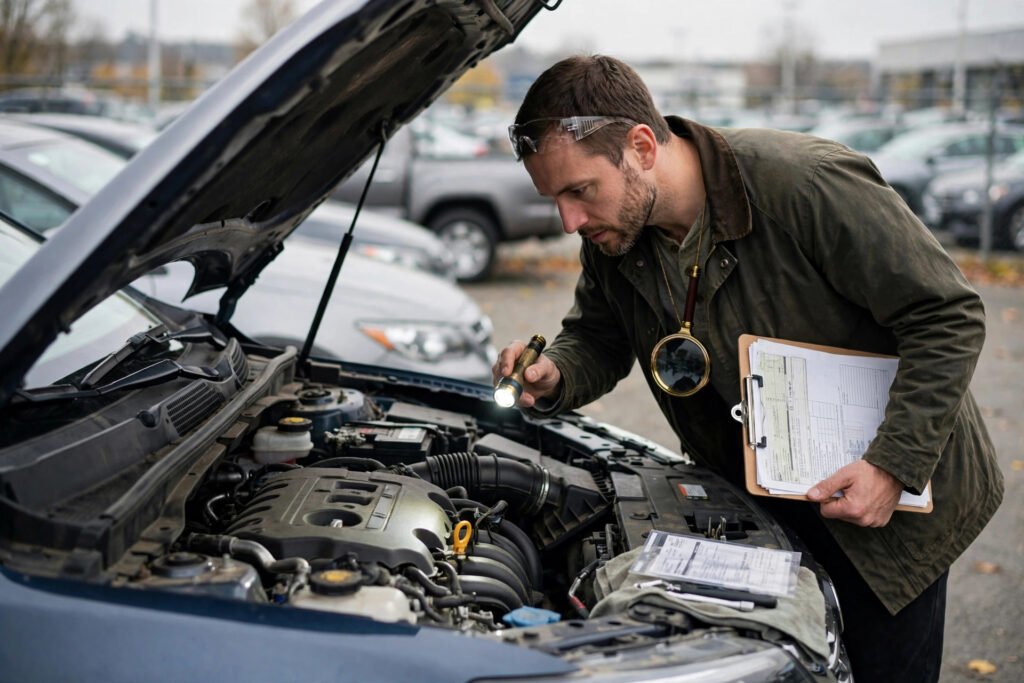
No database replaces eyes and hands. Check that all four tires match in brand and wear — mismatched tires suggest deferred maintenance or accident repairs. Look for paint overspray on trim and rubber seals, uneven panel gaps, and VIN stickers on every major panel; missing or mismatched VIN tags mean panels were replaced. Open the oil cap and look for milky residue (coolant leak), check the transmission fluid color, and smell for burnt odors.
Test every electrical feature: windows, locks, mirrors, sunroof, heated seats, infotainment. Electrical gremlins are expensive and common on neglected cars. Drive at highway speed and brake hard from 60 mph — pulling, vibration, or a spongy pedal reveal problems a parking-lot test drive hides. These basics are part of the basic car maintenance skills every used-car buyer should have before shopping.
The professional inspection: the $200 that saves $5,000
For any car you are serious about, pay an independent mechanic for a pre-purchase inspection. They will put it on a lift, check for frame damage, scan for hidden fault codes, and measure brake and tire life remaining. Mobile services operate nationwide if you are buying remotely. This single step catches the expensive problems — transmission issues, frame damage, flood evidence — that free checks and your own eyes can miss.
Red Flags That Mean Walk Away
Refusal to provide the VIN before you visit, a price far below market with a rushed-sale story, a title not in the seller’s name, fresh undercoating hiding the underside, and pressure to pay cash with no paperwork — any one of these ends the deal. There are millions of used cars for sale; none is so special it justifies ignoring your instincts. Patience is the cheapest tool in car buying.
Conclusion
Checking a used car’s history for free starts with NICB VINCheck for total-loss and theft records, NHTSA’s database for open recalls, and your state’s title records — then a paid Carfax or AutoCheck if the car passes those screens. Read the report for odometer anomalies, title brands, and geographic inconsistencies, back it up with your own physical inspection, and finish with a professional pre-purchase inspection before money changes hands. Free tools catch the big lies; the inspection catches the expensive ones. Use both, and buy with confidence.
Frequently Asked Questions
Is there a completely free alternative to Carfax?
Not a complete one. NICB VINCheck, NHTSA recalls, and some state DMV title lookups are free and cover the most critical risks. For the full accident and service timeline, a paid report is the only option — but the free checks catch the deal-breakers first.
Can a seller hide accidents from a vehicle history report?
Yes. Accidents repaired out of pocket without an insurance claim or police report never enter the databases. That is why a professional inspection matters: a mechanic can spot repaired damage the paperwork missed.
What does “title washing” mean?
Moving a branded-title car (salvage, flood, rebuilt) through states with weaker title-branding laws to obtain a clean title. The NMVTIS database was created to fight this — check the car’s full state history, not just the current title.
Should I worry about a car with an open recall?
As a safety matter, get it fixed — recall repairs are free. As a buying signal, one open recall is normal; several ignored recalls suggest an owner who deferred maintenance generally. Use it as a negotiating point and a prompt to inspect more carefully.