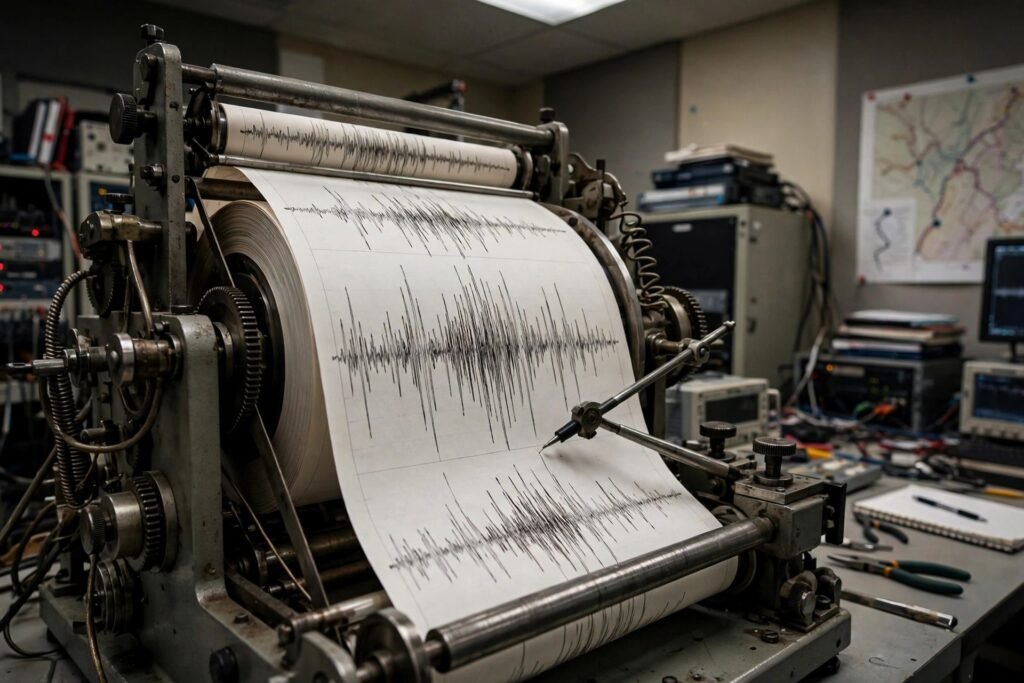
Is It Possible to Predict Earthquakes Accurately? Truth
We can predict hurricanes days in advance, track tornadoes with Doppler radar, and forecast volcanic eruptions with reasonable skill. But earthquakes — the most destructive sudden natural disaster — remain stubbornly unpredictable. After every major quake, the same question surges: with all our sensors and supercomputers, why can’t we predict earthquakes?
The answer reveals something deep about how the Earth works — and about the difference between forecasting (probabilities over time) and prediction (exact time, place, magnitude). This guide explains what seismologists can and cannot do, why precise prediction may be fundamentally impossible, the early-warning systems that do exist, and how to prepare anyway.
Forecasting vs. Prediction: The Critical Distinction
Prediction means: a magnitude 7.2 earthquake will strike this fault segment next Tuesday at 3 p.m. Forecasting means: this fault segment has a 60 percent chance of a magnitude 7+ quake in the next 30 years. Seismology is genuinely good at forecasting and genuinely incapable of prediction — and the distinction matters because the public asks for the first while science can only deliver the second.
Earthquake forecasting works because faults obey statistics. The Gutenberg-Richter law describes the ratio of small to large quakes with remarkable consistency. Elastic rebound theory explains the cycle: tectonic plates move centimeters per year, stress accumulates on locked faults, and eventually the fault ruptures — the longer since the last rupture, the larger the eventual quake (roughly). The USGS uses these principles to produce authoritative forecasts: its Uniform California Earthquake Rupture Forecast, for example, estimates a 93 percent chance of a magnitude 7+ quake in California within 30 years. That is actionable for building codes and insurance — but useless for deciding whether to go to work Tuesday.
Why Precise Prediction Is So Hard
We cannot see the fault. Earthquakes nucleate 5-20 kilometers underground, in rock we cannot directly observe. We infer stress states from surface measurements (GPS, strainmeters) that are proxies at best. It is like predicting when a specific wooden beam will crack by watching the house from the street.
The system may be inherently chaotic. Fault rupture is a nonlinear threshold process — like avalanches or material fracture. Decades of research suggest earthquake nucleation may be self-organized critical: the crust sits perpetually near failure, and the difference between a magnitude 3 tremor and a magnitude 7 catastrophe can hinge on microscopic, unmeasurable differences in initial conditions. If true, precise prediction is not just hard — it is physically impossible, like predicting the exact snowflake that triggers the avalanche.
Precursors don’t replicate. Every decade brings claimed precursors — radon emissions, electromagnetic signals, animal behavior, groundwater changes. All share the same fate: intriguing retrospective correlations that fail prospective testing. The 1975 Haicheng prediction (often cited as the success story) involved massive foreshock swarms and was as much evacuation luck as science; the 1976 Tangshan quake, months later, killed 240,000+ with no warning. No precursor has ever survived rigorous statistical validation.
False alarms are catastrophic. Even a hypothetical 50-percent-accurate prediction system would be unusable: evacuating Los Angeles on a coin flip destroys the economy and public trust within two false alarms. Prediction requires not just accuracy but extraordinary accuracy — a bar no proposed method approaches.
What We CAN Do: Early Warning (Seconds That Save Lives)
Here is the good news: while predicting quakes is impossible, detecting them fast enough to warn is a solved engineering problem. Earthquake early warning systems exploit a physics gift: the fast, weak P-waves arrive before the slow, destructive S-waves and surface waves. Sensors near the epicenter detect the P-wave, computers estimate magnitude and location in seconds, and alerts race ahead of the shaking at fiber-optic speed.
The U.S. system — ShakeAlert, operated by the USGS — now covers the West Coast, delivering warnings via the Wireless Emergency Alert system, apps like MyShake, and automated triggers. Warning times range from a few seconds (near the epicenter) to over a minute (distant cities) — enough to drop, cover, and hold on; to stop trains and elevators; to halt surgeries; to shut off gas valves automatically. Japan’s system famously gave millions up to a minute of warning before the 2011 Tohoku quake. Seconds sound trivial until they are the difference between under a desk and under debris.
The USGS earthquake hazards program operates ShakeAlert and publishes the authoritative forecasts; Ready.gov has the definitive earthquake preparedness checklists.
Aftershock Forecasting: The Practical Middle Ground
One genuinely useful predictive product: aftershock forecasts. After a major quake, the USGS issues statistical forecasts of aftershock probabilities — the chance of magnitude 5+ aftershocks in the coming week, updated as data arrives. Emergency managers use these to decide when to re-enter damaged buildings and when to keep search teams clear. It is forecasting, not prediction — but in the critical days after a disaster, it is exactly the information that matters.
Similarly, operational earthquake forecasting — short-term probability updates incorporating recent seismicity — is moving from research to operations in several countries. It will never say “Tuesday at 3 p.m.,” but “elevated risk this week” is real, validated, and useful for emergency posture.
How to Prepare (Since Prediction Isn’t Coming)
Preparedness is the rational response to unpredictability:
Secure your space. Anchor bookcases, water heaters, and heavy furniture to studs. Move heavy objects off high shelves. Install latches on cabinets. Most earthquake injuries come from falling objects and furniture, not building collapse (in code-compliant structures).
Know the drill. Drop, Cover, and Hold On — under a sturdy table, away from windows. Practice it; rehearsed responses execute under panic, unrehearsed ones do not. Teach everyone in the household, including the plan for where to meet if separated.
Build the kit. Water (1 gallon/person/day for 3+ days), food, medications, flashlight, battery radio, first aid, cash, documents, sturdy shoes by the bed (broken glass is the classic post-quake injury). The same household resilience that covers childproofing — securing hazards before they matter — applies to seismic prep.
Protect the data too. Disasters destroy devices; make sure photos and documents survive regardless — our guide to backing up phone photos free is part of any real preparedness plan.
Know your building and insurance. Standard homeowners insurance excludes earthquake damage — separate earthquake riders exist and are worth pricing in high-risk zones. Renters need the same consideration for belongings. And know whether your building predates modern seismic codes; retrofitting is expensive but so is collapse.
The Frontier: What Might Change
Machine learning is finding subtle patterns in seismic data humans miss — not predictions, but improved forecasting resolution. Dense sensor networks (including smartphone accelerometers via MyShake, turning millions of phones into seismometers) are improving early-warning speed and coverage. Fiber-optic cables are being repurposed as distributed strain sensors, creating thousands of kilometers of new instrumentation overnight. The future is better forecasting and faster warning — not the Tuesday-at-3-p.m. prediction, which the physics likely forbids.
Conclusion
Accurate earthquake prediction — exact time, place, and magnitude — remains impossible and may be physically impossible: faults are unobservable, rupture is a chaotic threshold process, precursors never replicate, and false alarms would be catastrophic. But seismology delivers enormous value anyway: statistical forecasts that drive building codes, aftershock forecasts that guide disaster response, and early-warning systems that turn seconds into saved lives. The rational response was never prediction — it is preparation. Secure the furniture, learn the drill, build the kit, check the insurance. The quake will come unannounced; you do not have to meet it unprepared.
Frequently Asked Questions
Can scientists predict earthquakes?
No — not the exact time, location, and magnitude. Seismologists can forecast probabilities over years and decades (used for building codes), and early-warning systems can detect quakes seconds after they start, but precise prediction remains impossible and may be physically impossible.
What is ShakeAlert?
The USGS earthquake early warning system for the U.S. West Coast. It detects fast P-waves near the epicenter and sends alerts ahead of destructive shaking — seconds to over a minute of warning via phones, apps, and automated systems.
Why can’t we predict earthquakes like weather?
Weather is observed directly by satellites and radar; earthquake nucleation happens kilometers underground where we cannot see. Fault rupture is also a chaotic threshold process — like avalanches — where microscopic differences determine outcomes, potentially making precise prediction physically impossible.
Do animals predict earthquakes?
No validated evidence. Anecdotes of strange animal behavior before quakes are common but have never survived controlled study — animals react to foreshocks humans cannot feel, which looks like prediction but is just better sensing of events already underway.
What should I do during an earthquake?
Drop, Cover, and Hold On: get under a sturdy table or desk, cover your head and neck, and hold on until shaking stops. Stay away from windows. If outdoors, move to open ground away from buildings. Do not run outside during shaking — falling debris at building exteriors is a leading injury cause.