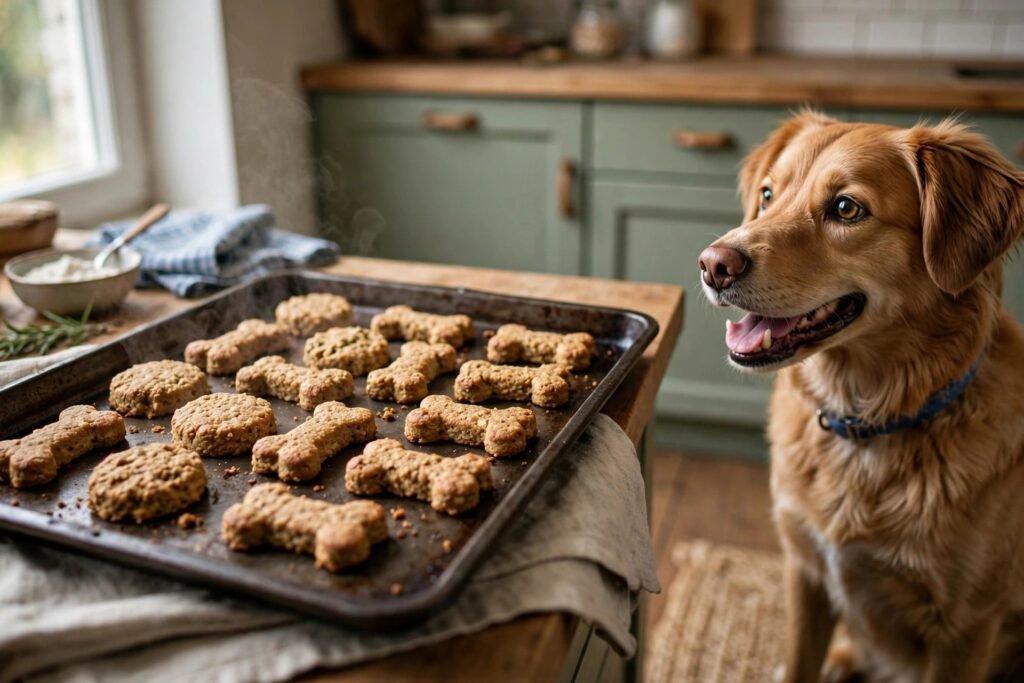
How to Make Homemade Dog Treats Safely: 3 Easy Treat Recipes
Homemade dog treats are having a moment, and for good reason: you control every ingredient, skip the preservatives and mystery “meat by-products,” tailor recipes to allergies, and save money — a bag of premium commercial treats runs $8-$15, while a batch of homemade biscuits costs under $2. Dogs, famously, do not care about packaging.
But “homemade” does not automatically mean “safe.” Several common human baking ingredients are toxic to dogs, nutritional balance matters more than most recipes admit, and food-safety rules still apply. This guide covers the safe-ingredient formulary, the toxic list you must memorize, tested base recipes, and the storage and feeding rules that keep homemade treating healthy.
The Safe Pantry: What Dogs Can Eat
Build treats from this core list and you will rarely go wrong:
Proteins: plain cooked chicken, turkey, lean beef, salmon, tuna (in water, limited), eggs. Carbohydrates: oats, brown rice, sweet potato, pumpkin purée (plain, not pie filling), whole wheat flour, peanut butter (xylitol-free — check every label). Fruits: blueberries, apples (no seeds), bananas, watermelon (no rind/seeds), strawberries. Vegetables: carrots, green beans, peas, cucumber, zucchini. Fats/flavor: small amounts of coconut oil, plain yogurt, unsweetened applesauce, low-sodium broth.
Peanut butter deserves a special callout: it is the backbone of half of all dog-treat recipes, but some brands now use xylitol (birch sugar) as a sweetener — and xylitol is lethally toxic to dogs even in small amounts. Read the label every time you buy; formulations change.
The Toxic List: Memorize These
Xylitol (in some peanut butters, sugar-free products) — causes rapid insulin release and liver failure; emergency. Chocolate — theobromine toxicity; darker is worse. Grapes and raisins — can cause acute kidney failure; toxic dose varies unpredictably. Onions, garlic, leeks, chives — damage red blood cells; powdered forms are concentrated. Macadamia nuts — weakness, vomiting, tremors. Alcohol — obviously. Caffeine. Cooked bones — splinter risk (raw bones have their own controversies; cooked are universally discouraged). Raw yeast dough — expands in the stomach and produces ethanol.
The ASPCA maintains the definitive toxic foods list — bookmark it on your phone for label-checking at the store.
Three Tested Base Recipes
1. Peanut Butter Oat Biscuits (the workhorse). 2 cups oat flour (blend rolled oats), 1/2 cup xylitol-free peanut butter, 1/2 cup unsweetened applesauce, 1 egg. Mix, roll to 1/4 inch, cut shapes, bake at 350°F for 20-25 minutes until hard. Makes ~30 medium biscuits. These keep two weeks refrigerated and are endlessly customizable — swap applesauce for pumpkin purée, add blueberries.
2. Chicken & Sweet Potato Jerky. Slice chicken breast or sweet potato into 1/8-inch strips, arrange on a rack over a sheet pan, and dehydrate at 200°F for 2-3 hours until completely dry and leathery. No dehydrator needed. Cool fully before storing. The chew time makes these excellent training rewards — and far cheaper than commercial jerky, which has faced recurring FDA scrutiny over imported ingredients (see the FDA’s pet food safety alerts).
3. Frozen Pup Pops (summer). Blend plain yogurt, banana, blueberries, and a spoonful of peanut butter; pour into silicone molds or ice cube trays; freeze. Perfect for teething puppies and hot days. Five minutes of prep, zero baking.
Baking Tips for Dog Treats
Bake treats harder than you would human cookies — crunchier treats last longer and clean teeth better. Cool completely before storing (trapped moisture = mold). Skip the salt, sugar, and spices you would add for humans; dogs do not need them and some (nutmeg, excess salt) are harmful. When in doubt about an ingredient, leave it out.
Nutrition: Treats Are Not Meals
The veterinary rule: treats should supply no more than 10 percent of daily calories. For a 30-pound dog eating ~700 calories daily, that is 70 treat calories — roughly two medium biscuits. Homemade treats make overfeeding easy because they feel virtuous; use small sizes and count them against the daily total, reducing meal portions slightly on heavy training days.
Balance matters if you treat heavily. A diet of 30 percent unbalanced homemade treats can dilute the carefully formulated nutrition of commercial food. For dogs with kidney disease, pancreatitis, or food allergies, run recipes past your vet first — “healthy” ingredients like high-fat peanut butter can be dangerous for pancreatitis-prone dogs. And remember that protein safety starts at purchase: our guide to refreezing thawed meat safely applies to the chicken going into those treats, and the shaping skills transfer from decorating birthday cakes — minus the frosting, which dogs should not have.
Storage and Food Safety
Homemade treats lack commercial preservatives, so they perish faster. Rules: soft/moist treats (jerky not fully dried, pup pops) — refrigerate, use within a week, or freeze up to 3 months. Hard-baked biscuits — airtight container, room temperature up to 2 weeks, refrigerate for longer. Anything with meat or egg — refrigerate, treat like fresh food. When in doubt, freeze the batch and thaw portions — freezing adds months of life with zero quality loss for most recipes.
Kitchen hygiene is the same as for human food: wash hands, clean surfaces, cook meats to safe temperatures (165°F for poultry), and do not let raw-meat treats sit out. Dogs are more resistant to some foodborne pathogens than humans, but “more resistant” is not “immune” — salmonella from raw-ingredient treats is a documented risk, especially around children and immunocompromised people.
Cost Comparison: Is It Worth It?
A batch of 30 peanut butter biscuits costs roughly $1.50-$2.50 in ingredients versus $8-$12 for a comparable commercial bag. The jerky recipe runs about $4-$6 per pound of finished treats versus $15-$25 commercial. The savings are real — 60-80 percent — but honest accounting includes your time (30-45 minutes per batch including cleanup) and energy costs. Where homemade truly wins beyond money: allergy control, ingredient transparency, and freshness. Where commercial wins: dental-specific formulations, precise nutritional balance, and convenience.
Conclusion
Homemade dog treats are cheaper, fresher, and more customizable than store-bought — provided you respect the toxic-ingredient list, keep treats under 10 percent of daily calories, bake them dry, and store them like the perishable food they are. Start with the peanut butter oat biscuit, check every peanut butter label for xylitol, and let your dog’s enthusiasm be the review that matters.
Frequently Asked Questions
What ingredients are toxic to dogs in homemade treats?
Xylitol, chocolate, grapes/raisins, onions/garlic/leeks, macadamia nuts, alcohol, caffeine, cooked bones, and raw yeast dough. Always check peanut butter labels for xylitol.
How long do homemade dog treats last?
Hard-baked biscuits: ~2 weeks airtight at room temperature. Soft or meat-based treats: 1 week refrigerated. Most treats freeze well for up to 3 months — freeze in portions and thaw as needed.
How many homemade treats can I give my dog per day?
Treats should stay under 10% of daily calories — for a 30-lb dog, roughly 70 treat calories or about two medium biscuits. Reduce meal portions slightly on heavy treat days.
Is peanut butter safe for dogs?
Yes, if xylitol-free. Check the ingredient label every time you buy, as formulations change. Natural peanut butters with only peanuts and salt are the safest choice.
Are homemade treats cheaper than store-bought?
Typically 60-80% cheaper in ingredients ($1.50-$2.50 per batch vs. $8-$12 commercial). Factor in your time; the biggest wins beyond money are allergy control and ingredient transparency.