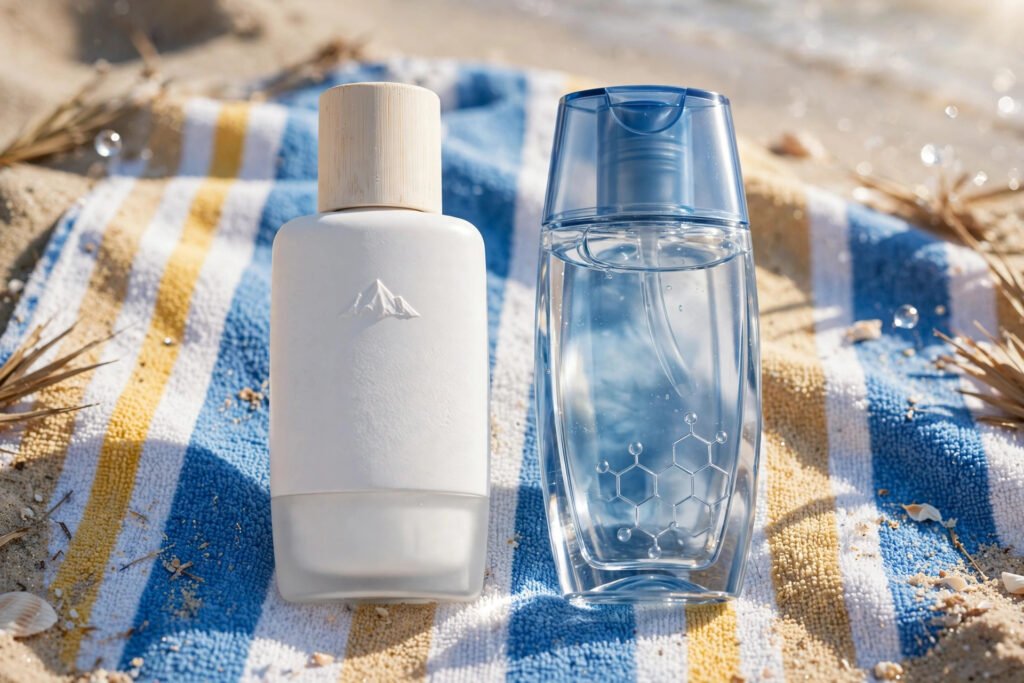
Physical vs. Chemical Sunscreen: What’s the Difference? (Guide)
Every sunscreen aisle presents the same confusing choice: “mineral” versus “chemical,” “physical” versus “synthetic,” zinc versus avobenzone. The labels make it sound like a moral decision — natural good, chemical bad — but the real differences are about how they work, how they feel, and which one you will actually wear every day. Because the best sunscreen is not the one with the purest ingredients. It is the one on your face.
Here is what the difference between physical and chemical sunscreen actually is: how each type blocks UV, the real pros and cons dermatologists cite, who should choose which, and how to use either one correctly — because most people apply sunscreen wrong regardless of type.
How They Work: Shield vs. Sponge
Physical (mineral) sunscreens use zinc oxide and/or titanium dioxide — fine mineral particles that sit on the skin’s surface and reflect and scatter UV rays away, like millions of tiny mirrors. They start working the moment you apply them. Chemical (organic) sunscreens use compounds like avobenzone, octinoxate, and octocrylene that absorb into the skin and convert UV radiation into heat, which the skin then releases. They need about 15 minutes to activate after application.
The “natural versus chemical” framing is misleading: zinc oxide is a chemical too, and “chemical” sunscreens have decades of safety data. The meaningful distinctions are practical, not philosophical.
Physical Sunscreen: Pros and Cons
Advantages
Gentler on sensitive and reactive skin — mineral filters are less likely to cause irritation or stinging, which is why dermatologists recommend them for rosacea, eczema-prone skin, and children. Photostable by nature (they do not degrade in sunlight the way some chemical filters do). Effective immediately upon application. And generally considered reef-safer, which matters in Hawaii and other jurisdictions that restrict certain chemical filters.
Disadvantages
The white cast — the deal-breaker for many. Zinc and titanium sit on the skin visibly, leaving an ashy or purple cast especially on medium and deep skin tones. (Tinted mineral formulas largely solve this.) They can feel thick and pasty, pill under makeup, and rub off more easily onto clothing. Achieving high SPF with minerals alone requires heavy concentrations that worsen the texture problems.
Chemical Sunscreen: Pros and Cons
Advantages
Cosmetically elegant — thin, invisible, no white cast on any skin tone, layers beautifully under makeup. Easier to formulate at high SPF with broad-spectrum protection. Spreads thinly, so people tend to apply closer to the correct amount. For daily facial wear, especially under cosmetics, chemical sunscreens win on user experience — and user experience determines whether sunscreen gets worn.
Disadvantages
More likely to irritate sensitive eyes and reactive skin — avobenzone and oxybenzone are the most common culprits in sunscreen irritation reports. Requires 15-minute activation before sun exposure. Some filters (notably avobenzone) degrade in sunlight unless stabilized. And certain chemical filters face environmental restrictions and ongoing FDA safety review — the FDA has called for more safety data on several chemical UV filters while emphasizing that sunscreen’s proven benefits outweigh theoretical risks.
Which Should You Choose?
Choose physical if
You have sensitive, rosacea-prone, or post-procedure skin; you are buying for young children; you want immediate protection (applied at the beach parking lot); or you prefer to avoid chemical filters for environmental or personal reasons. If you have struggled to find a non-irritating formula, start with the guidance on how to choose the right sunscreen for sensitive skin — most of its recommendations are mineral-based for good reason.
Choose chemical if
You have medium to deep skin and hate white cast; you wear sunscreen daily under makeup; you need high-SPF water-resistant protection for sports; or cosmetic elegance is what gets you to apply enough. The sunscreen you apply generously every day beats the “better” formula you skip.
The hybrid option
Many modern sunscreens combine both filter types — mineral plus chemical — capturing stability and gentleness from minerals with elegance and high SPF from chemical filters. If you cannot decide, hybrids are the pragmatic middle ground.
How to Use Either Type Correctly
Most people get 20 to 50 percent of the labeled SPF because they under-apply. The correct dose: a full teaspoon for the face and neck (the “two finger lengths” rule — a strip of product along the index and middle fingers), a shot-glass amount for the body. Reapply every two hours outdoors and after swimming or heavy sweating, regardless of type. Apply as the last step of your morning routine — and budget for it properly, since daily sunscreen is a recurring cost worth planning inside how much you budget for monthly self-care.
Do not rely on SPF in makeup alone — nobody applies foundation thickly enough for the labeled protection. And remember the rest of photoprotection: shade, hats, sunglasses, and avoiding peak hours do as much work as any bottle. The Skin Cancer Foundation and the American Academy of Dermatology both stress that sunscreen is one layer of a sun-protection strategy, not the whole plan.
Sunscreen Myths Worth Busting
Myth: “I have dark skin, so I do not need sunscreen.” Melanin provides roughly SPF 13 equivalent — meaningful, but nowhere near enough, and skin cancer in darker skin is often diagnosed later and deadlier. Everyone needs sunscreen. Myth: “My makeup has SPF 15, so I am covered.” Nobody applies foundation at the thickness required for labeled SPF — makeup SPF is a bonus, never the plan.
Myth: “Sunscreen causes vitamin D deficiency.” Studies show regular sunscreen users maintain adequate vitamin D; incidental exposure and diet cover needs, and supplements fill any gap far more safely than unprotected sun. Myth: “Waterproof sunscreen lasts all day.” No sunscreen is truly waterproof — “water-resistant” means 40 to 80 minutes of retained protection, and reapplication after swimming or sweating is mandatory regardless of label claims. Myth: “A base tan protects you.” A tan is visible DNA damage — it provides roughly SPF 3 while signaling the exact harm sunscreen prevents.
Conclusion
Physical sunscreens reflect UV with mineral filters — gentler, immediate, but prone to white cast. Chemical sunscreens absorb UV and convert it to heat — elegant and invisible, but more irritating for sensitive skin and needing 15 minutes to activate. Choose based on your skin’s tolerance and which formula you will actually apply generously every day, use enough of it, reapply on schedule, and pair it with shade and hats. The physical-versus-chemical debate matters far less than the applied-versus-skipped reality.
Frequently Asked Questions
Is mineral sunscreen safer than chemical sunscreen?
Mineral filters have longer safety records and are gentler on sensitive skin, but major dermatology organizations consider both types safe and effective. The FDA continues to review chemical filters while affirming that sunscreen use prevents skin cancer.
Why does mineral sunscreen leave a white cast?
Zinc oxide and titanium dioxide are white minerals that sit on the skin’s surface. Tinted formulas, smaller particle sizes, and thorough blending minimize it — but some cast is inherent to the technology, especially at high SPF.
Can I mix physical and chemical sunscreens?
Layering different sunscreens is fine, though it can cause pilling. Many products already combine both filter types. Do not mix them in the bottle — use formulated hybrids instead.
Do I need to reapply mineral sunscreen as often?
Yes — every two hours outdoors, same as chemical. Mineral filters rub off, sweat off, and break down mechanically just like any sunscreen. The reapply rule is about the film on your skin, not the filter chemistry.