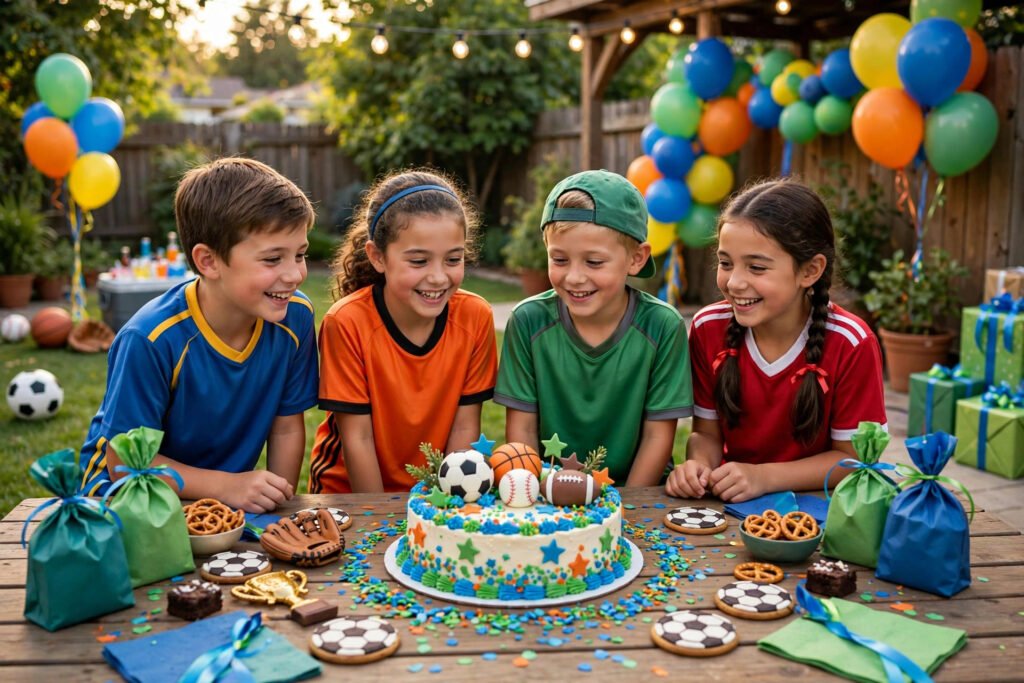
How to Plan a Sports-Themed Birthday Party for Kids
There is no faster way to become the favorite parent on the block than throwing a killer sports-themed birthday party — and no faster way to exhaust yourself than trying to wing it. The difference between a chaotic afternoon and a legendary one is not budget. It is structure: the right activities at the right times, food that feeds a crowd without chaining you to the kitchen, and decorations that look impressive but take an hour, not a weekend.
This guide walks through how to plan a sports-themed birthday party for kids step by step, from picking the sport and venue to games, cake, and the timeline that keeps everything moving.
Step 1: Pick the Sport and the Guest List
Let the birthday kid choose the sport — soccer, basketball, baseball, football, or a multi-sport “field day” theme all work. The sport determines your venue and activities, so lock it in 4–6 weeks out. For the guest list, the sweet spot is 8–12 kids: enough for team games, few enough to manage. Match the activities to the age group — 5-year-olds need simple, short games with lots of movement; 10-year-olds can handle real scrimmages and competitions.
Send invitations 3–4 weeks ahead with the essentials: date, time, location, what to wear (athletic clothes and sneakers), and whether parents should stay. For outdoor parties, include a rain plan right on the invite so nobody is confused. Digital invitations through a free service keep costs down and RSVPs organized.
Step 2: Choose the Venue
Your backyard is the classic for a reason: free, flexible, and the cleanup is contained. You will need flat space for games — a quarter-acre works for most setups. Local parks offer pavilions, restrooms, and fields for a small reservation fee (often $50–$150); book early because pavilions go fast in spring. Indoor sports facilities — trampoline parks, indoor soccer centers, batting cages — cost more ($200–$500+) but eliminate weather risk and usually include staff who run the activities. Community centers and YMCAs often rent gyms cheaply for members.
For winter birthdays, indoor is non-negotiable in the Midwest. Many gymnastics gyms and sports complexes offer party packages with dedicated party rooms — the premium is worth it for the zero-cleanup factor alone.
Decorations That Look Pro Without the Effort
Pick two team colors and commit — everything coordinates instantly. A balloon arch in those colors over the food table is the single highest-impact decoration for the money. Tablecloths in team colors, paper plates with a sports motif, and printed pennant banners (free templates online) cover the rest. Centerpieces can be as simple as a ball in a bucket: soccer balls, mini basketballs, or baseballs in galvanized buckets look great and double as party favors.
The photo station is worth the small effort: a backdrop (a plastic tablecloth works), some sports props (oversized foam fingers, jerseys, medals), and good lighting. Parents will photograph it all afternoon, and the birthday kid gets great pictures. If you are baking the cake yourself, our guide to making a birthday cake look professional at home turns a box mix into a field-stadium masterpiece.
Games and Activities: The Heart of the Party
Plan 3–4 structured activities of 15–20 minutes each, with free play in between. The magic formula: one icebreaker, one team competition, one skills challenge, and one finale.
Ideas by sport: Soccer — penalty kick shootout, dribble relay races. Basketball — knockout (the elimination shooting game), free-throw contests. Baseball — home run derby with plastic bats, base-running relays. Football — quarterback accuracy toss at targets, flag-football scrimmage. Multi-sport — an obstacle course combining stations from each sport, timed for medals.
Universal winners: a tug-of-war (always a hit), relay races with silly twists (dribbling a ball while balancing a beanbag), and a “draft combine” where kids rotate through stations earning stickers or points. End with something memorable — a mini championship game with parents as the cheering section, or a medal ceremony where every kid gets recognized for something (“best hustle,” “best teammate”). For adult-sized inspiration on running a smooth event, the principles in hosting a game night at home translate surprisingly well to kids’ parties.
Food: Feed the Team Without the Stress
Kids at a sports party want food that is fast, familiar, and eatable between activities. The winning menu: a “concession stand” setup — hot dogs or sliders, popcorn in individual bags, pretzels, fruit cups, and juice boxes or a lemonade dispenser. The concession theme doubles as decoration. Pizza is the reliable backup; order 20% more than you think you need.
Handle allergies proactively: ask on the RSVP, label everything, and keep one allergen-free option (fruit, popcorn) clearly separate. Cake timing matters — serve it about 75% through the party, not at the end when energy crashes and parents start arriving. Cupcakes are easier than cake for a crowd: no cutting, no plates sliding around.
The Timeline: 2 Hours, Zero Dead Air
0:00–0:20: arrivals and free play (have balls out immediately — never let kids stand around). 0:20–0:50: structured games block one. 0:50–1:10: food and cake. 1:10–1:40: structured games block two or the championship finale. 1:40–2:00: favors, group photo, pickup. Two hours is the sweet spot for ages 5–10; younger kids tap out at 90 minutes.
Build in a 10-minute buffer — something always runs long. Have one “emergency” activity in reserve (a dance freeze game, extra relay) for gaps. And recruit one other adult as your co-captain; running games solo while managing food is how parties unravel.
Party Favors That Do Not End Up in the Trash
Skip the plastic trinkets. The best sports party favors are usable: a water bottle with the birthday kid’s “team logo” (printable stickers), a mini ball of the party’s sport, sweatbands or eye black stickers, and a bag of popcorn. Total cost per favor: $3–$5, and kids actually keep them. The Parents.com party planning section has great printable templates if you want to go the extra mile.
The Bottom Line
A great sports-themed birthday party is 20% decorations and 80% momentum — keep kids moving, fed, and competing, and the theme takes care of itself. Pick the sport early, book the venue, plan four activities, run the concession-stand menu, and hold the two-hour timeline. Do that and you will not just survive the party — you will be asked to do it again next year. The American Academy of Pediatrics reminds us that active play is exactly what growing kids need, so consider this party a public health service.
Frequently Asked Questions
How much does a sports-themed birthday party cost?
A backyard party typically runs $100–$250 (decorations, food, cake, favors). Park pavilion parties add $50–$150 for the reservation. Indoor facility packages run $200–$500+ but include activities and cleanup.
How long should a kids’ birthday party last?
Two hours is ideal for ages 5–10. Kids under 5 do best with 90 minutes. Longer parties lead to energy crashes and chaos — a tight, fun two hours beats a sprawling three.
What is the best age for a sports-themed party?
Ages 5–12 are the sweet spot — kids are coordinated enough for real games but still thrilled by the theme. Younger kids enjoy the decorations and free play more than structured competition.
What if it rains on an outdoor sports party?
Always have a rain plan on the invitation: a garage or basement backup with indoor-friendly games (balloon volleyball, minute-to-win-it challenges), or a rain date. Do not try to run a field party in a downpour.