How to Deal With Japanese Beetles in Ohio Gardens
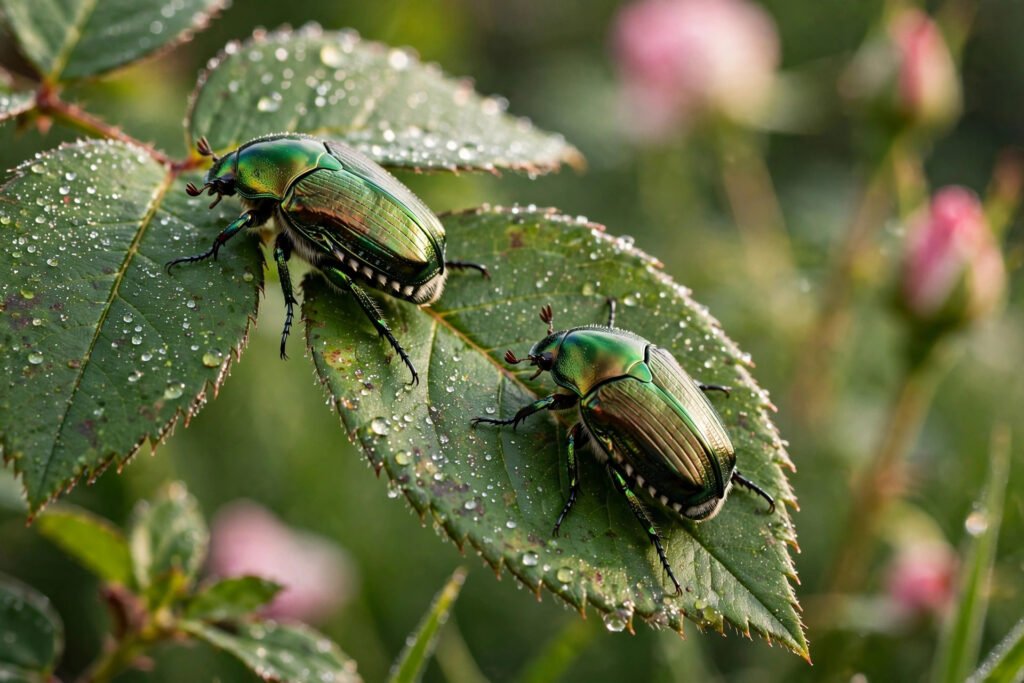
They arrive in late June like a metallic green plague: Japanese beetles, swarming Ohio gardens by the thousands, skeletonizing roses, devouring lindens, stripping grape vines to lace in days. An invasive species with no effective natural predators in North America, the Japanese beetle is Ohio gardeners’ most hated summer pest — and fighting them wrong (hello, beetle traps) can actually make the problem worse.
This guide explains how to deal with Japanese beetles in Ohio gardens — their lifecycle and timing, what actually works (and what backfires), organic and conventional controls, and the long-term strategies that reduce pressure year after year. The beetles are not going away; but you can win the battle for your garden.
Know Your Enemy: Lifecycle and Timing in Ohio
Japanese beetles spend most of their lives as grubs underground, feeding on grass roots from fall through spring — the same grubs that brown your lawn. Adults emerge from the soil in late June through July in Ohio, feed aggressively for 4-6 weeks, then females return to turf to lay eggs, starting the cycle again.
Adults feed in groups — they release aggregation pheromones that attract more beetles, which is why damage escalates exponentially once a few find your roses. They prefer over 80 plant species, with Ohio favorites including roses, lindens, grapes, raspberries, crabapples, birches, and soybeans. They feed on leaf tissue between veins, leaving the characteristic skeletonized leaves.
Timing is everything: controls targeting adults work only during the 4-6 week flight period; grub controls work in late summer/fall. Treating at the wrong time wastes money completely. Ohio State University Extension publishes current beetle forecasts and control bulletins for Ohio gardeners.
What Backfires: Traps and Bad Timing
Beetle bag traps: the classic mistake. Those pheromone/floral-lure traps catch thousands of beetles — and attract far more than they catch. University research consistently shows traps increase beetle pressure on nearby plants; the traps draw beetles from hundreds of feet away, and many never enter the bag. If you use traps, place them at the far perimeter of your property, downwind, away from valued plants — or better, coordinate with neighbors so the whole street is not luring beetles toward your roses.
Spraying at the wrong time wastes product and kills pollinators. Broad-spectrum insecticides applied during bloom, when bees are active, devastate beneficial insects. Treating grubs in spring is largely ineffective — grubs are large and tolerant by then; late summer/early fall treatment of young grubs works far better.
What Actually Works: Adult Controls
Hand-picking: Genuinely effective for small gardens. In the cool morning when beetles are sluggish, knock them into a bucket of soapy water. Daily 10-minute patrols through July can protect a rose garden almost completely — and it is free, organic, and oddly satisfying.
Neem oil and insecticidal soap: Neem acts as a feeding deterrent and growth disruptor; it will not kill on contact like synthetics, but beetles avoid neem-treated foliage. Apply in the evening to protect pollinators, reapply after rain. Insecticidal soap kills on direct contact — spray beetles directly in the morning.
Targeted conventional insecticides: For severe infestations on non-food ornamentals, products containing carbaryl, bifenthrin, or cyfluthrin work fast. Use them surgically — spot-treat valued plants, avoid blooming plants during bee activity, follow labels exactly. The EPA’s pesticide guidance covers safe application practices.
Row covers: Lightweight floating row covers over vegetables and small fruits physically exclude beetles entirely — the most reliable protection for food crops, with zero chemicals.
The Long Game: Grub Control and Smart Planting
Breaking the lifecycle beats fighting adults every summer. Milky spore (a bacterial disease of grubs) and beneficial nematodes (microscopic worms that parasitize grubs) are organic grub controls applied to lawns in late summer — they reduce next year’s beetle population at the source. Results build over 2-3 years; this is a strategy, not a quick fix.
Reduce grub habitat: Beetles prefer laying eggs in moist, irrigated turf. Letting lawns go slightly dormant in summer (raising mowing height, reducing irrigation in July) makes your yard less attractive for egg-laying. Overseeding with tall fescue and fine fescues — less preferred by grubs than Kentucky bluegrass — helps over time.
Plant smart: In heavily affected areas, favor beetle-resistant plants — they tend to avoid magnolias, dogwoods, redbuds, boxwoods, and most conifers. And diversify: monocultures of roses and lindens are beetle buffets. Ohio gardeners planning beds should also consider houseplant care basics for indoor growing and keeping herbs fresh — because a resilient garden is an ecosystem, not just a battlefield.
Community coordination multiplies effectiveness. Japanese beetles do not respect property lines — if your neighbor’s untreated roses are a beetle nursery, your garden suffers regardless of your efforts. The most successful Ohio neighborhoods organize: sharing the cost of nematode applications across lawns, agreeing to skip the counterproductive bag traps (or placing them jointly at the neighborhood perimeter), and staggering treatments. OSU Extension offices can advise community groups, and the per-household cost of coordinated grub control is a fraction of solo efforts.
Protecting pollinators while fighting beetles deserves emphasis, because the cure can be worse than the pest. Broad-spectrum insecticides kill bees, ladybugs, parasitic wasps, and other beneficials that control other garden pests — trading a beetle problem for an aphid explosion. Rules of thumb: never spray blooming plants during daylight bee activity (spray at dusk if you must), prefer targeted options (neem, insecticidal soap, hand-picking) over broadcast sprays, and leave some untreated refuge areas. A garden with a healthy beneficial-insect population resists pest outbreaks of all kinds far better than a chemically sterilized one.
Finally, keep perspective: Japanese beetle pressure varies enormously year to year with weather. Wet springs favor grub survival (bad years); drought summers suppress them. A bad beetle year does not mean your controls failed — compare against untreated areas before judging. And remember that established, vigorous plants tolerate beetle feeding far better than stressed ones: proper watering, mulching, and feeding make your garden resilient, so the beetles become a cosmetic nuisance rather than a crisis.
Conclusion
Beating Japanese beetles in Ohio means: hand-pick daily during the late-June-to-August flight, use neem or row covers for protection, skip the counterproductive bag traps (or place them far away), and invest in grub controls like nematodes and milky spore for long-term reduction. No single tactic wins alone — but the integrated approach, applied consistently, keeps your garden thriving while the neighbors’ roses become lace.
Frequently Asked Questions
When do Japanese beetles appear in Ohio?
Adults typically emerge in late June and feed through July into early August. Grubs are active underground from fall through spring, damaging lawns.
Do Japanese beetle traps work?
They catch beetles but attract more than they catch, often worsening damage on nearby plants. If used, place them far from valued plants at the property perimeter — or skip them in favor of hand-picking.
What kills Japanese beetles naturally?
Hand-picking into soapy water, neem oil as a feeding deterrent, insecticidal soap on contact, beneficial nematodes and milky spore for grubs, and row covers for physical exclusion. No natural predator controls them effectively in North America.
What plants do Japanese beetles avoid?
They tend to avoid magnolias, dogwoods, redbuds, boxwoods, junipers, arborvitae, and most conifers. They love roses, lindens, grapes, raspberries, crabapples, and birches.
When should I treat for Japanese beetle grubs?
Late summer to early fall (August-September), when grubs are small and vulnerable. Spring treatments are largely ineffective against mature grubs.