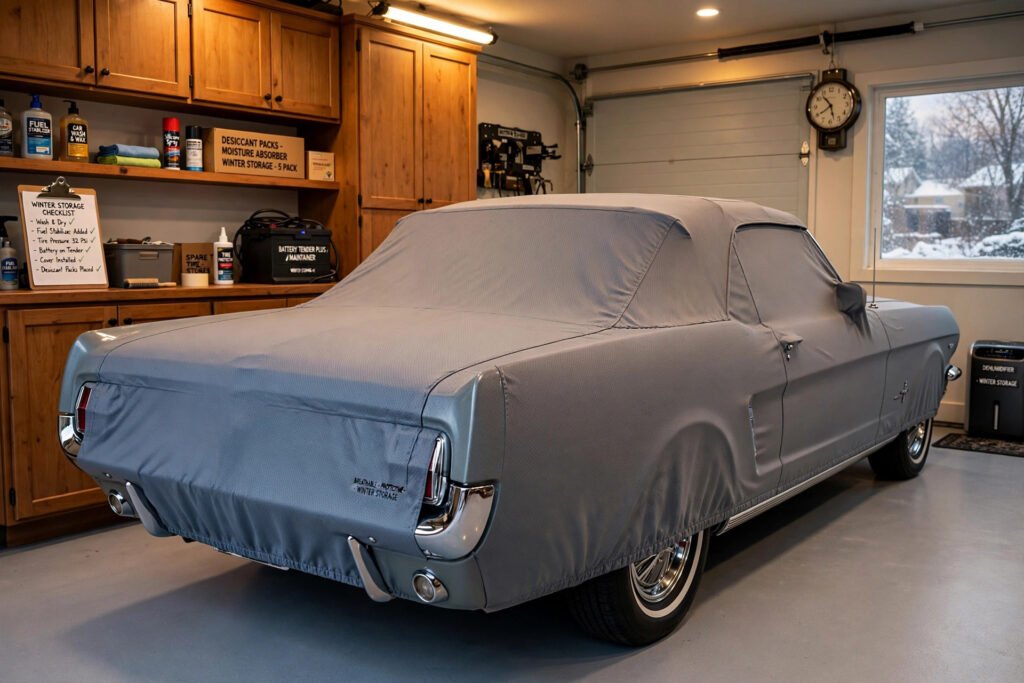
How to Store a Convertible for Winter in Chicago
How to store a convertible for winter in Chicago: salt, sub-zero temperatures, freeze-thaw cycles, and months of disuse can destroy an unprepared convertible — rotting soft tops, dead batteries, flat-spotted tires, rodent infestations, and hidden moisture damage that costs thousands to fix. Chicago winters are especially brutal on stored cars, with road salt in the air and temperature swings that punish every seal and surface. Here’s the complete guide to winterizing your convertible so it emerges in spring as good as it went in.
Where to Store: Location Matters Most
The ideal: a heated garage (45–55°F) with concrete floors. Realistic Chicago options: your home garage (unheated is fine with proper prep), a rented storage unit (climate-controlled preferred — $150–$300/month for car-sized units), or a friend’s garage. Avoid: outdoor storage (even with a cover — Chicago’s freeze-thaw and salt air punish outdoor cars), dirt-floor barns (moisture wicks up), and anywhere with known rodent activity.
If using a storage facility, verify: insurance coverage (your auto policy may not cover stored vehicles — ask about comprehensive-only “storage” policies, which are cheap), access hours (you’ll want monthly check-ins), and security. Whatever you choose, the car must be clean, dry, and prepped — location alone doesn’t save an unprepared car.
Step-by-Step Winterization
1. Wash and detail thoroughly: Salt, bird droppings, and grime etch paint over months. Wash, clay-bar if needed, wax (quality sealant protects for months), clean the interior, and condition leather. A clean car stores better — contaminants don’t get months to bond. This is car care at its most important.
2. Change the oil: Used oil contains acids and contaminants that corrode internals during storage. Fresh oil + new filter before storage, not after. Learn the fundamentals — basic car maintenance makes this a 30-minute job.
3. Fill the fuel tank and add stabilizer: A full tank prevents condensation; fuel stabilizer (STA-BIL or equivalent) prevents varnish for up to 12 months. Add stabilizer, then drive 10 minutes to circulate it through the system.
4. Battery: Remove it and connect a battery tender/maintainer (not a trickle charger — tenders cycle intelligently; $40–$70). Or leave it connected on a tender if the storage location has power. A dead-after-winter battery is the #1 storage failure — entirely preventable.
5. Tires: Inflate to 5–10 PSI above normal (tires lose pressure in cold), and ideally put the car on jack stands to prevent flat spots. At minimum, move the car slightly during monthly check-ins. Flat-spotted tires thump for hundreds of miles — or need replacement.
6. Protect the convertible top: Clean and treat the soft top (RaggTopp or equivalent for fabric; conditioner for vinyl), ensure it’s fully dry, and store with the top UP — storing with the top down creases and stresses the material for months. Lubricate seals and hinges.
7. Rodent defense: Chicago garages host mice seeking winter shelter — and they love engine bays (chewing wires, nesting in airboxes). Stuff steel wool in the exhaust tip and air intake, place mothballs or peppermint-oil deterrents around (not inside) the car, remove all food traces from the interior, and set traps nearby. Rodent damage causes thousands in wiring repairs — prevention is everything.
8. Moisture control: Place desiccant packs or a dehumidifier tub inside the cabin, crack windows slightly only if the storage is climate-controlled (otherwise keep sealed), and ensure the cover (if used) is breathable — non-breathable covers trap moisture and breed mold.
Insurance and Registration Paperwork
Don’t overlook the paperwork. Insurance: switch to comprehensive-only “storage” coverage — typically $15–$30/month versus $100+/month for full coverage — but never cancel entirely. An uninsured stored car hit by fire, theft, or a garage collapse is a total loss. Notify your insurer of the storage location; some policies have garaging-location clauses. Registration: Illinois allows you to keep plates current or use planned non-operation status depending on your situation — check current Illinois Secretary of State rules, as driving with expired registration in spring brings tickets.
Documentation: photograph the car’s condition thoroughly before storage (all angles, odometer, interior) — essential for any insurance claim. Keep storage receipts, the battery tender manual, and a checklist of everything you did, so spring de-winterizing is systematic rather than guesswork.
Cover Selection and Monthly Check-Ins
Use a breathable, fitted indoor car cover ($100–$200) — never a plastic tarp, which traps condensation against paint. The cover protects from dust and accidental scratches during storage months.
Visit monthly: check tire pressure, look for rodent signs and moisture, verify the battery tender’s indicator, and start the car — actually, don’t. Modern advice: do NOT start a stored car for “a few minutes” — idling doesn’t warm the engine fully, creates condensation in the exhaust and oil, and does more harm than good. Either drive it 20+ minutes (impractical in Chicago winter) or leave it sleeping until spring. The NHTSA’s vehicle maintenance resources support proper storage practices.
Spring Wake-Up: De-Winterizing
When Chicago finally thaws: remove the cover and all rodent defenses (check the exhaust tip and air intake — forgetting steel wool there causes real problems), reinstall or reconnect the battery (charge if the tender shows anything but green), check all fluid levels, inspect tires (pressure, flat spots, dry rot), check for rodent damage (wires, hoses, nesting material), wash off dust, and take a gentle 20-minute drive to warm everything fully before any spirited driving. Inspect the convertible top operation carefully — cycle it fully and check seals.
Then enjoy the payoff: that first top-down drive on a 65°F April day, in a car that starts instantly and looks pristine — the reward for doing winter right. The Department of Energy’s vehicle care guidance reinforces why proper seasonal maintenance extends vehicle life.
Conclusion
Storing a convertible for winter in Chicago requires: indoor storage (never outside), thorough cleaning and waxing, fresh oil and filter, stabilized full fuel tank, battery on a smart tender, overinflated tires or jack stands, top up/clean/treated, rodent defenses deployed, moisture controlled with desiccants, breathable fitted cover, storage insurance in place — then disciplined monthly check-ins without short idling sessions. Do it right and spring arrives with a car that’s ready to drive, not a project that’s ready for the shop.
Frequently Asked Questions
Can I safely store my convertible outside during a Chicago winter?
Strongly discouraged — freeze-thaw cycles, salt air, snow load, and moisture destroy soft tops and finishes. Indoor storage is one of the highest-ROI car expenses in Chicago.
Should I periodically start my stored convertible during winter?
No — short idling sessions create condensation damage without fully warming the engine. Either drive 20+ minutes or leave it sleeping until spring.
How do I keep mice from nesting in my stored convertible?
Steel wool in exhaust/intake, deterrents around (not in) the car, zero food traces inside, and traps nearby. Inspect monthly — early detection prevents wiring damage.
Do I need insurance on a convertible that’s in winter storage?
Yes — comprehensive-only “storage” policies are cheap and cover theft, fire, and weather damage. Don’t cancel everything; an uninsured stored car is a total loss waiting to happen.
Should the convertible soft top be up or down during winter storage?
Up — storing with the top down creases fabric/vinyl and stresses the mechanism for months. Clean, treat, dry, and latch it up.