When Should You Worry About Your Dog Limping? (Vet Guide)
Your dog takes three normal steps, then hops, holding up a back leg. Or the limp appears after a long hike and vanishes by morning. Or it has been getting gradually worse for weeks and you have been telling yourself it is nothing. Limping is the most common reason dog owners call the vet — and the hardest symptom to interpret, because it ranges from a thorn between the toes to a torn cruciate ligament to bone cancer.
Here is how to think about your dog limping: the immediate triage you can do at home, the red flags that mean emergency care tonight, the common causes by pattern, and how vets actually diagnose and treat the problem.
Immediate Home Triage
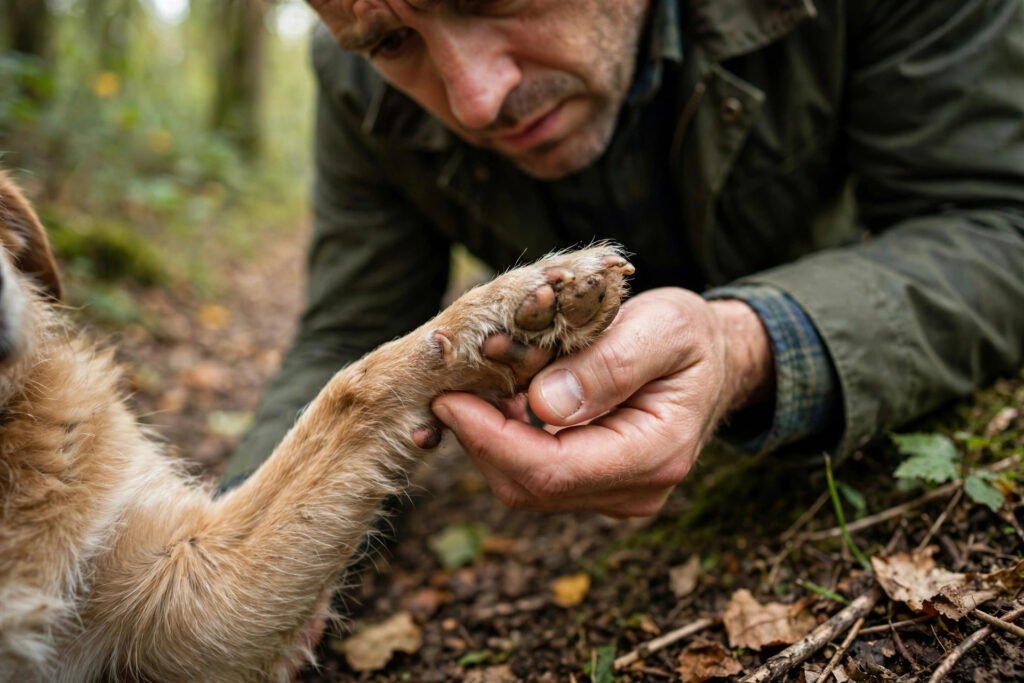
When you first notice the limp, do a calm, systematic check. Look at the paw first — most acute limps start here. Spread the toes and check for thorns, glass, burrs, torn nails, cracked pads, or swelling between the digits. Feel gently up the leg for heat, swelling, or a pain response; compare to the matching leg on the other side. Watch the dog walk: a front-leg limp bobs the head up when the sore leg hits the ground; a hind-leg limp drops the hip on the sore side.
Note the pattern, because it is diagnostic gold for your vet: sudden versus gradual onset, constant versus intermittent, worse after rest or worse after exercise, one leg or shifting between legs. “Started suddenly after the dog park yesterday, left front, worse in the morning” tells a vet enormously more than “limping.”
Red Flags: Go to the Vet Now
Some limps cannot wait for morning. Seek emergency care if: the dog cannot bear any weight on the leg at all; there is visible deformity suggesting fracture or dislocation; the leg is rapidly swelling; the dog is in obvious severe pain (panting, whining, aggression when touched); the limp follows trauma like being hit by a car; or limping is accompanied by lethargy, fever, loss of appetite, or pale gums. Non-weight-bearing lameness after trauma is an emergency until proven otherwise.
Puppies with sudden severe lameness need prompt evaluation too — growth-plate injuries in young dogs can cause permanent deformity if not treated correctly. And any limp in a senior dog that is rapidly worsening over days deserves urgent attention rather than a wait-and-see approach.
Common Causes by Pattern
Sudden limp in an active dog
The usual suspects: a torn nail, a pad cut, a thorn or foxtail between toes, a sprain from an awkward landing, or — the big one — a cranial cruciate ligament (CCL) tear, the dog equivalent of an ACL tear — the American College of Veterinary Surgeons details the surgical options. CCL tears often announce themselves with a sudden hind-leg limp during play, sometimes with an audible pop. Large, active breeds are most prone, and overweight dogs tear cruciates at far higher rates — another reason weight management matters.
Gradual limp that worsens over weeks
Think arthritis (especially in seniors — worse after rest, better once warmed up), hip or elbow dysplasia in young large breeds, or Lyme disease, which causes shifting-leg lameness with fever and lethargy. In Michigan and across the tick belt, sudden lameness with a fever should always raise Lyme suspicion — a simple blood test diagnoses it, and it responds well to antibiotics when caught early. Veterinary Partner’s pet health library covers tick-borne diseases and their lameness patterns in depth.
Intermittent limp that comes and goes
Panosteitis (“growing pains”) in adolescent large breeds, early cruciate disease with partial tears, or soft-tissue strains that re-injure. Intermittent does not mean minor — partial CCL tears often present intermittently before rupturing fully.
Limping plus other symptoms
Lameness with lethargy, appetite loss, or fever points to systemic causes: tick-borne disease, immune-mediated joint disease, or in older dogs, bone cancer (osteosarcoma), which typically strikes the long bones of large breeds and causes progressive pain and swelling. This combination always warrants prompt veterinary workup, not home rest.
What to Do While You Wait
For mild limps with no red flags, 24 to 48 hours of strict rest is reasonable: leash walks only for bathroom breaks, no running, jumping, or stairs. Getting a limping dog to the vet often means lifting them into the car — protect your seats with the same approach used for keeping your car clean with kids and pets. Do not give human painkillers — ibuprofen and acetaminophen are toxic to dogs, and even dog-safe NSAIDs need veterinary dosing. Ice the area for 10 minutes a few times daily if there is swelling from a known minor injury.
If the limp improves steadily over two days, you likely dealt with a strain or minor paw injury — but mention it at the next vet visit. If it is unchanged after 48 hours, worsening at any point, or the dog seems painful, book the appointment. “Wait and see” has a 48-hour limit.
How Vets Diagnose Limping
Diagnosis starts with the orthopedic exam: the vet manipulates each joint through its range of motion, checking for pain, instability (the drawer test for cruciate tears), and reduced range. X-rays reveal fractures, arthritis, dysplasia, and bone tumors; they are the workhorse diagnostic. Advanced cases get ultrasound, CT, or MRI — cruciate tears and soft-tissue injuries often need advanced imaging for surgical planning.
Treatment spans rest and anti-inflammatories for strains, antibiotics for Lyme, physical rehabilitation for soft-tissue injuries, and surgery for cruciate tears, fractures, and severe dysplasia. Cruciate surgery (TPLO or lateral suture) costs $3,000 to $7,000 — the single most common expensive orthopedic procedure in dogs, and a strong argument for pet insurance and healthy weight — and for honestly assessing whether a pet fits a busy lifestyle and budget before emergencies strike. Understanding typical vet costs helps you plan for these possibilities before they become emergencies — ask your clinic for estimates and payment options upfront.
Conclusion
Worry about your dog limping when there are red flags — non-weight-bearing, trauma, deformity, rapid swelling, severe pain, or systemic symptoms — and get emergency care the same day. For mild limps, do the paw-and-leg triage, enforce 48 hours of strict rest, and book a vet visit if it does not steadily improve. Note the pattern carefully, because sudden versus gradual and rest-versus-exercise details drive the diagnosis. Most limps are minor; the skill is in recognizing the ones that are not.
Frequently Asked Questions
Should I let my limping dog walk it off?
No — “walking it off” risks turning a minor strain into a major injury. Rest for 48 hours; if it is not clearly improving, see the vet. Dogs are stoic and will walk on injuries that need treatment.
Can I give my dog ibuprofen for limping pain?
Never. Ibuprofen, acetaminophen, and naproxen are toxic to dogs and can cause fatal stomach ulcers or kidney failure. Only use pain medications prescribed by your veterinarian.
How much does cruciate ligament surgery cost?
Typically $3,000 to $7,000 depending on the procedure (TPLO vs. lateral suture), the dog’s size, and your region. It is one of the most common major surgeries in dogs — pet insurance often pays for itself on this single procedure.
Why is my dog limping but the vet found nothing on X-ray?
Soft-tissue injuries — partial cruciate tears, muscle strains, early joint disease — often do not show on X-rays. If lameness persists with clean X-rays, ask about advanced imaging or a referral to an orthopedic specialist.