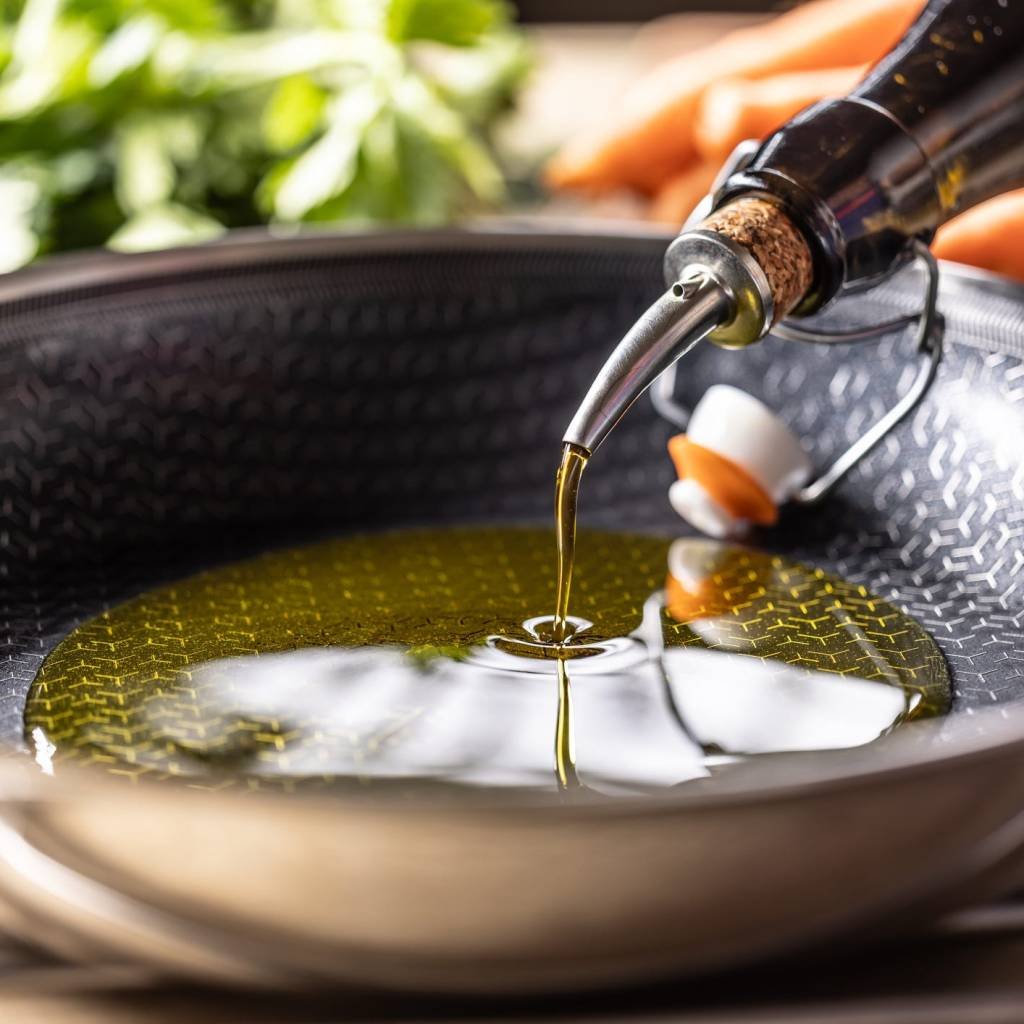
The Best Oil to Use for Everyday Cooking
The Best Oil to Use for Everyday Cooking (And When to Switch)
What’s the best oil to use for everyday cooking? For most home cooks, the answer is simple: keep two oils — a neutral high-heat oil (like avocado or refined olive oil) for cooking, and an extra-virgin olive oil for finishing and low-heat dishes. That covers 95% of everything you’ll ever cook. The cooking-oil aisle has gotten absurdly complicated, with a dozen options all claiming to be the healthiest. Let me cut through the marketing and tell you what actually matters.
Smoke Point: The Only Spec That Really Matters
An oil’s smoke point is the temperature where it starts breaking down and smoking — producing off flavors and potentially harmful compounds. Match the oil to the heat:
- High heat (searing, stir-frying, 400°F+): avocado oil (520°F), refined peanut oil (450°F), refined olive oil (465°F)
- Medium heat (sautéing, general cooking): regular olive oil, canola oil (400°F)
- Low/no heat (dressings, drizzling, dips): extra-virgin olive oil (375°F), toasted sesame oil, walnut oil
The biggest mistake home cooks make is using extra-virgin olive oil for high-heat searing. It smokes, tastes bitter, and wastes money — EVOO’s delicate flavors are destroyed by high heat anyway. Save it for where you can taste it.
The Two-Oil Kitchen (My Recommendation)
Oil #1: Avocado oil (or refined/light olive oil) for cooking
Avocado oil has the highest smoke point of common cooking oils, a neutral flavor, and a good fat profile. It’s pricier (~$10-14 for 500ml), so refined or “light” olive oil is a fine budget alternative at half the price. Canola is cheapest of all and perfectly fine for everyday cooking despite its reputation — the health concerns are overblown.
Oil #2: Extra-virgin olive oil for flavor
Use EVOO where you’ll taste it: salad dressings, drizzled over pasta, guacamole, bruschetta, finishing soups. Buy a decent one ($12-18) and store it away from heat and light — olive oil goes rancid, and old oil tastes flat. The Wikipedia overview of olive oil grades explains the labeling if the “light vs. extra-virgin” terminology confuses you.
What About Coconut Oil, Butter, and the Rest?
- Coconut oil: Fine for specific uses (curries, baking) but high in saturated fat — not an everyday all-purpose oil despite the hype.
- Butter: Unbeatable flavor for eggs, pancakes, and finishing. Low smoke point (300°F), so mix with oil for higher-heat cooking or use ghee/clarified butter (450°F).
- Toasted sesame oil: A finishing oil, not a cooking oil — a teaspoon transforms stir-fries and dressings.
- Vegetable/soybean oil: Cheap, neutral, fine for deep frying. Nothing wrong with it for everyday use.
Oils to Skip
Expensive “specialty” oils (grapeseed, safflower, sunflower) offer no real advantage for everyday cooking over cheaper options. And avoid reusing frying oil more than 2-3 times — it degrades and picks up off flavors. When oil smells off, looks cloudy, or foams when heated, it’s done.
Storage Matters More Than You Think
Heat, light, and air kill oil. Store bottles in a cool, dark cabinet — not next to the stove, no matter how convenient it looks. Most oils last 6-12 months opened; EVOO is best within 3-6 months of opening. Buy smaller bottles if you cook infrequently.
The Takeaway
Stop overthinking it: one neutral high-heat oil for cooking, one good extra-virgin olive oil for flavor. That’s the entire system. Match oil to heat, store it properly, and don’t waste expensive EVOO in a screaming-hot cast iron skillet — your wallet and your taste buds will both thank you.
Frequently Asked Questions
Is canola oil actually bad for you?
No — canola’s bad reputation is mostly internet mythology. It’s low in saturated fat, high in monounsaturated fat, and has a neutral flavor and decent smoke point, making it a perfectly fine everyday cooking oil. The concerns you see online (processing methods, omega-6 ratios) are overstated relative to the actual evidence; major health organizations consider it a healthy choice. That said, if the taste or the industrial processing bothers you, avocado or light olive oil are easy upgrades — just don’t believe canola is poison. It isn’t.
Can I reuse cooking oil, and how many times?
Yes, for shallow frying and sautéing — strain it through a fine mesh or coffee filter into a clean jar, refrigerate, and reuse 2-3 times. Discard when it darkens significantly, smells off, foams when heated, or smokes at lower temperatures than it used to. Never reuse oil that cooked fish for anything else (the flavor transfers permanently). Deep-frying oil degrades faster — 2-3 uses max. And never pour used oil down the drain; it solidifies and clogs pipes. Most cities have cooking-oil recycling drop-offs.
What’s the healthiest cooking oil overall?
Extra-virgin olive oil has the strongest evidence base — decades of Mediterranean diet research link it to heart health benefits. But “healthiest” depends on use: EVOO for dressings and low-heat cooking, avocado oil for high heat. The bigger picture matters more than the oil choice: the difference between olive and canola oil is trivial compared to the difference between home-cooked meals and ultra-processed food. Pick an oil you’re comfortable cooking with regularly; that’s the health win.
Why does my olive oil taste peppery or bitter?
That’s actually a sign of quality, not a flaw. The peppery throat catch in good extra-virgin olive oil comes from polyphenols — antioxidant compounds linked to health benefits. Fresh, high-quality EVOO should taste fruity, slightly bitter, and peppery. Flat, greasy, or flavorless olive oil is old or low-grade. If the pepperiness bothers you in delicate dishes, use a milder EVOO for those and save the robust peppery one for drizzling over hearty foods where it shines.
Should I buy organic or cold-pressed oils?
Cold-pressed (or expeller-pressed) matters for flavor oils like EVOO — heat extraction damages delicate flavors. For neutral cooking oils, pressing method barely affects the final product. Organic certification on oils is about farming practices, not cooking performance or safety; refined oils contain negligible pesticide residue regardless. Spend the premium on good EVOO where you’ll taste the difference; buy conventional for everyday neutral cooking oil.