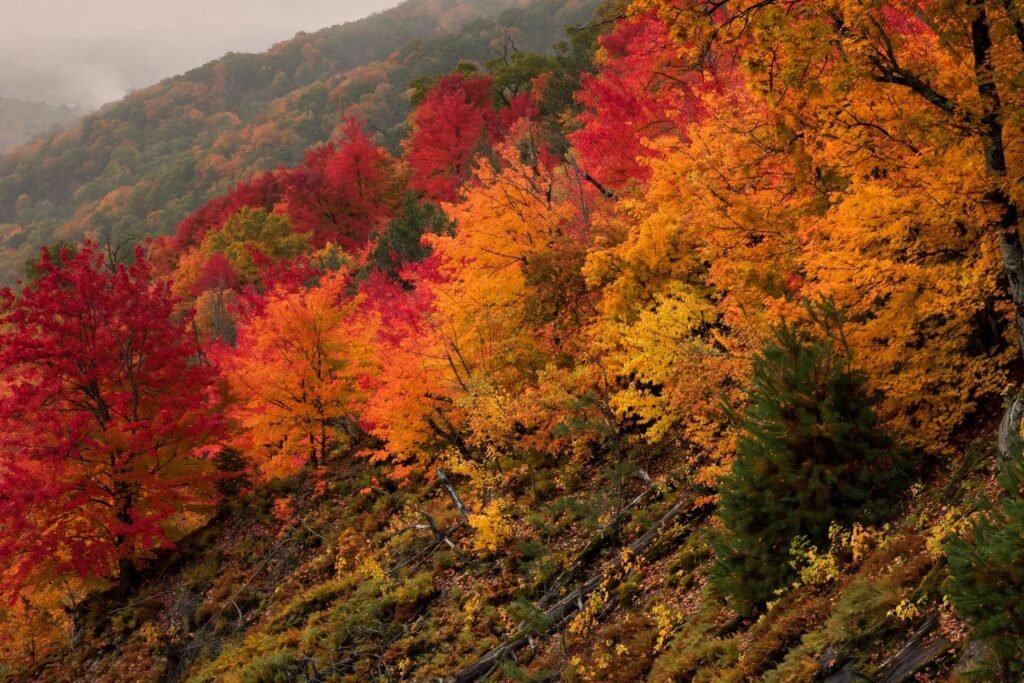
Why Do Leaves Change Color in Fall? The Real Science Explained
Every autumn, the forests of New England, the Great Lakes, and the Appalachians ignite in one of nature’s great spectacles — hillsides flaming red, gold, and orange against an impossible blue sky. “Leaf-peeping” season draws millions of tourists and billions of dollars. But the color was there all along, hidden. Fall color is not something leaves gain — it is something they reveal, when the green mask of chlorophyll finally comes off.
Why do leaves change color? The answer involves plant economics, a carefully orchestrated shutdown sequence, and an evolutionary mystery scientists still debate: why would a tree spend energy making new red pigment in a leaf it is about to throw away?
The Green Mask: Chlorophyll’s Dominance
All summer, leaves are green because of chlorophyll, the pigment that captures sunlight for photosynthesis. Chlorophyll is so abundant and so optically dominant that it masks everything else in the leaf. But leaves contain other pigments year-round: carotenoids (yellows, oranges — the same pigments in carrots and egg yolks) and, in some species, the precursors of anthocyanins (reds, purples).
Think of it as paint layers: chlorophyll is a thick coat of green over thinner coats of yellow and orange. As long as the tree keeps manufacturing chlorophyll, you see only green. Fall color begins the moment chlorophyll production stops and the existing chlorophyll degrades — unmasking the carotenoids that were there since spring.
The Shutdown Sequence: Abscission
The color change is driven by a deliberate, energy-intensive process called abscission — the tree dismantling its solar panels before winter. The triggers are shortening day length (the primary cue — temperature is secondary, which is why the timing is consistent year to year) and cooling temperatures.
The sequence: as nights lengthen, cells at the base of the leaf stem (the abscission zone) begin sealing the leaf off. Veins that carried water in and sugars out gradually close. Chlorophyll — expensive in nitrogen and magnesium — is broken down and its valuable components resorbed into the tree for winter storage. This nutrient salvage is the whole point of the exercise: a tree that simply dropped green leaves would hemorrhage the nitrogen it spent all summer accumulating.
As chlorophyll drains away, the carotenoids show through — the yellows of birch and aspen, the golds of hickory, the oranges of sugar maple (a carotenoid-anthocyanin blend). These colors are revealed, not made.
But the Reds Are Manufactured
Here is the twist: the brilliant reds and purples — the scarlets of red maple, the crimson of sumac and Virginia creeper — come from anthocyanins that the tree actively synthesizes in autumn, spending precious energy on pigment for a leaf it will discard within weeks. Yellow is unmasking; red is manufacturing. And that manufacturing demands an explanation.
The Great Red Mystery: Why Make Anthocyanins?
Scientists have debated this for over a century, and several hypotheses compete:
The sunscreen hypothesis (currently leading). As chlorophyll breaks down, the leaf’s photosynthetic machinery becomes vulnerable to light damage — and damaged machinery cannot complete the nutrient salvage the whole shutdown is for. Anthocyanins act as sunscreen, shading the leaf while it finishes resorbing nitrogen. Supporting evidence: red leaves appear most in bright, cool autumns; shaded leaves on the same tree often stay yellow. The tree is protecting its salvage operation.
The antioxidant hypothesis. Related: anthocyanins mop up free radicals generated during chlorophyll breakdown, again protecting the nutrient-recovery process.
The coevolution/signaling hypothesis. More speculative: bright red signals to insects (like aphids seeking overwintering sites) that the tree is vigorous and well-defended — honest advertising of chemical defenses. Intriguing, with some supporting data, but not settled.
The frost-protection hypothesis. Anthocyanins may lower the leaf’s freezing point slightly, buying time to complete nutrient resorption before hard freezes.
The honest answer: probably a combination, with photoprotection leading. It is a reminder that even the most familiar natural spectacle can harbor a genuine scientific mystery.
Why Some Years Are Spectacular (and Some Are Dull)
Fall color quality is weather-driven, and the recipe for a brilliant year is specific: a warm, wet spring (healthy leaves), a good summer (not drought-stressed), and then warm sunny days with cool (not freezing) nights in early fall. Sun drives anthocyanin production; cool nights trap sugars in the leaf, fueling red pigment synthesis.
What ruins it: early hard freezes (kill leaves before color develops), prolonged drought (leaves drop brown and early), warm cloudy falls (less anthocyanin, muted reds), and strong windstorms at peak (strip the canopy overnight). Climate change is already shifting the show — peak color is trending later, drought stress is dulling some years, and the reliable brilliance of past decades is becoming less reliable. If you are planning a leaf-peeping trip, the same eye for seasonal change applies closer to home — even seasonal hair shedding follows the light-cycle cues that drive fall color.
Why Evergreens Don’t Bother
Conifers keep their needles through winter using a different strategy: needle-shaped leaves with thick waxy cuticles, antifreeze-like chemistry, and a photosynthetic system that can idle through cold. They pay for this with slower growth — the deciduous strategy (big cheap leaves, discarded yearly) photosynthesizes faster in summer. Two solutions to winter, both successful, which is why mixed forests show both.
Where and When: The Color Wave
Peak color sweeps southward and downward in elevation as fall progresses: northern New England and the Upper Midwest peak late September to early October; the mid-Atlantic and lower Midwest mid-to-late October; the southern Appalachians late October into November. Elevation mimics latitude — mountain peaks color weeks before valleys. State tourism sites and the Smoky Mountains’ fall color reports track the wave in real time.
For the home landscape, fall color is a planting choice: sugar and red maples, sweetgum, black tupelo, and sumac for reds; aspens, birches, and hickories for golds. Our guide to improving curb appeal on a budget covers siting these for maximum autumn impact.
The Smithsonian (si.edu) and the U.S. Forest Service (fs.usda.gov) both publish excellent fall-color science explainers and peak-prediction resources.
Conclusion
Leaves change color because trees shut down photosynthesis for winter: shortening days trigger abscission, chlorophyll is dismantled and its nutrients salvaged, and the unmasking reveals yellow carotenoids — while many species actively manufacture red anthocyanins, likely as sunscreen protecting the salvage operation. The spectacle is plant economics made visible: a tree reclaiming its investment before the snow, painted in the chemistry of the retreat.
Frequently Asked Questions
Why do leaves turn red in fall?
Red comes from anthocyanins, pigments the tree actively manufactures in autumn — unlike yellows, which are merely revealed when chlorophyll degrades. The leading theory: anthocyanins act as sunscreen, protecting the leaf while it finishes resorbing nutrients before dropping.
What triggers fall color change?
Shortening day length is the primary trigger; temperature is secondary. Cool (not freezing) nights and sunny days produce the brightest colors by trapping sugars that fuel red pigment synthesis.
Why are some fall seasons more colorful than others?
Warm sunny days + cool nights = brilliant reds. Drought, early hard freezes, prolonged warmth, or windstorms at peak all dull or destroy the display. The best years follow a healthy growing season and a crisp, bright autumn.
Why don’t evergreen trees change color?
Conifers use a different winter strategy: waxy, antifreeze-protected needles that photosynthesize (slowly) year-round. They keep their foliage instead of the deciduous strategy of building disposable leaves each spring.
When is peak fall color?
It sweeps south and downhill: northern New England/Upper Midwest late Sept-early Oct; mid-Atlantic/lower Midwest mid-late Oct; southern Appalachians late Oct-Nov. Elevation mimics latitude — peaks color weeks before valleys.