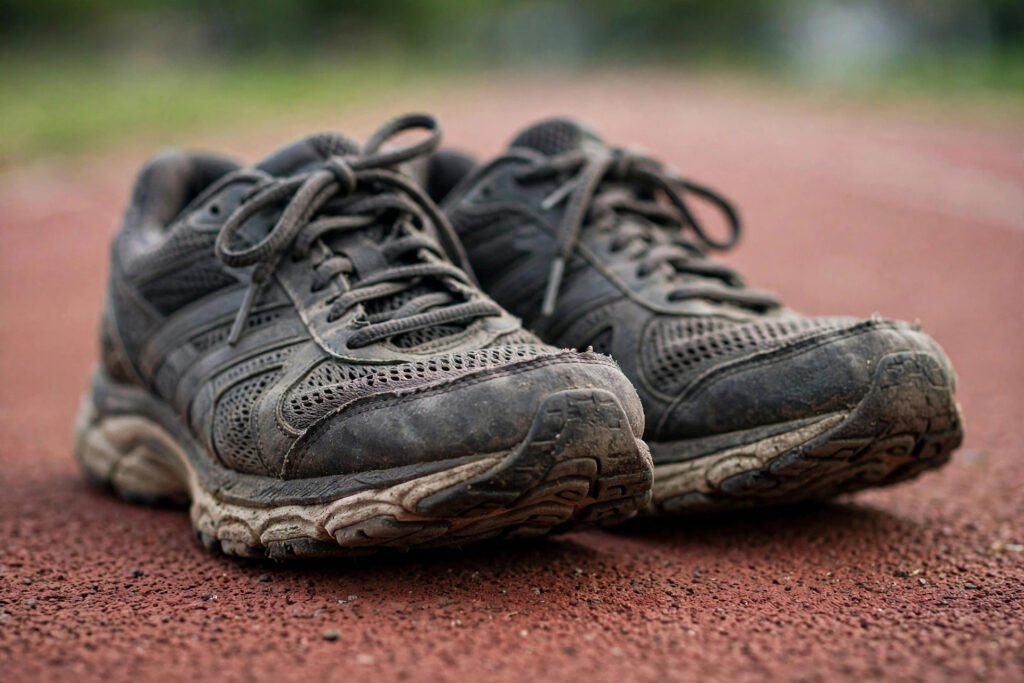
When Should You Replace Running Shoes by Mileage?
Running shoes die quietly. There is no dramatic blowout, no warning light — just a slow fade in cushioning that your knees notice before your eyes do. Most runners replace their shoes either too early (wasting money) or far too late (collecting injuries). The mileage rule everyone quotes — 300 to 500 miles — is a decent starting point, but the real answer depends on your body, your shoes, and how you run.
This guide explains when to replace running shoes by mileage, the physical signs that matter more than the odometer, and how to get the most life out of every pair without getting hurt.
The 300-to-500-Mile Rule: What It Really Means
The widely cited guidance from shoe manufacturers and sports medicine is that running shoes last 300 to 500 miles (roughly 500 to 800 kilometers). That range exists because lifespan varies enormously. A 140-pound efficient runner in a durable daily trainer on soft trails might get 550 miles; a 210-pound heel-striker pounding concrete in a lightweight racing shoe might be done at 250.
Think of 300 miles as “start paying attention” and 500 as “you are on borrowed time.” The American Podiatric Medical Association and running medicine specialists consistently tie worn-out shoes to increased injury risk — shin splints, plantar fasciitis, IT band issues, and stress reactions all show up more often in dead shoes. The midsole foam (usually EVA or newer supercritical foams) compresses with every footstrike and stops rebounding long before the outsole looks worn.
Signs Your Shoes Are Done (Mileage Aside)
The press test: press your thumb firmly into the midsole. Fresh foam springs back; dead foam stays dented and feels hard. Uneven wear: set the shoes on a flat table — if they rock or tilt, the midsole has compressed asymmetrically, which subtly changes your gait. New aches: the classic signal. If your shins, knees, or arches start complaining on runs that used to feel fine, and nothing else changed, suspect the shoes. Wrinkled midsole: deep horizontal creases in the foam, especially at the heel and forefoot flex points, indicate breakdown. Tread: worn smooth in patches means lost traction, though tread often outlasts cushioning — do not use good tread as proof of life.
Keep a simple log. Most running apps and watches track shoe mileage automatically if you tag your shoes — set a reminder at 300 miles to start the press test weekly. If you are managing any joint sensitivity, pairing fresh shoes with low-impact exercises that protect your knees on cross-training days extends your running longevity considerably.
What Affects Shoe Lifespan
Your body and gait
Heavier runners compress foam faster — that is physics, not judgment. Heel strikers wear the rear outsole and heel cushioning; forefoot strikers wear the front. Overpronators break down the medial (inner) edge. None of these are “wrong,” but they all shorten life versus a light, neutral runner.
The shoe itself
Maximalist trainers with thick foam stacks often feel dead before they look it — all that foam compresses. Lightweight racers and tempo shoes sacrifice durability for weight; expect 200–300 miles. Trail shoes with rock plates and rugged outsoles often outlast road shoes. Carbon-plated super shoes are a special case: the plate lasts, but the foam dies around 200–300 miles, and they are too expensive to run into the ground — retire them from racing to training duty, then out.
Surface and rotation
Concrete is the harshest surface; treadmills and tracks are gentlest. Heat and UV degrade foam, so do not leave shoes in a hot car. And rotation is the single best lifespan hack: alternating two pairs lets the foam fully rebound between runs (foam needs ~24–48 hours to recover), effectively extending each pair’s life. Two pairs rotated will outlast two pairs run consecutively. Never machine-wash or tumble-dry running shoes — heat breaks down foam and adhesives faster than miles do. Remove the insoles, stuff with newspaper, and air-dry away from direct heat.
The Smart Replacement Strategy
Do not run a pair to zero and then scramble. The pro move is overlapping: when your current pair hits ~300–350 miles, buy the replacement and rotate the new pair in for shorter runs while the old pair finishes its life on easy miles. This also gives you a transition period — even the same model changes slightly year to year, and your feet appreciate the gradual break-in.
Buy your next pair before you need it, ideally when you find your model on sale. Running shoe models update annually, and last year’s version is often 30–40% off when the new one drops — the changes are usually cosmetic. Stock up on a model you love; runners’ grief when a beloved model is discontinued is real and well-documented. Track two pairs at once. Serious runners often keep a daily trainer in rotation alongside a lighter tempo shoe. Log miles separately for each — most apps support multiple shoes — and you will quickly learn which models last longest for your gait. The data also settles the endless debate about whether expensive shoes outlast cheap ones: for most runners, mid-range daily trainers deliver the best dollars-per-mile in the sport. Fueling all those miles matters too — dialing in what to eat before a morning workout keeps your training consistent enough that shoe mileage actually accumulates.
What About the Old Pair?
Retired running shoes still have life as walking, gym, or yard-work shoes — the cushioning demands are far lower. Many running stores have recycling bins (Nike’s Reuse-A-Shoe program grinds old shoes into playground surfaces), and donation programs put wearable pairs on feet that need them. Just do not demote them back to running duty; the “they feel fine for walking” test is exactly why people get hurt resuming running in them.
The Bottom Line
Replace running shoes every 300 to 500 miles, start checking at 300, and trust physical signs — the press test, uneven wear, and new aches — over the calendar. Rotate two pairs, buy on sale before you are desperate, and retire racers early. Your knees will never send a thank-you note, but the absence of injury is the message. The Mayo Clinic and Runner’s World both maintain excellent shoe-care resources if you want to go deeper on the biomechanics.
Frequently Asked Questions
How many miles do running shoes last?
Most running shoes last 300 to 500 miles. Lighter runners on soft surfaces may reach 500+; heavier runners, heel strikers, and lightweight racing shoes may be done closer to 250–300.
Can I run in shoes with worn tread?
Worn tread mainly affects traction, but tread usually outlasts the midsole cushioning — the invisible killer. Shoes can look fine and still be dead inside. Use the press test and watch for new aches rather than judging by appearance.
Do expensive running shoes last longer?
Not necessarily. Price correlates with technology and weight savings more than durability. A $180 daily trainer and a $130 one from the same brand often have similar lifespans; super shoes are actually shorter-lived despite premium prices.
How long do running shoes last in years?
Foam degrades even unworn — shoes sitting in a closet lose cushioning over 1–2 years as the materials oxidize. Do not stockpile more than you will run within about a year.