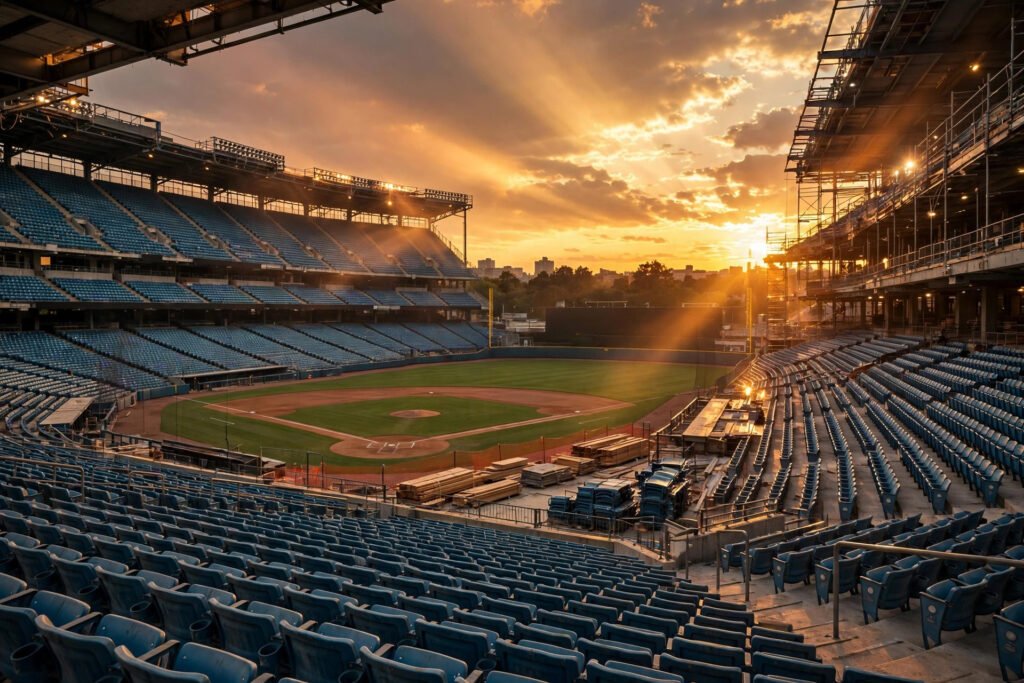
White Sox Rebuild Timeline: When Will They Contend?
The Chicago White Sox have tested their fans’ loyalty like few franchises in modern sports. After the failed contention window of the early 2020s collapsed into a historically bad 2024 season — 121 losses, the most in modern MLB history — the organization tore it down to the studs. Now South Siders ask the only question that matters: when will this team actually contend again?
This article maps the White Sox rebuild timeline honestly — where the farm system stands, the prospects who matter, the front office’s approach, comparable rebuild timelines around MLB, and realistic scenarios for when contention returns to Guaranteed Rate Field. No false hope, no doom-mongering — just the rebuild math.
Where Things Stand: The State of the Rebuild
The teardown was thorough. The White Sox traded away nearly every veteran asset of value — Dylan Cease, and others — restocking a farm system that had been among baseball’s thinnest. By 2025-2026, the system had climbed into the middle tier of MLB farm rankings, headlined by a new core of young talent acquired through trades and high draft picks (losing 120+ games delivers premium draft position, the one consolation).
The 40-man roster in 2026 skews extremely young: a rotation led by developing arms, a lineup with more potential than production, and payroll flexibility that is either an opportunity (spending when the window opens) or an indictment (ownership pocketing revenue-sharing money), depending on your level of South Side cynicism. The front office, restructured after the collapse, talks about sustainable contention built on player development — the right words; the execution is the entire question.
Key context: this is a full teardown rebuild, not a retool. Those take longer but produce more sustainable winners if the drafting and development are competent. The White Sox official site tracks the roster and prospects, and ESPN’s MLB coverage provides independent farm-system evaluations.
The Prospects Who Determine the Timeline
Rebuild timelines are prospect timelines. The White Sox’s contention date depends on 4-6 key young players becoming above-average major leaguers — the hit rate on top prospects is roughly 50-60%, so depth matters as much as headliners. Watch for:
The ETA wave (2026-2027): the first wave of acquired and drafted talent reaching the majors. These players’ rookie performances set the trajectory — a wave that produces two solid regulars accelerates everything; a wave that busts delays it years.
The second wave (2027-2028): younger high-upside prospects, often the highest-ceiling talents, arriving as the first wave enters its prime. Championship rebuilds (the Astros, Cubs models) feature two overlapping waves — the first establishes competence, the second provides stardom.
What to watch in the minors: not just stats but adjustments — prospects who struggle after promotion and adapt are the ones who stick. Strikeout-to-walk ratios for hitters, strikeout rates and command for pitchers. A prospect dominating Triple-A at 22 is a contention building block; one repeating Double-A at 24 is organizational depth.
Comparable Rebuilds: How Long Does This Take?
Recent MLB history gives us the template. The fast rebuild (3-4 years): the 2016 Cubs model — elite core prospects arriving together, supplemented by smart free-agent spending at the right moment. Requires hitting on multiple top picks and ownership spending when the window opens. The standard rebuild (4-6 years): most successful teardowns — Astros (2011-2015 teardown to 2015 contention), Braves (2014-2018). Patient development, one big spending wave. The failed rebuild (7+ years / indefinite): when drafting busts, development stalls, or ownership will not spend — the Orioles’ wilderness years, the Pirates’ perpetual cycle.
For the White Sox, the clock roughly started with the teardown (2024). The optimistic timeline: contention in 2028-2029 — first wave establishes a .500 team by 2027, second wave plus targeted free-agent spending pushes into contention. The realistic timeline: 2029-2030 — allowing for normal prospect attrition and a deliberate spending ramp. The pessimistic timeline: 2031+ — if the farm’s top talents bust or ownership treats the team as a revenue stream rather than a contender.
The variable that matters most is not prospects — it is ownership spending at the inflection point. Every successful rebuild in modern MLB history includes a moment where the team spends aggressively to supplement the young core. White Sox history on this front is… checkered, which is why South Side skepticism is rational.
What Contention Will Actually Look Like
Do not expect a linear rise. Rebuilds go: terrible → frisky-but-flawed (.500-ish, exciting young players, maddening inconsistency) → genuine contention. The “frisky” phase — likely 2027-2028 — is actually the most fun: low expectations, breakout performances, meaningful September games for the first time in years.
Signs the rebuild is working: top prospects graduating and sticking (not just debuting), the team winning 75-80 games with a young roster, targeted mid-tier free-agent signings (the “we are trying” signal), and payroll rising from the bottom third toward league average. Warning signs: top prospects stalling in Triple-A, the team cycling through managers, payroll staying bottom-five deep into the supposed window, and the farm system ranking declining as prospects graduate without replacements.
What fans should do now: follow the prospects (minor-league baseball is genuinely entertaining and cheap), enjoy the no-pressure development years, and judge the front office on process (drafting, development, timely spending) rather than major-league wins — wins are a lagging indicator in rebuilds. And for the ballpark experience itself, knowing family entertainment costs helps budget the season — rebuilding years mean cheaper tickets, the small consolation. When the team is good again, navigating resale markets becomes relevant for playoff tickets.
Conclusion
The White Sox rebuild timeline points to realistic contention in 2029-2030 — 2028 in the optimistic case where prospects hit and ownership spends, 2031+ if either fails. The teardown was necessary and the farm system is improved, but rebuilds are won in player development and the eventual spending wave, not in teardown trades. Watch the prospects, watch the payroll, and enjoy the frisky phase when it arrives — South Side patience has been tested enough to deserve the payoff.
Frequently Asked Questions
When will the White Sox be good again?
Realistic contention timeline is 2029-2030, with 2028 possible if top prospects develop quickly and ownership spends at the right time. The teardown began in 2024, and full rebuilds typically take 5-6 years.
How bad were the 2024 White Sox?
Historically bad — 121 losses, the most in modern MLB history (since 1901), surpassing the 1962 Mets’ 120. It was the catalyst for the full organizational teardown.
Who are the White Sox’s top prospects?
The system’s headliners are the young talents acquired in the teardown trades plus recent high draft picks. Check current MLB Pipeline or Baseball America rankings for the latest names, as prospect lists change yearly with graduations and trades.
What is a realistic win total for the White Sox in 2026-2027?
Expect gradual improvement from the historic lows — the 70-80 win range with a young roster would signal healthy rebuild progress. Wins are a lagging indicator; prospect development matters more at this stage.
Do the White Sox spend money in free agency?
Historically, the franchise has been mid-to-low in payroll, which is the great uncertainty in the rebuild timeline. Every successful modern rebuild included an aggressive spending phase to supplement the young core — whether ownership does this will determine the ceiling.