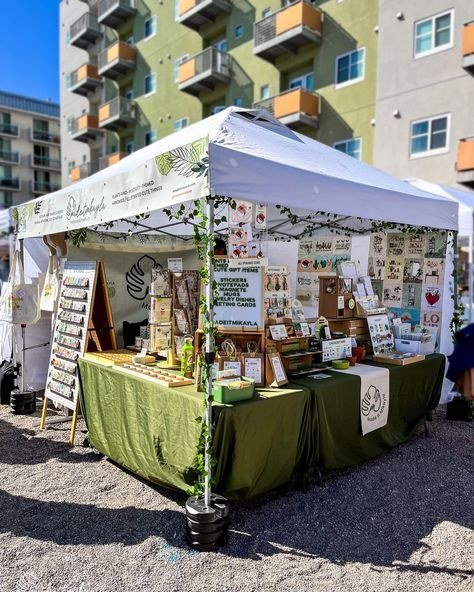
What is the best way to accept payments at a craft fair
Craft fair day. Your booth looks amazing. A customer wants your $45 ceramic mug — and pulls out a card. You only take cash. They walk away. That sale evaporated over a 2.9% fee. So what is the best way to accept payments at a craft fair? The answer has gotten both simpler and more competitive.
The Best Way to Accept Payments at a Craft Fair: The Short List
Square: The Default Choice
Square remains the best all-around option for craft vendors. Free magstripe reader (or $49 contactless + chip reader), 2.6% + $0.10 per tap/dip/swipe, no monthly fee, deposits in 1–2 days. It handles cards, Apple Pay, Google Pay, and even Afterpay. The free POS app tracks inventory and sales — genuinely useful for knowing what sold. For most craft fair sellers, start here and stop researching.
Strong Alternatives
- Stripe Terminal: 2.7% + $0.05, better if you already sell online with Stripe and want unified reporting.
- PayPal Zettle: 2.29% + $0.09 — slightly cheaper than Square, integrates with PayPal.
- Shopify POS: best if your online store is Shopify; the Go reader is cheap and inventory syncs perfectly.
- Cash App / Venmo business: 1.9–2.9% fees, popular with younger buyers. Worth offering as an option, not a primary.
Don’t Forget Cash (Seriously)
About 20–30% of craft fair sales are still cash. Bring a lockbox, $100 in small bills and coins for change, and price with tax included (round numbers: $20, not $19.47) to keep the line moving. Price for the fee: if card fees average 2.7%, either bake it into prices or set a $10 card minimum. Most vendors just bake it in — simpler.
The Craft Fair Payment Setup Checklist
- Reader + backup: bring the card reader and have manual card entry enabled in the app as backup (higher fee ~3.5%, but a sale saved).
- Power: a fully charged phone plus a portable battery pack. Dead phone = no sales.
- Connectivity: most fairs have Wi-Fi, but it’s unreliable. Enable offline mode in Square (accepts payments without signal, processes when reconnected) — and know the risk limits.
- Signage: a small sign listing accepted payments (cards, Apple Pay, Venmo, cash) prevents the “do you take cards?” hesitation at every transaction.
- Receipts: offer text/email receipts — they double as a mailing list signup. “Can I text your receipt?” builds your customer list for the next fair.
- Sales tax: know whether your state requires collecting sales tax on handmade goods (most do) and whether the fair provides a temporary seller’s permit.
Pricing for the Fair Environment
Craft fair shoppers are primed to buy but price-sensitive. Round pricing wins: $15, $25, $40. Bundle deals move volume: “3 for $40” outsells three $15 items separately. Have a clear bestseller at an impulse price point ($10–$20) — it funds the booth fee while big pieces find buyers. Speaking of pricing psychology, our service pricing guide covers the tactics that work across any small business.
After the Fair: The Money Part
Reconcile same-day: total sales, fees, cash vs. card split. Transfer card payouts to your business account (not personal — see our freelancer finance guide on separating money). Log mileage and booth fees as deductions. And email your new list within a week: “Thanks for visiting my booth — here’s 10% off my online shop.” The fair’s real profit is often the repeat customers, which is why having your own online store matters as the follow-up channel.
Craft Fair Payments: Frequently Asked Questions
What if the fair has no Wi-Fi or cell signal?
Enable offline mode in your payment app before you go — Square’s offline mode processes card payments without a connection and syncs when you’re back online. Know the limits: offline transactions have caps and slightly higher risk (a declined card won’t be caught until sync). For truly remote fairs, lean heavier on cash and make your offline cap known. A portable hotspot as backup is a $50 investment that has saved many vendors’ days.
Should I charge extra for credit card payments?
Surcharging is legal in most states now (with disclosure rules), but at craft fairs it’s usually bad strategy — it creates friction at exactly the moment someone’s deciding to buy. Better: bake the ~2.7% fee into your prices across the board. Cash buyers effectively subsidize card buyers slightly, but the simplicity and higher conversion are worth far more than the recovered fees. The SBA’s pricing resources cover how small sellers build fees into sustainable pricing.
How do I handle sales tax at craft fairs?
Most states require collecting sales tax on handmade goods sold at fairs. Many fairs provide a temporary seller’s permit or operate under the organizer’s. Ask the organizer before the event: “Do I need my own temporary permit, or am I covered under yours?” Price with tax included (round numbers) to keep lines moving, and track what you collect — you’ll remit it with your regular filings.
What’s the cheapest card reader setup that actually works?
Square’s free magstripe reader technically works, but in 2026 you want the $49 contactless + chip reader — customers expect tap-to-pay, and chip transactions have better fraud protection. Total startup cost under $50 with no monthly fee. That’s the entire investment. Don’t overthink this; pick Square or Zettle and spend your energy on your products instead.
How do I turn fair customers into repeat buyers?
The receipt trick: offer text or email receipts through your payment app, which quietly builds your customer list. Follow up within a week with a thank-you and a small discount for your online shop. Include a business card with every purchase (with your website and Instagram). The fair’s real profit isn’t Saturday’s sales — it’s the 20% of buyers who become year-round customers.
The Bottom Line on Craft Fair Payments
What’s the best way to accept payments at a craft fair? Square (or Zettle) for cards and mobile wallets, plus a cash box with change — with offline mode enabled, a battery pack in your bag, and tax-included round pricing. The setup costs under $50 and takes an afternoon. Every card you can’t accept is a sale walking to the next booth — in 2026, “cash only” is a business decision to earn less. Set it up before the fair, not at it.
Pingback: Facebook Ads for Local Business: Worth It?