Best Grass Seed for Ohio Lawns (2026 Guide)
Ohio lawns live a hard life: humid summers that cook cool-season grasses, winters that bury them in snow and salt, clay soils that compact like concrete, and the occasional grub invasion for excitement. The grass seed that thrives in Georgia will die an ugly death in Columbus by August. Choosing the right seed for Ohio’s climate — and your specific yard conditions — is the difference between a lawn you mow and a lawn you fight.
This guide breaks down the best grass seed for Ohio lawns in 2026 — the top-performing grass types for our transition-zone climate, the best seed blends for sun, shade, and high-traffic yards, when and how to seed for success, and the mistakes that waste money every fall.
Ohio’s Climate: Why Grass Type Matters
Ohio sits in the transition zone — too hot for northern grasses to thrive effortlessly in summer, too cold for southern grasses to survive winter. This eliminates entire categories: warm-season grasses (Bermuda, zoysia) winter-kill unreliably, while pure cool-season lawns stress in July and August heat.
The answer is cool-season grasses selected for heat and disease tolerance, with turf-type tall fescue leading the pack. Ohio State’s turfgrass research consistently ranks tall fescue as the most adaptable grass for Ohio homeowners — deep roots (2-3 feet) that survive drought and heat, good wear tolerance, and solid performance in our clay soils. Ohio State University Extension’s turfgrass resources publish variety trial results specific to Ohio conditions.
The Top Grass Types for Ohio, Ranked
1. Turf-type tall fescue — the best all-around choice. Modern turf-type varieties (not the coarse old K-31 pasture grass) are fine-bladed, dark green, drought-tolerant, and disease-resistant. Best for: full sun to partial shade, average soils, busy homeowners who want a good lawn without obsession. Look for blends with named elite varieties rather than generic “tall fescue.”
2. Kentucky bluegrass — the beauty queen. Unmatched color and density, self-repairing via rhizomes, the classic lawn look. But: thirstier, more disease-prone in Ohio humidity, and slower to establish. Best for: irrigated lawns, homeowners who fertilize on schedule, sunny areas. Often blended with perennial ryegrass for faster establishment.
3. Perennial ryegrass — the fast fix. Germinates in 5-10 days (versus 14-21 for bluegrass/fescue), excellent wear tolerance — it is the backbone of sports fields. But it is the least heat-tolerant and does not spread to repair damage. Best for: overseeding, high-traffic areas, and blends (10-20% of a mix for quick cover while slower grasses establish).
4. Fine fescues (creeping red, chewings, hard fescue) — the shade and low-input specialists. The only grasses that truly thrive in dry shade under Ohio trees, and excellent for low-maintenance, low-fertilizer lawns. Best for: shady areas, naturalized lawns, homeowners who hate fertilizing. Do not use in high-traffic sunny areas — they wear poorly.
Best Seed Blends by Yard Situation
Sunny average yard: 80-90% turf-type tall fescue + 10-20% Kentucky bluegrass. The fescue provides toughness; the bluegrass adds density and self-repair. This is the default recommendation for most Ohio homes.
Shady yard (under trees): Fine fescue blend (creeping red + chewings + hard fescue), possibly with shade-tolerant tall fescue. Accept that deep shade (under 4 hours of filtered light) will not support any grass well — consider mulch beds or groundcover there instead.
High-traffic (kids, dogs): Turf-type tall fescue with a higher percentage of perennial ryegrass (up to 30%) for wear recovery. Plan on annual overseeding — traffic damage is maintenance, not failure.
New lawn from scratch: The sunny blend above, seeded at the correct rate (tall fescue: 6-8 lbs per 1,000 sq ft for new lawns). Buy quality seed — look for 0% weed seed on the label and named varieties. Cheap seed with weed contamination creates years of regret; the price difference is a few dollars per bag.
When and How to Seed in Ohio
Timing: early fall is king. Seed between mid-August and mid-September in Ohio — warm soil for fast germination, cooling air that reduces stress, fall rains, and minimal weed competition. Spring seeding (April-May) is the distant second choice; summer seeding is nearly pointless.
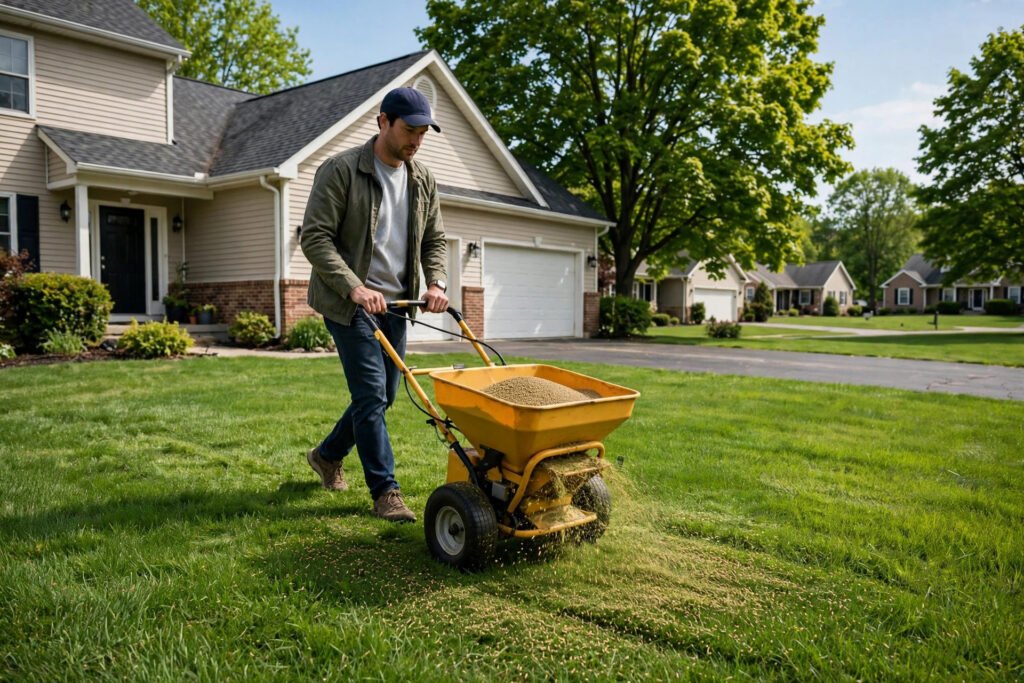
For overseeding existing lawns: mow short, dethatch or aerate (core aeration is the single best thing you can do for Ohio clay — rent an aerator every fall), spread seed at half the new-lawn rate, top-dress lightly with compost or peat moss, and water consistently — light watering 2-3 times daily until germination, then deeper and less frequent. Seed that dries out during germination dies; inconsistent watering is the #1 seeding failure.
For bare spots: loosen the soil, mix seed with compost, press firmly for seed-to-soil contact (a lawn roller or even foot traffic works), cover lightly with straw (not hay — hay contains weed seeds), and water religiously for 3 weeks.
Fertilizing new seed: use a starter fertilizer at seeding (high phosphorus for root development), then follow Ohio State’s recommended fall fertilization schedule — Labor Day and Thanksgiving applications do more for Ohio lawns than all spring fertilizing combined.
Mistakes That Waste Your Seed Money
Seeding in spring without a plan: spring seedlings face summer heat before establishing roots, plus crabgrass competition. If you must seed in spring, apply crabgrass preventer carefully — most preventers also block grass seed germination for 8-12 weeks (use siduron-based products if seeding simultaneously).
Wrong seed for the conditions: planting sun-loving bluegrass in deep shade, or fine fescue in a sunny soccer field, guarantees failure regardless of effort. Match the grass to the site.
Seeding over compacted clay without aerating: seed sitting on concrete-hard clay cannot root. Aerate first, always.
Underwatering after seeding: the most common failure. Set a timer, enlist family members, do whatever it takes — germination requires consistently moist (not flooded) seed beds for 2-3 weeks.
Homeowners investing in their yards should also budget for fencing costs if needed — and if you are pricing out lawn care services versus DIY, lawn mowing rates help you decide whether to outsource the maintenance.
For product-specific guidance, Scotts’ lawn care resources include spreader settings and timing calculators for their seed blends — useful even if you buy a different brand, since the application principles transfer. Whatever seed you choose, keep the bag tag: it lists the exact varieties and germination rates, which helps you troubleshoot if establishment is uneven.
Conclusion
The best grass seed for most Ohio lawns is a turf-type tall fescue blend (with some Kentucky bluegrass for sunny yards, fine fescues for shade), planted in early fall into aerated soil, watered consistently through germination, and fed on a fall schedule. Buy quality seed with 0% weed seed, match the grass to your conditions, and respect the fall timing window. Ohio’s climate is demanding, but the right seed in the right season makes a great lawn almost inevitable.
Frequently Asked Questions
What is the best grass seed for Ohio?
Turf-type tall fescue is the best all-around choice for Ohio’s transition-zone climate — heat-tolerant, drought-tolerant, and adaptable to clay soils. Blend with Kentucky bluegrass for sunny lawns or fine fescues for shade.
When should I plant grass seed in Ohio?
Early fall (mid-August to mid-September) is ideal — warm soil, cool air, fall rain, and little weed competition. Spring is a distant second; avoid summer seeding.
Can I grow Kentucky bluegrass in Ohio?
Yes, but it needs more water and fertilizer than tall fescue and struggles in Ohio’s summer heat and humidity without irrigation. It works best blended with fescue rather than as a monostand.
How long does grass seed take to germinate in Ohio?
Perennial ryegrass: 5-10 days. Tall fescue: 7-14 days. Kentucky bluegrass: 14-21+ days. Fine fescues: 7-14 days. Cool fall soil slows everything slightly versus late summer.
Should I aerate before overseeding in Ohio?
Yes — core aeration is the single most impactful step for Ohio’s clay soils. It relieves compaction, improves seed-to-soil contact, and dramatically improves germination and establishment.