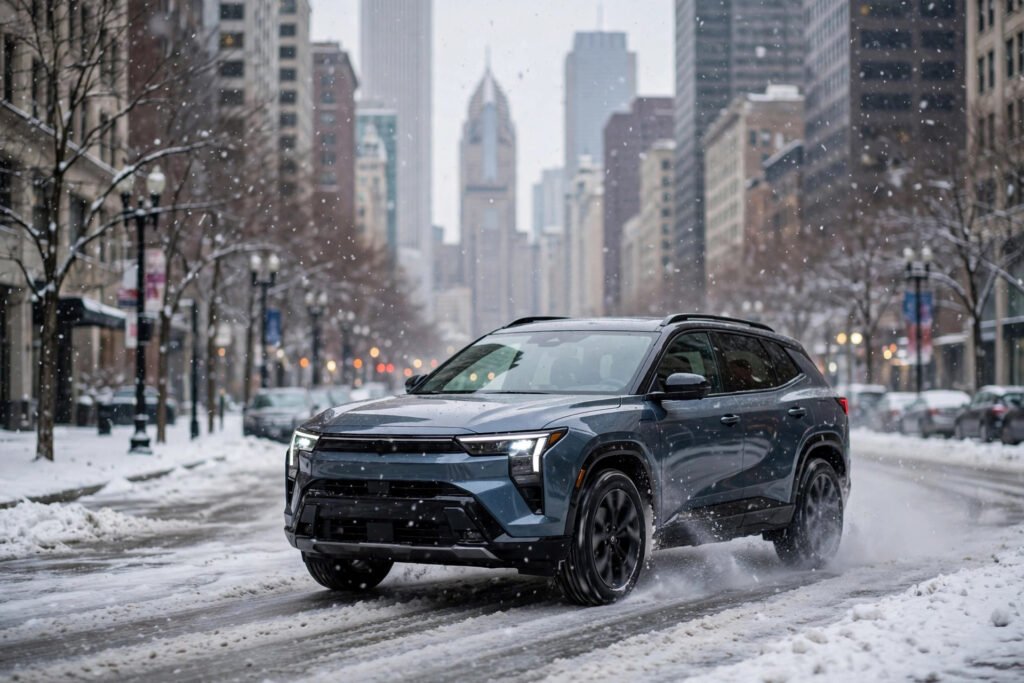
Best AWD SUVs for Snowy Chicago Roads in 2026
Chicago winters do not forgive the wrong vehicle. Lake-effect snow, flash freezes on the Kennedy, unplowed side streets in February — the city demands real winter capability, not marketing badges. All-wheel drive helps enormously, but not all AWD systems are equal, and the “best” SUV for Chicago depends on whether you are commuting from Naperville, street-parking in Logan Square, or hauling kids to hockey practice in a blizzard.
This 2026 guide ranks the best AWD SUVs for snowy Chicago roads across budgets — from affordable crossovers to three-row family haulers — and explains what actually matters for winter driving beyond the AWD label. Because the tires, the ground clearance, and the driver matter as much as the drivetrain.
What Actually Matters for Chicago Winter Driving
First, a truth the commercials skip: AWD helps you go; it does not help you stop. Every SUV has four-wheel braking. On ice, the vehicle with proper winter tires and a careful driver will outperform an AWD SUV on all-seasons driven aggressively — every time. Budget $800-$1,200 for a set of dedicated winter tires on steel wheels; it is the single best winter safety investment you can make, more impactful than any AWD system upgrade.
Beyond tires, prioritize: ground clearance (8+ inches for unplowed streets and alley parking), a full-time AWD system with a real center differential or predictive torque vectoring (not a reactive system that only engages the rear wheels after the fronts slip), heated everything (seats, steering wheel, mirrors — Chicago necessities, not luxuries), and remote start for those -10°F mornings. Check NHTSA safety ratings and EPA fuel economy data before shortlisting.
Best Affordable AWD SUVs (Under $35,000)
Subaru Forester: The default answer for a reason. Standard full-time AWD on every trim, 8.7 inches of ground clearance, excellent visibility, and X-Mode for deep snow. It is not exciting, but Chicago winters are not the time for excitement. Reliability is strong and resale values hold.
Mazda CX-5: The driver’s choice in the class. Its predictive AWD system sends torque rearward before slip occurs, and the chassis feels a class above its price. Slightly less cargo space than rivals, but the best blend of winter competence and daily enjoyment under $35,000.
Honda CR-V AWD: The rational pick — cavernous interior, strong reliability record, and a refined hybrid option that sips fuel in stop-and-go winter traffic. The AWD system is reactive rather than proactive, so winter tires are especially recommended.
Toyota RAV4 AWD: Available with a genuinely capable torque-vectoring AWD system on Adventure and TRD trims. Bulletproof reliability and strong resale, though the ride is firmer and the interior less premium than the Mazda.
Best Midsize and Three-Row AWD SUVs ($35,000-$55,000)
Subaru Outback / Outback Wilderness: The Wilderness trim’s 9.5 inches of clearance and retuned AWD make it arguably the most capable winter vehicle in the mainstream segment — a wagon that embarrasses many “real” SUVs in deep snow. Ideal for Chicago families who ski in Wisconsin or Michigan.
Kia Telluride / Hyundai Palisade AWD: The three-row value kings. Both offer capable AWD with a locking center differential, heated everything on upper trims, and interiors that shame vehicles costing $20,000 more. For families needing space plus winter confidence, this pair is very hard to beat.
Toyota Highlander Hybrid AWD: The sensible three-row: standard hybrid efficiency, proven reliability, and an electronic AWD system that performs well in snow. Less engaging than rivals, more dependable than all of them.
Jeep Grand Cherokee 4×4: The most genuinely off-road-capable option here, with available air suspension and real low-range gearing on Trailhawk trims. Higher running costs and spottier reliability than Japanese rivals, but unmatched for the worst lake-effect days.
Best Premium AWD SUVs ($55,000+)
Volvo XC60 / XC90: Scandinavian winter engineering — standard AWD, superb heated seats, and some of the best safety scores in the industry. The XC90’s three rows work for families; the XC60 is the sweet spot for couples. Pilot Assist makes white-knuckle commutes noticeably calmer.
BMW X3 / X5 xDrive: xDrive is one of the best-executed AWD systems available, rear-biased for handling but instantly proactive in snow. The X5 with the cold-weather package is a winter fortress. Maintenance costs are the real price of admission — budget accordingly.
Audi Q5 / Q7 quattro: Quattro’s reputation was built in rally snow stages, and the modern ultra system is excellent. Superb interiors, strong winter option packages, and confident high-speed stability on icy interstates.
Genesis GV70 / GV80: The value disruptor in luxury — near-German refinement, generous standard equipment including heated everything, and a warranty that covers you for a decade. Chicago buyers sleeping on Genesis are leaving money on the table.
Chicago-Specific Advice: Street Parking, Salt, and Sense
If you street-park in the city, size matters as much as AWD: a Forester or CX-5 fits in plowed-out spots that swallow a Tahoe’s dignity. Get rustproofing or at minimum frequent undercarriage washes — Chicago’s road salt destroys unprotected vehicles in five to seven years. Run winter washer fluid rated to -25°F, keep a winter emergency kit in the cargo area, and know that remote start is worth every penny when the wind chill hits -30°.
And the eternal Chicago debate — whether you are road-tripping to Niagara or just commuting on the Edens — remember that no SUV defeats physics. AWD with all-seasons on black ice is still a two-ton sled. Slow down, increase following distance, and let the aggressive drivers discover the ditch first. If you are budgeting the total cost of winter driving, factor in realistic road-trip costs too — winter getaways to Michigan ski country add up.
Conclusion
For most Chicago drivers, the Subaru Forester or Mazda CX-5 with dedicated winter tires is the unbeatable value answer; growing families should look at the Telluride/Palisade or Outback Wilderness; and premium buyers cannot go wrong with Volvo or Audi’s winter-bred systems. But the real best winter vehicle is any AWD SUV with proper snow tires, good clearance, and a driver who respects the ice. Buy the tires first, then the car.
Frequently Asked Questions
Is AWD enough for Chicago winters, or do I need 4WD?
Modern AWD is plenty for Chicago, including lake-effect snow. True 4WD with low range (Jeep, trucks) only matters for deep off-road snow — for city and highway driving, a good AWD system with winter tires is the better choice.
Do I really need winter tires if I have AWD?
Yes. AWD helps acceleration; winter tires improve braking, cornering, and acceleration on snow and ice. The difference in stopping distance can be 30% or more — it is the most important winter safety upgrade.
What is the best affordable AWD SUV for snow?
The Subaru Forester is the consensus pick: standard full-time AWD, 8.7 inches of clearance, strong reliability, and reasonable pricing. The Mazda CX-5 is the best alternative for drivers who want more engagement.
How much ground clearance do I need for Chicago snow?
At least 8 inches for comfortable winter driving on unplowed side streets and alleys. Vehicles under 7 inches will high-center in deep snow ruts.
Are electric SUVs good in Chicago winters?
They work, but expect 20-40% range loss in extreme cold. AWD EVs like the Tesla Model Y or Hyundai Ioniq 5 handle snow well thanks to instant torque control and low centers of gravity — just plan charging around the range hit.