Vin Diesel: The Self-Made Star, His Partner Paloma, Three Children and a $225 Million Fortune
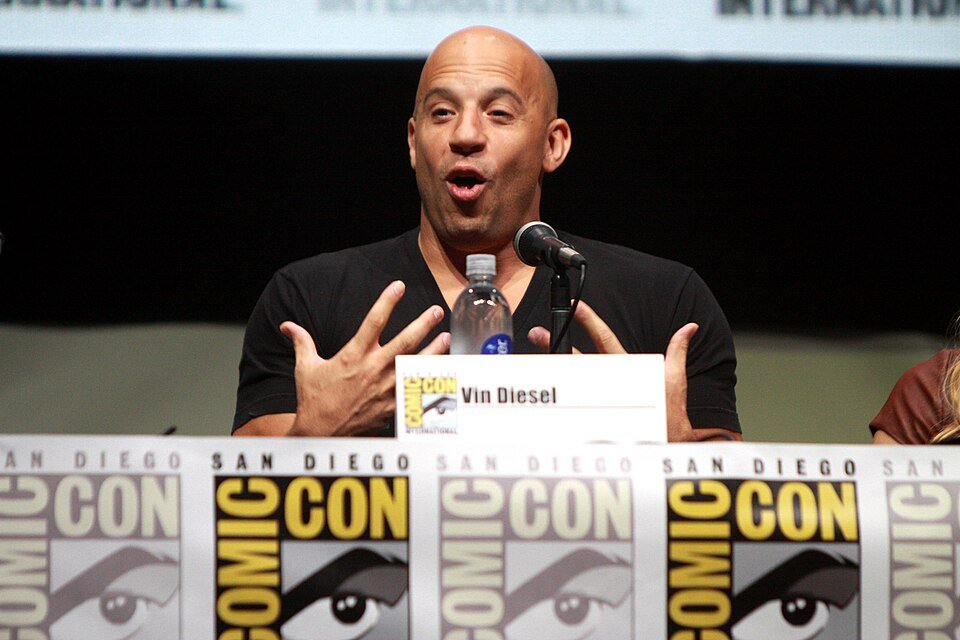
Vin Diesel: The Self-Made Star, His Partner Paloma, Three Children and a $225 Million Fortune
Vin Diesel at a Glance
| Vin Diesel at a Glance | Details |
|---|---|
| Born | 18 July 1967, Alameda County, California |
| Age | 59 |
| Height | 6 ft 0 in (1.83 m) |
| Net Worth | $225 million (Celebrity Net Worth) |
| Weight | No reliable published figure |
| Partner | Paloma Jiménez (together since 2007) |
| Children | 3 |
| @vindiesel |
A New York Boy Raised by an Acting Teacher
Vin Diesel was born Mark Sinclair on 18 July 1967 in Alameda County, California, and raised in New York City. His mother is Delora Vincent, née Sinclair. His stepfather, Irving H. Vincent, was an acting instructor and theater manager, and the household gave him the stage early: his own account tells of a childhood appearance at Theater for the New City, the beginning of a formation inside New York’s theater world rather than outside it. He studied at Hunter College. He never met his biological father, and this profile records that exactly as he states it, and adds nothing to it.
The beginning matters because of what he did with its frustrations. Unable to find the roles he wanted, he wrote, directed and starred in his own short, Multi-Facial, in 1995 — a calling card that reached the one director whose attention changed everything — and followed it with the feature Strays in 1997. The self-made route was not a slogan in his case; it was the literal mechanism of the career.
How Multi-Facial Won Vin Diesel His Break
The Breakthrough
Saving Private Ryan, in 1998, was the breakthrough he had built the calling card to win. The Iron Giant followed in 1999, then Boiler Room and Pitch Black in 2000 — the latter creating Riddick, the first of his signature roles. The Fast and the Furious, in 2001, created the second and the greater: Dominic Toretto, the patriarch of a street-racing family, in a modestly budgeted picture that became one of the defining franchises of the century. xXx followed in 2002 and The Chronicles of Riddick in 2004.
The Franchise Years
His return to the Fast series as producer-star in Fast & Furious, in 2009, through his One Race company, converted a role into an ownership position — the single most consequential financial decision of his career. Fast Five in 2011 and Fast & Furious 6 in 2013 raised the series to global scale. Furious 7, in 2015, carried it through the death of his co-star Paul Walker. From 2014 he added Groot, the voice role in Guardians of the Galaxy that made him beloved of an audience that never saw his face. The Fate of the Furious followed in 2017, F9 in 2021, and Fast X and Guardians of the Galaxy Vol. 3 in 2023. The franchise’s second pillar across the later films was Dwayne Johnson, whose arrival in Fast Five raised the series’ scale; readers following that partnership can continue in Dwayne Johnson’s net worth profile, which covers his Fast & Furious co-star’s career. Studios expect Fast Forever in 2027, and Riddick: Furya is in preparation.
This profile states the earnings record with its labels kept: Forbes put his 2015 earnings at $47 million, an annual figure and not wealth; reports put his fee per later Fast production at about $20 million, a salary; and the franchise’s $11 billion-plus box office is a production gross. Each belongs to a different column, and this profile keeps them in theirs.
The filmography’s spine, laid end to end, shows the strategy. Saving Private Ryan in 1998 proved he belonged; Pitch Black in 2000 and The Fast and the Furious in 2001 gave him two signature roles in two years; xXx in 2002 tested a third; and the return in Fast & Furious in 2009, as producer-star through One Race, converted the most valuable of them into an owned position. Fast Five in 2011, Fast & Furious 6 in 2013, Furious 7 in 2015, The Fate of the Furious in 2017, F9 in 2021 and Fast X in 2023 carried the series past $11 billion in box office — a production gross, labeled as such — while Groot, from Guardians of the Galaxy in 2014 through Vol. 3 in 2023, added the second franchise. Fast Forever, expected in 2027, and Riddick: Furya, in preparation, are the announced future of both.
Paloma Jiménez, Three Children and Nineteen Years
His partner is Paloma Jiménez, and the relationship dates from 2007 — nineteen years by 2026. The couple has never formalized it in law, and one correction belongs in the record: Celebrity Net Worth’s page describes the relationship in terms of a legal union, and this profile identifies that description as a source error; no such union has taken place. The partner row in the table above gives the verified position.
The couple have three children: Hania Riley, born in April 2008; Vincent Sinclair, born in 2010; and Pauline, born in March 2015, named in honor of Paul Walker, described here as he should be — his co-star and close friend. His mother Delora and his stepfather Irving complete the family record, along with the plainly stated absence at its center: a biological father he never met, recorded only as he states it himself.
His Instagram account, @vindiesel, runs the franchise’s public life between releases, and the table records it as the bank directs. He posts production milestones, family-marked tributes to Paul Walker, and the long build toward each new chapter directly to an audience the studio itself courts — a distribution channel he owns outright, in keeping with the pattern of the whole career. The boy from the Theater for the New City stage, whom his stepfather Irving H. Vincent’s world formed, built every subsequent asset the same way: Multi-Facial to win the break, One Race to own the sequel, the producer’s chair to keep the share.
The correction about his partner belongs to the closing record as firmly as to the table. Paloma Jiménez and Diesel have shared a life since 2007 and raise three children; the relationship has never taken legal form; and Celebrity Net Worth’s contrary wording stands corrected in this profile as a source error, plainly identified. Hania Riley, Vincent Sinclair and Pauline — the daughter who carries Paul Walker’s name — complete the family account, alongside his mother Delora Vincent and the father he never met, whose absence he states himself and this profile simply repeats.
Fast Films, Riddick and a $225 Million Fortune
Celebrity Net Worth puts Vin Diesel’s net worth at $225 million, carried here with its attribution at every mention. The fortune rests on the structure described above: not merely salaries, though the reported $20 million per later Fast production is a salary of the first rank, but a producer-star’s position, through One Race, in a franchise whose box office exceeds $11 billion — a gross, labeled as such, from which his share flows through the producer’s column rather than the performer’s alone. The Groot role added a second franchise; Riddick, a third, smaller one, remains his personal property in every sense.
Houses
His reported property record includes a Beverly Hills purchase in October 2001 at a reported $2.25 million and a Hollywood Hills property bought in 2000 at a reported $562,500, listed in 2013 at a reported $1.3 million and again in 2016. The 2013 Riddick security episode, from his own published account, belongs to the record of the Hollywood Hills years. This profile claims no inventory total.
Cars
His reported cars, recorded as reported only, include a 1969 Dodge Charger Daytona, a 1970 Dodge Charger R/T, a 1963 Chevrolet Corvette Sting Ray Grand Sport, a 1970 Chevrolet Chevelle, a 1974 Plymouth Barracuda, a 1993 Mazda RX-7, a 1994 Toyota Supra, a 2014 Lykan HyperSport and the custom 1970 Charger “Tantrum,” presented to him in 2019 — a collection in which the screen cars and the real ones are, fittingly, hard to tell apart.
The earnings figures keep their labels in the closing account as they have throughout: Forbes’s $47 million for 2015 is a year of earnings; the reported $20 million per later Fast production is a salary; the $11 billion is a box-office gross belonging to a franchise, not a man. Celebrity Net Worth’s $225 million is the wealth estimate, and it rests most plausibly on the producer-star structure — the decision, taken in 2009, to return to the series as an owner. The houses and cars recorded above, from the Beverly Hills and Hollywood Hills purchases to the Charger Daytona, the Corvette Sting Ray Grand Sport and the Lykan HyperSport, stand as reported items only, and this profile claims no inventory total for either.
The Riddick thread shows the same ownership instinct in miniature. Pitch Black in 2000 created the character on a modest budget; The Chronicles of Riddick in 2004 expanded him; and the later chapters, which he drove as producer, kept the property alive on his terms while the Fast series occupied the foreground. Riddick: Furya now stands in preparation as the next installment — a third franchise, smaller than the other two, and the one that most purely belongs to him. Add Groot’s improbable second career inside the Marvel machine, a voice role that made three words into a beloved character across Guardians of the Galaxy and its sequels through Vol. 3 in 2023, and the portfolio explains itself: one owned flagship, one global voice franchise, one personal property, and a producer’s chair over all of it.
Hunter College and the New York theater world formed the craftsman; Multi-Facial proved the craftsman could sell himself; and Steven Spielberg’s casting in Saving Private Ryan ratified the proof in 1998. Every later structure — One Race, the producer’s chair, the owned Instagram channel — extends that first lesson: he advances furthest when he owns the means of his own presentation.
Alameda County holds the birth record of 18 July 1967, but New York City holds the formation — the theaters, the college, the stepfather’s stage world, the streets the Fast films’ mythology would later romanticize. Mark Sinclair became Vin Diesel in that city, by his own design, before any studio agreed with him.
The Actor Who Manufactured His Own Break
The lasting picture of Vin Diesel is of the actor who manufactured his own break and then owned it. Multi-Facial was a twenty-minute argument that he belonged on screen; the Fast franchise became the proof, sustained across a quarter-century, that he belonged at its center — as producer as much as star. The family his films celebrate is a fiction; the one in the table above is the record, and he built the career to provide for it.
At fifty-nine, with Fast Forever ahead, a fortune of $225 million on Celebrity Net Worth’s figure, three children and a partnership of nineteen years, his position is the one he designed in the 1990s: indispensable to his own franchise. The record shows how rare that is, and how deliberately he did it.