Michael Jackson: The Life, the Children and the Fortune That Was $500 Million Underwater
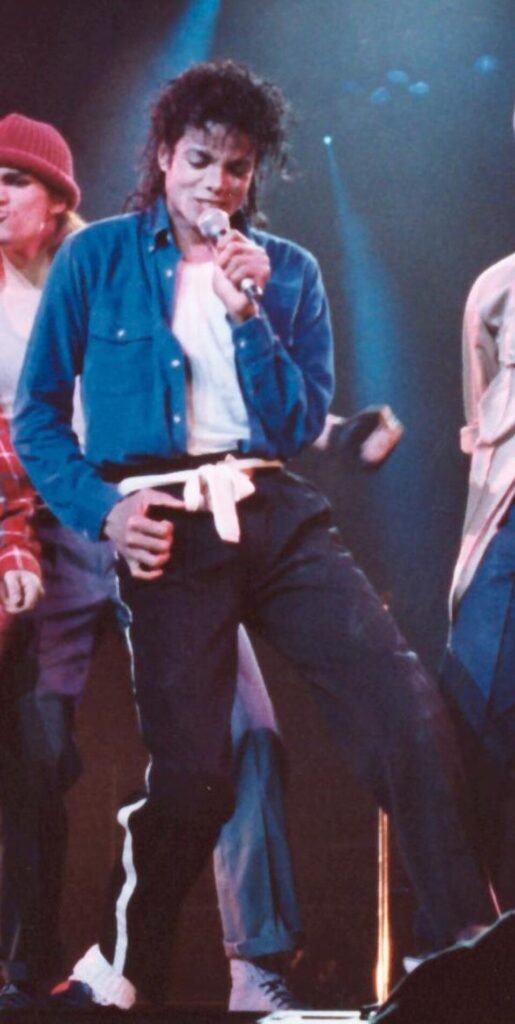
Michael Jackson: The Life, the Children and the Fortune That Was $500 Million Underwater
Michael Jackson at a Glance
| Michael Jackson at a Glance | Details |
|---|---|
| Born | August 29, 1958, in Gary, Indiana; died June 25, 2009, in Los Angeles, California, aged 50 |
| Age | 50 at his death in 2009 |
| Height | 5 ft 9 in (1.75 m) |
| Net Worth | −$500 million at death (Celebrity Net Worth) — debts of more than $500 million at his death |
| Weight | No reliable published figure |
| Partner | None at his death; he was unmarried. Former wives: Lisa Marie Presley (1994–1996) and Debbie Rowe (married 1996, later divorced) |
| Children | Three: Prince (born February 1997), Paris (born April 1998) and Prince Michael II, known as Bigi (born February 2002) |
| Religion | Raised a Jehovah’s Witness; disassociated from the faith in 1987 |
A Gary Childhood Under Joe Jackson’s Rule
Michael Joseph Jackson was born on August 29, 1958, in Gary, Indiana, the eighth of ten children born to Joseph and Katherine Jackson. Joe Jackson worked as a crane operator at a steel mill and played guitar in an R&B band; Katherine, a devout Jehovah’s Witness since her 1963 baptism, worked at a department store and played piano and clarinet. The family — Rebbie, Jackie, Tito, Jermaine, La Toya, Marlon, Brandon (Marlon’s twin, who died shortly after birth), Michael, Randy and Janet — lived in a two-bedroom house at 2300 Jackson Street. Joe recognized his sons’ musical talent early and organized them, with a discipline that the children later described in sharply differing terms, into a performing group.
The Jackson 5 — Jackie, Tito, Jermaine, Marlon and the preternaturally gifted Michael, who became lead singer while still in elementary school — won talent shows across the Midwest, recorded for a local label, and in 1968 Motown Records signed them. The group’s first four singles for Motown, beginning with “I Want You Back” in 1969, each reached number one, a feat no debut act had achieved. Michael, aged eleven, was the focal point of all of it: the voice, the dancer, the interview subject. A solo career ran alongside the group’s from 1971, with “Ben” giving him a solo number one at fourteen.
The childhood inside that success was, by his repeated account, lonely and laborious — rehearsals instead of schoolyard time, and a father whose methods he described as frightening. What it produced, indisputably, was a performer trained to a professional standard before puberty, who spent the rest of his life trying to build, at Neverland and elsewhere, the childhood the work had displaced.
How Thriller Made Jackson the King of Pop
1979–1987: Off the Wall, Thriller and Bad
The adult career began in earnest with Off the Wall (1979), his first album with producer Quincy Jones, which spun off four top-ten singles and announced a solo artist independent of the family group. Thriller, which he released in November 1982, became the best-selling album of all time — a position it still holds — with seven of its nine tracks coming out as singles and “Billie Jean” and “Beat It” defining the first age of MTV; his televised moonwalk in 1983 became the decade’s most imitated image. His collaborations in these years included work with Paul McCartney, the former Beatle who duetted with him on “The Girl Is Mine” and whose hit “Say Say Say” Jackson returned, a partnership that ended when Jackson outbid McCartney for the ATV music publishing catalog in 1985. Bad (1987), the first album in history to produce five consecutive number one singles, and its world tour confirmed that Thriller had not been an anomaly.
1991–2001: Dangerous, HIStory and a Changing Climate
Dangerous (1991), which he made with producer Teddy Riley, opened with “Black or White” and sold in the tens of millions, though the era around it darkened: accusers made allegations of child sexual abuse in 1993, and he settled the civil case the following year, an episode that permanently altered his public standing. HIStory (1995), a double album pairing greatest hits with new material including “Scream,” a duet with his sister Janet, was defensive and furious in equal measure. Invincible (2001) sold respectably while his relationship with his label collapsed in public. In 2005, after a five-month trial on further charges, the jury acquitted him on all counts. The final years were quieter — residences abroad, aborted comebacks, mounting financial disorder — until the announcement in March 2009 of This Is It, fifty farewell concerts at London’s O2 Arena, which sold out in hours.
2009: The End and the Estate
He died on June 25, 2009, in Los Angeles, during rehearsals for the London shows, from acute propofol intoxication; his personal physician administered the propofol, and a court later convicted the physician of involuntary manslaughter. He was fifty. Audiences around the world watched the public memorial at the Staples Center, and the posthumous documentary This Is It, which its makers assembled from rehearsal footage, became the highest-grossing concert film of its time.
One asset threads through both halves of the financial story and deserves its own explanation: the ATV music publishing catalog, which Jackson bought in 1985 for $47.5 million on the advice of his attorney, over the competing interest of his collaborator Paul McCartney, who had mentioned its availability. The catalog contained the publishing rights to most of the Beatles’ songs — some 250 Lennon–McCartney compositions — along with thousands of other copyrights, and it became the most valuable single asset he ever owned. In 1995 he merged it with Sony’s publishing arm into Sony/ATV, retaining a half share, and in 2016, seven years after his death, the estate sold that share to Sony for $750 million. The purchase that cost him a friendship became, across thirty years, the foundation on which the estate later built its posthumous recovery — a reminder that the same man whose spending produced the negative net worth also made, at twenty-seven, one of the shrewdest acquisitions in music business history.
The recordings themselves never stopped working in the interval. Thriller returns to the charts every Halloween; the catalog’s streaming totals place him among the most-listened-to artists of the platform era despite his death predating it; and the stage production Michael Jackson: The Musical, which opened on Broadway in 2022, joined the Cirque du Soleil productions and the This Is It film in an estate-managed portfolio that treats the catalog as a permanent business rather than a memorial.
Lisa Marie, Debbie Rowe and Three Children
Jackson was unmarried at his death and had no partner. His marriages were to Lisa Marie Presley, whom he married in 1994 and divorced in 1996, and to Debbie Rowe, a nurse he married in 1996 and later divorced. Rowe is the mother of his two elder children: Michael Joseph Jackson Jr., whom the public knows as Prince, born in February 1997, and Paris Jackson, born in April 1998. His third child, Prince Michael Jackson II, whom the public knows as Bigi and called Blanket in childhood, was born in February 2002 to a surrogate mother whose identity the family never publicly disclosed. Their grandmother Katherine Jackson, his appointed guardian, raised the three children after his death, and have since built their own public lives — Prince in production and charity work, Paris as a model, actress and musician, Bigi largely out of view.
The family he came from remained show business’s most famous dynasty. His father Joe, the group’s architect and manager, died in 2018; his mother Katherine, the family’s matriarch, was central to the children’s upbringing after 2009. His siblings pursued their own careers — Janet most successfully — within a family story that began in that two-bedroom house in Gary.
His faith was his mother’s. Raised a Jehovah’s Witness, he remained associated with the faith into adulthood — the “Thriller” video famously carried a disclaimer added under pressure from church elders — before disassociating himself in 1987. Claims of conversions to other faiths late in his life or after his death no one has ever confirmed, and this profile records them as unconfirmed rather than repeating them as fact.
The Fortune That Fell $500 Million Underwater
The central financial fact of Michael Jackson’s life is a paradox, and documentation supports both halves of it. At his death in June 2009, according to Celebrity Net Worth, his net worth was negative $500 million: he owed more than $500 million in debts, a position confirmed in substance by his estate executors’ filings in court in 2024, which described debts and creditors’ claims exceeding $500 million at his death. The spending that produced it — Neverland, the shopping, the legal settlements, the entourage, the loans secured against his assets — ran for years at a rate his recording income, enormous as it was, did not match once the hits slowed.
The other half is what happened next. Under its executors, the estate became one of the most successful posthumous businesses in entertainment: Forbes calculates that Jackson has earned more than $3.5 billion since his death, including roughly $105 million in the year from October 2024 to September 2025 alone, and Forbes has named him the highest-earning deceased celebrity thirteen times. Those are estate earnings, kept strictly separate here from his personal net worth at death: the man died half a billion dollars underwater, and the estate he built on his catalog — which his own recordings and the publishing assets he had bought in 1985 anchored — then earned its way into a different story entirely.
The Houses
Neverland Ranch in Los Olivos, California — bought in 1988 for about $19.5 million and transformed into a private amusement park and zoo — was the emblem of both the fortune and its collapse. He effectively left it after 2005, and the estate sold the property, renamed Sycamore Valley Ranch, in 2020 for about $22 million. At his death he was renting a mansion in Holmby Hills, Los Angeles, the house in which he died.
The Cars
No authoritative inventory of his cars exists. Vehicles documented in reporting over the years include a 1999 Rolls-Royce Silver Seraph limousine, a 1990 Rolls-Royce Silver Spur II, a 1985 Mercedes-Benz 500 SEL and a 1954 Cadillac Fleetwood. This profile names them as multiply reported individual cars, not as a cataloged collection with a value.
The Work, the Videos and the Wreckage
Michael Jackson’s legacy divides into the work and the wreckage, and any honest account has to hold both. The work — Thriller’s permanent place as the best-selling album ever made, the videos that built MTV, a performance style that artists born after his death still copy — made him the most famous entertainer of the twentieth century’s second half. The wreckage is financial and personal: a man who earned more than almost any performer in history and died, on Celebrity Net Worth’s figure, $500 million in debt.
Forbes calculates the estate’s posthumous earnings at $3.5 billion, and that figure is the final twist: the catalog out-earned the chaos. Prince, Paris and Bigi inherit a business rather than a debt, and the lasting picture is of a fortune that was negative at the moment of his death and monumental in the years after — two numbers that are both true, and that only make sense together.