Lily Allen: The Life, the Songs and the $4 Million Question
Lily Allen: The Life, the Songs and the $4 Million Question
Lily Allen at a Glance
| Lily Allen at a Glance | Details |
|---|---|
| Born | May 2, 1985, in Hammersmith, London, England |
| Age | 41 |
| Height | 5 ft 2 in |
| Net Worth | $4 million (Celebrity Net Worth) |
| Weight | No reliable published figure |
| Partner | Separated from David Harbour (separation reported February 2025; no finalized divorce confirmed) |
| Children | Two daughters — Ethel Mary and Marnie Rose |
| @lilyallen |
A Hammersmith Girl Inside Show Business
Lily Allen was born on May 2, 1985, in Hammersmith, London. Her father, Keith Allen, is an actor and comedian; her mother, Alison Owen, is a film producer. She grew up inside the British entertainment industry without letting it insulate her — her parents’ marriage ended in her childhood, and she moved through a long series of schools before she left formal education in her mid-teens. She has an older sister, Sarah Owen, and a younger brother, Alfie Allen, who became an actor. That professional world gave her fluency in how the industry worked; the instability of her education gave her the observational, diaristic voice that became her songwriting signature.
Her route in was characteristically early-internet. After an initial label deal produced little, she began posting demos to MySpace in 2005, building an audience directly and generating the press attention that forced the industry to take her seriously. A new deal with Regal Recordings followed, on terms shaped by the fact that she now arrived with an audience of her own. The sequence matters for understanding her finances across twenty years: Allen was one of the first British pop stars whose leverage came from a self-built online following, and the tension between that independence and the economics of the traditional album business runs through her whole career.
How Smile Made Lily Allen a Number One Star
2006–2009: Alright, Still and It’s Not Me, It’s You
Her debut record, Alright, Still (2006), produced the number-one single “Smile” and “LDN,” and sold in the millions worldwide. Its follow-up, It’s Not Me, It’s You (2009), debuted at number one in Britain and produced “The Fear,” a number-one single that satirized celebrity consumption while participating in it, and “Not Fair.” In February 2010 she won the BRIT Award for British Female Solo Artist, the industry’s formal recognition of a run that had taken her from self-posted demos to the top of the charts in under four years. The fashion world claimed her in the same years: she fronted a Chanel campaign for Karl Lagerfeld in 2009 and launched the vintage label Lucy in Disguise with her sister Sarah in 2010. Allen moved through pop, fashion and television presenting with the same restless energy, and she has said since that the pace of those years — the touring, the businesses, the public life conducted at tabloid speed — cost her more than the public saw. That candor about the cost became the subject of her later work. By her mid-twenties Allen had two multi-platinum records, a Brit Award, and a public profile that extended into television presenting and a fashion label run with her sister. She was, briefly, one of the defining British pop figures of her generation — and then, at the height of it, she announced she was stepping away from recording.
2010–2018: The Pause, Sheezus and No Shame
The pause was real but partial: a fashion venture, a record label of her own — In the Name Of, which she founded in 2011 and through which she signed and championed other acts — and eventually a return with Sheezus (2014), which debuted at number one in Britain even as Allen spoke candidly about her ambivalence toward the material. Television took a share of those years too: she had fronted her own BBC Three chat show, Lily Allen and Friends, back in 2008, at the height of her first fame, and the format suited her — unscripted, funny and visibly uninterested in the usual celebrity courtesies. The pattern across the pause years looks scattered only from the outside. Allen kept testing which parts of the industry would let her work on her own terms, and she kept the answer consistent: the parts where she owned something. No Shame (2018) was the more personal record — written through the end of her first marriage — and critics received it as a return to the diaristic honesty of her best work. It was also in June 2018 that she stated publicly that she was more than $1 million in debt, a disclosure this profile records as her position at that time, and one that frames every later estimate of her wealth. The same period produced two of her most durable recordings outside the album cycle: “Somewhere Only We Know,” her 2013 cover recorded for a retailer’s Christmas campaign, reached number one and became a seasonal standard, and critics widely praised her memoir, My Thoughts Exactly, published in 2018, for the same unsparing directness as her songwriting. The stage then added another dimension to the career: her run in the West End play 2:22 A Ghost Story in 2021 drew strong reviews and an Olivier Award nomination, and she followed it with a leading role in The Pillowman in 2023. In 2024 she added broadcasting, co-hosting the BBC podcast Miss Me? — a portfolio of stage, page and audio work that kept her public and professional life moving through the years between records. Pink’s net worth profile profiles the singer with whom she recorded the duet “True Love” in 2012, among the collaborators of her early hit-making years.
2025–2026: West End Girl
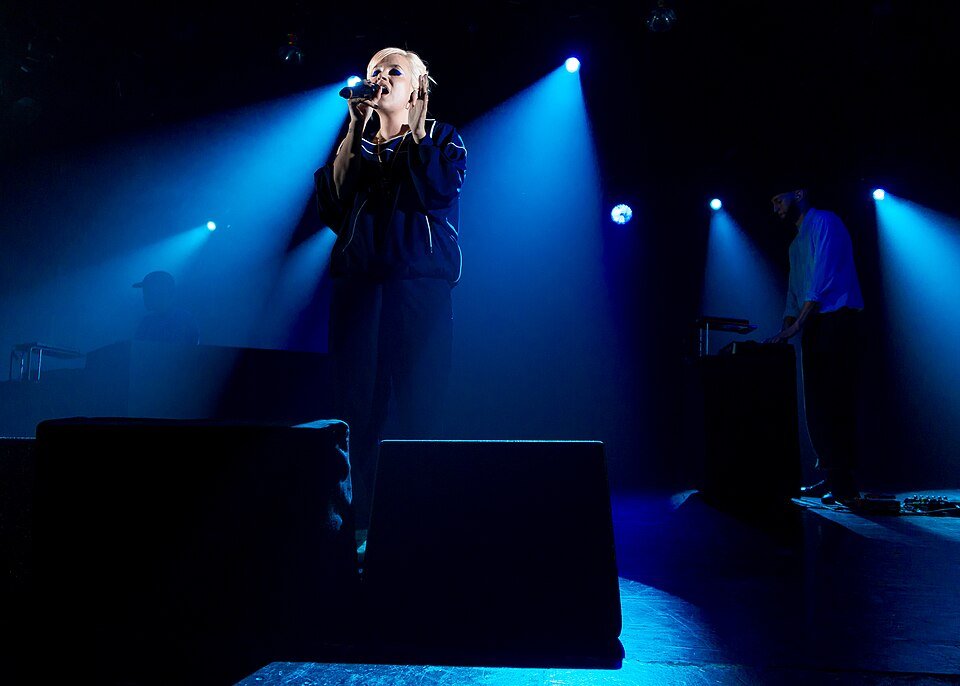
West End Girl, released on October 24, 2025, was her first record in seven years and the most discussed of her career: a song cycle widely reported as drawing on the breakdown of her second marriage, released to intense coverage and followed in 2026 by the Lily Allen Performs West End Girl tour. Whatever its subjects, its commercial effect was to return her to the center of British pop conversation after years at its edge — and to remind the industry that her catalog, and her pen, remained live assets. Few comebacks by artists of her generation have been so completely built on songwriting rather than nostalgia.
The comeback also reframed her back catalog. Streaming sent listeners back to Alright, Still and It’s Not Me, It’s You in large numbers through late 2025 and 2026, and a generation that had grown up on those records now heard them as documents of an era rather than novelties. Allen wrote every part of that story herself, in the first person, without a persona to hide behind — the method cost her privacy and, at times, money, but it gave her work a shelf life that more carefully managed careers rarely achieve. The 2026 tour played the new record in full, a performer’s statement of intent: no nostalgia set, no greatest-hits padding, the newest work carrying the evening. Audiences came anyway. That response, more than any chart position, measures what the writing is worth now.
Sam Cooper, Two Daughters and Life After Divorce
Allen married Sam Cooper in 2011; they separated in 2015 and a court finalized their divorce in 2018. Their daughters are Ethel Mary, born in November 2011, and Marnie Rose, born in January 2013. Allen has also spoken publicly, in her memoir and interviews, about a stillbirth in 2010; this profile mentions it only because she has made it part of her own public account. In September 2020 she married the actor David Harbour in Las Vegas. Reports of their separation surfaced in February 2025, and as of November 2026 no reliable reporting confirms a finalized divorce — this profile therefore records her as separated, not divorced, and does not follow tracker wording that upgrades the status. This profile does not treat unconfirmed 2026 reports of a new relationship as a status. Her family — her father Keith Allen, her mother Alison Owen, her sister Sarah Owen and her brother Alfie Allen — remain the fixed points of the biography, and her Instagram account, @lilyallen, is her principal public channel.
Hits, Debt and the $4 Million Question
Celebrity Net Worth’s current page puts Lily Allen’s net worth at $4 million, updated in January 2026, and that figure governs here. This profile prints the disagreement around it openly: secondary coverage in December 2025 attributed $2 million to the same tracker, but the tracker’s own current page reads $4 million, and the profile follows the source rather than the citation of the source. No Forbes or individual Sunday Times Rich List total exists for her. This profile presents her own 2018 statement that she was over $1 million in debt as what it was — a past position Allen disclosed herself — not as a current measure, but it explains why her net figure sits far below what two multi-platinum records might lead a reader to expect.
The assets beneath the estimate are her catalog and her pen. Songwriting and recording royalties from five studio records, including two of the most recognizable British pop singles of the 2000s, continue to earn; the West End Girl release and its 2026 tour added a new earnings cycle; stage work and presenting have contributed at intervals. This profile deliberately excludes one transaction from her individual wealth: a Brooklyn property she bought jointly with Harbour in 2021 at a reported $3.35 million, listed in October 2025 at $7.99 million and reported sold for $7.3 million in January 2026. It was a joint purchase, the couple has not disclosed the division of proceeds, and counting any of it as her individual wealth would be invention. That discipline — counting only what the record supports — is why this profile’s figure may look conservative next to rounder numbers elsewhere.
The Pop Star Who Wrote Her Way Back
Lily Allen’s career is one of the clearest case studies in the economics of British pop: early leverage, enormous early success, a candid public record of debt and industry friction, and a late comeback built entirely on writing. The $4 million estimate from Celebrity Net Worth is not the number of an artist who failed to monetize fame; it is the number of one who has described, more honestly than most, what fame actually cost.
What lasts is the catalog and the voice — the conversational, funny, unsparing writing that made “Smile” and “The Fear” era documents and that powered West End Girl two decades later. Younger British singers cite her constantly, and they cite the method rather than the image: write the actual week you had, name the actual feelings, let the melody carry the sting. Allen built that template when British pop preferred its women polished and distant, and the industry now runs on her settings. At 41, Allen has demonstrated the rarest pop skill: returning on her own terms, with the work, rather than the mythology, doing the talking.