Kate Hudson and the Fabletics Fortune: Net Worth, Age, Partner, Children and Films
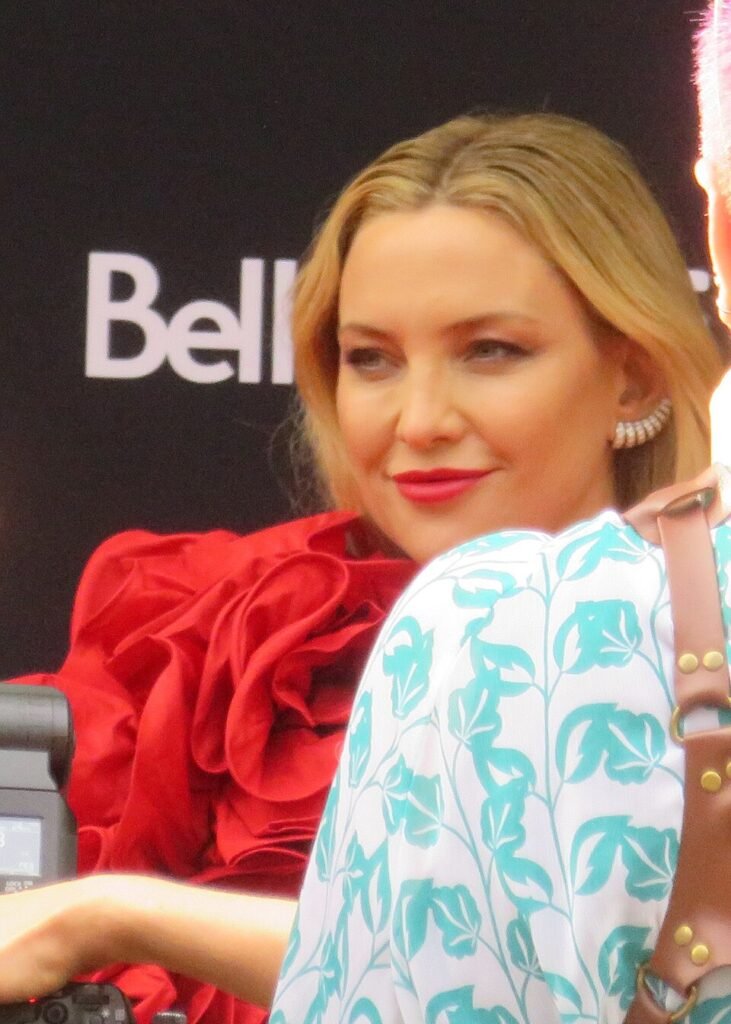
Kate Hudson and the Fabletics Fortune: Net Worth, Age, Partner, Children and Films
Kate Hudson at a Glance
| Kate Hudson at a Glance | Details |
|---|---|
| Born | 19 April 1979, Los Angeles |
| Age | 47 |
| Height | 5 ft 6 in |
| Net Worth | $500 million (Celebrity Net Worth) |
| Weight | No reliable published figure |
| Partner | Danny Fujikawa (together since 2016; engaged since September 2021; not married) |
| Children | Three: Ryder Russell Robinson (born 7 January 2004), Bingham Hawn Bellamy (born 9 July 2011) and Rani Rose Hudson Fujikawa (born 2 October 2018) |
| Siblings | Oliver Hudson; half-siblings Wyatt Russell, Zachary, Emily and Lalania Hudson; stepbrother Boston Russell |
| @katehudson |
A Los Angeles Girl Born Into Show Business
Kate Garry Hudson arrived on 19 April 1979 in Los Angeles, born into a show-business family that gave her both a start and a standard. Her mother is Goldie Hawn, one of the most beloved comic actresses of her era, and her father is Bill Hudson, a singer and actor. Her parents divorced in 1980, when she was a toddler, and Hawn raised her children alongside Kurt Russell, the actor who became the central paternal figure of Kate’s upbringing and whom she credits as the father who raised her.
She grew up between Los Angeles and Colorado in a family where film sets counted as ordinary workplaces and fame carried no mystery. That demystification shaped her choices: she skipped the college route her school prepared her for, turned down an acceptance to New York University, and went straight into acting while still in her teens. Small film roles in Desert Blue and Ricochet River arrived in 1998, and they paid her the standard beginner’s fees — reports put them at $7,000 to $8,000 per film — a number worth remembering when the fortune section explains where her money actually came from.
The family context also gave her a map of the industry’s economics. She watched her mother sustain a forty-year career and watched Russell do the same, and she absorbed the lesson that acting income alone rises and falls with casting fashion. Her later business career — the decision that built the fortune this profile records — grows directly out of that upbringing: build something you own, because the phone stops ringing for everyone eventually.
How Almost Famous Made Kate Hudson Penny Lane
2000 — Almost Famous and the Golden Globe
Cameron Crowe cast Hudson as Penny Lane in Almost Famous in 2000, and the performance made her career in a single stroke. She won the Golden Globe and earned an Academy Award nomination at twenty-one, playing the luminous, wounded heart of a film that critics still rank among the finest of its decade. Studios recast their expectations instantly: the beginner of the $7,000 fees now anchored magazine covers and casting lists.
2003–2009 — The Romantic Comedy Reign
How to Lose a Guy in 10 Days arrived in 2003, paired her with Matthew McConaughey, and paid her a reported $4.5 million — a fee that marked her arrival at the top of the romantic comedy market. A run of hits followed: Raising Helen, You, Me and Dupree, Fool’s Gold, My Best Friend’s Girl and Bride Wars. For most of a decade Hudson was the genre’s defining star, and the fees and profile of those years built the public brand that her business career later converted into equity. Anyone tracing the family dimension of that brand should start with her mother — readers can follow the earlier generation in Goldie Hawn’s net worth profile.
2012–2016 — Ensemble Work and the Fabletics Founding
She took recurring television work on Glee, voiced a character in Kung Fu Panda 3, and appeared in films including Deepwater Horizon and Mother’s Day. The decisive move of these years happened off screen: in 2013 she co-founded Fabletics, a subscription activewear brand, and took a founding ownership position rather than a celebrity endorsement fee. The distinction between those two arrangements — a wage for her face versus a share of the company — is the entire financial story of her life, and the fortune section below examines it in full.
2022–2026 — Glass Onion, Running Point and Glorious
Hudson joined the ensemble of Glass Onion: A Knives Out Mystery in 2022, reminding audiences of her comic precision in a hit that reached a global streaming audience. She took the lead in the comedy series Running Point in 2025 and a dramatic role in Song Sung Blue the same year. In May 2024 she released Glorious, her debut album, fulfilling a musical ambition she had carried since her teens and adding a recording career to a résumé that already spanned film, television and retail. At forty-seven she works across four industries at once, and the business she co-founded remains the largest of them.
Danny Fujikawa, Three Children and a Long Engagement
Hudson’s partner is Danny Fujikawa, a musician. The couple have been together since 2016 and engaged since September 2021, and they are not married — a position Hudson stated herself in September 2026 in words this profile quotes directly: “I still am not married. I’m just engaged.” Aggregator claims of a 2021 marriage circulate online; they are wrong, and her own statement settles the question.
Her earlier relationships belong to the record at their exact statuses. She married Chris Robinson of the Black Crowes on 31 December 2000, and the marriage ended in divorce in 2007. She became engaged to Matt Bellamy of Muse in April 2011, and that engagement ended in 2014 without a marriage. She has three children, and the record names their fathers factually: Ryder Russell Robinson, born 7 January 2004, with Robinson; Bingham Hawn Bellamy, born 9 July 2011, with Bellamy; and Rani Rose Hudson Fujikawa, born 2 October 2018, with Fujikawa.
Her parents and siblings fill out the family picture. Goldie Hawn and Bill Hudson divorced in 1980, and Hawn and Kurt Russell raised her; she describes Russell as her father in every way that counts. Her siblings include her brother Oliver Hudson, her half-siblings Wyatt Russell, Zachary, Emily and Lalania Hudson, and her stepbrother Boston Russell — a wide, blended family that mirrors the blended household she now runs herself, with three children, three fathers and a fiancé, all of it conducted, by every account, with unusual harmony.
Her mother’s example frames the Fabletics decision in a way the numbers alone cannot. Hudson watched Hawn sustain stardom across four decades and watched the industry’s economics change around performers of that generation — salaries rose, but ownership stayed with studios and producers. When the activewear opportunity arrived, Hudson had spent a lifetime close enough to the business to know which side of a contract builds lasting wealth. She also brought the brand a genuine use case: a performer who trained, danced and worked out on camera for years, selling the clothing she actually exercised in. Customers read the authenticity correctly, the subscription model converted it into recurring revenue, and the founding stake she held from 2013 rode the company’s growth from a start-up into a reported billion-dollar revenue line.
Fabletics, Films and a $500 Million Fortune
Celebrity Net Worth estimates Hudson’s net worth at $500 million, and it states the basis with unusual directness: roughly 90 percent of the estimate rests on her 20 percent stake in Fabletics. Forbes has likewise reported the stake at 20 percent, and reports put Fabletics’ revenue above $1 billion. Readers must hold the structure clearly: Fabletics is a privately held company, no published valuation of it exists, and the $500 million figure is therefore an estimate that rests on an estimated stake in an unpriced company. It is the tracker’s stated position, printed here with its basis, and it is not a bank balance.
The disagreement deserves equal prominence. A long-standing estimate of $80 million for Hudson circulated for years and still appears in current coverage — Hello magazine repeated it as recently as September 2026. That figure reflects the older, acting-based reading of her wealth: strong romantic comedy fees across a decade, television work and endorsements, accumulated without the Fabletics stake at full weight. This profile prints both numbers and the reasoning behind each. The $500 million Celebrity Net Worth estimate stands or falls with the value of a private company; the $80 million estimate ignores most of that company’s value. The truth depends on a valuation nobody has published.
The acting layer underneath is real and documented. The $7,000 to $8,000 fees of 1998 became a reported $4.5 million for How to Lose a Guy in 10 Days by 2003, and a decade of genre-leading roles followed at strong rates. But acting alone produces the $80 million conversation, not the $500 million one. The fortune’s centre of gravity is a single decision she made in 2013: take equity, not a fee. Founders across the entertainment industry now copy that structure routinely; Hudson executed it early, in a category — women’s activewear — that grew for a decade straight, and she held the stake while the brand scaled past a billion dollars in reported revenue.
No Forbes or Sunday Times Rich List wealth total exists for her, and no property record of consequence stands in her banked file, so this profile offers no inventory beyond the stake, the fees and the career. The honest summary is that Hudson is either a very wealthy actress or, if the tracker’s reading of her Fabletics position holds, one of the richest performer-founders of her generation — and the published record supports printing the estimate, its basis and its challenger side by side, which is what this page does.
Her recent screen work also protects the business at the centre of the fortune. Glass Onion put her in front of a global streaming audience in 2022, Running Point gave her a series lead in 2025, and the Glorious album generated a fresh round of coverage in 2024 and 2025 — each project refreshing the public profile that makes her an effective founder-face for Fabletics. The two careers feed each other deliberately: the acting keeps the name warm, and the name keeps the brand’s marketing costs lower than any rival’s. That flywheel, more than any single fee or valuation, is the asset she built.
Penny Lane and a Fortune Built on Leggings
Hudson’s acting legacy starts with Penny Lane, a performance that has outlived the era that produced it, and continues through a decade of romantic comedies that defined the genre for her generation. Glass Onion and Running Point show the craft intact in her forties, and Glorious added the recording chapter she had deferred for twenty-five years. Few performers sustain relevance across that many formats; fewer still build a business that dwarfs the performing income.
The fortune is the headline the business pages will keep arguing about. Celebrity Net Worth puts it at $500 million on the strength of a 20 percent stake in Fabletics; the older $80 million estimate still circulates as the counter-argument. Either way, the underlying achievement is not in dispute: a performer who started at $7,000 a film now holds a founding share of a billion-dollar-revenue brand, three children, an engagement she is in no hurry to convert, and a career she runs entirely on her own terms.