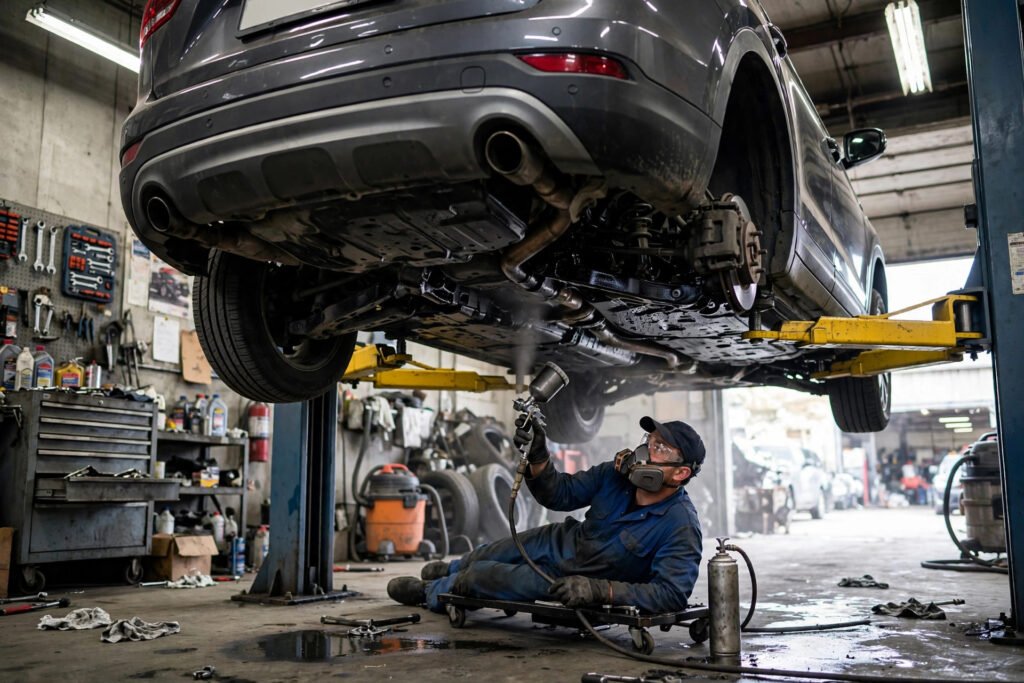
Is It Worth Rust-Proofing Your Car in Michigan?
In Michigan, rust is not a cosmetic issue — it is the thing that eventually totals your car. A vehicle that runs perfectly at 150,000 miles can still fail inspection or become structurally unsafe because the subframe, brake lines, or rocker panels dissolved. Rustproofing promises to stop that clock: professional treatments that seal the undercarriage against salt. The question Michigan drivers ask every fall is whether the $150–$500 treatment is genuinely worth it, or just well-marketed peace of mind.
This guide examines whether rustproofing your car in Michigan is worth it: the types of treatments, what they actually do, the ROI math, and when to skip it.
Why Michigan Cars Need Extra Help
Michigan is among the heaviest road-salt users in America, and the chemistry is unforgiving: salt makes water dramatically more conductive, accelerating the galvanic corrosion of steel. Factory protection (galvanized panels, e-coats, underbody shielding) has improved enormously since the 1990s — but it is designed for average conditions, not for a decade of Michigan winters. The components that fail first — brake lines, fuel lines, subframe mounting points, rocker panels — are exactly the ones factory coatings protect least.
The economics frame the decision: the average Michigan driver keeps a car 8–12 years, and structural rust is the most common reason an otherwise healthy car gets retired in the salt belt. If a $200/year treatment extends the car’s structural life by even two years, it has paid for itself several times over in deferred car payments alone. That is the core of the pro-rustproofing case — and it is a strong one for keepers. The AAA consistently lists corrosion-related failures among the top reasons cars get retired early in salt-belt states.
The Types of Rustproofing, Ranked
Oil-based sprays (Krown, NH Oil Undercoating, Fluid Film): the gold standard. Annual application of a creeping oil/wax product that penetrates seams, displaces moisture, and stays pliable. Cost: $150–$300/year. Requires yearly reapplication, can drip for a day or two after treatment, but the protection is real and well-documented — these are what professionals use on their own vehicles. Wax-based (e.g., Dinitrol, Waxoyl): harder-setting wax coatings, longer-lasting (2–3 years) but less self-healing than oils; excellent when professionally applied to a clean undercarriage.
Rubberized undercoating: the thick black spray — looks impressive, but it can crack with age and trap moisture underneath, accelerating the rust it was meant to prevent. Professionals generally advise against rubberized coatings on daily drivers unless the undercarriage is pristine and prepped. Electronic modules: skip entirely — no credible evidence they work on cars. Dealer “rustproofing” packages: often overpriced ($500–$1,200) versions of basic treatments, sometimes duplicating factory protection you already paid for — get an independent specialist instead.
The ROI Math
Run your own numbers: annual oil spray at $200/year over 10 years = $2,000. Compare against: one brake line replacement ($300–$600), one rocker panel repair ($800–$1,500 per side), subframe issues ($1,500–$3,000+), or — the big one — replacing the car two years early because of structural rust ($8,000–$15,000+ in accelerated depreciation and new-car costs, or the payments on the replacement). The treatment does not need to prevent everything; preventing one major corrosion repair or buying one extra year of service pays for a decade of applications. Factor resale: a rust-free undercarriage commands a premium from knowledgeable buyers in salt-belt states. When you eventually sell, the treatment history becomes a selling point worth real money.
The math is strongest when: you bought new or nearly new (treat early, before rust starts — rustproofing seals in existing rust if applied too late), you plan to keep the car 8+ years, and you drive year-round in Michigan (garaged winter beaters need it less). The math is weakest for: leased vehicles (you will not own the rust problem), cars you will sell within 4–5 years, and vehicles already showing significant undercarriage rust (treat the existing rust first; sealing over it helps little). Consumer Reports owner surveys consistently show corrosion as a leading age-related issue in salt-belt states, supporting the prevention case.
What Rustproofing Cannot Do
Honest limits: it will not reverse existing rust — heavily corroded metal needs repair first. It will not protect against neglect — you still need to wash the undercarriage regularly (see our car washing basics); treatments complement washing, they do not replace it. It will not stop all corrosion forever — it dramatically slows the clock; it does not stop time. And it will not fix design flaws — some vehicles have known rust-prone areas (check forums for your model) that need extra attention regardless.
Also understand the warranty angle: some manufacturers’ corrosion warranties (often 5–7 years, perforation only) can theoretically be affected by aftermarket treatments — in practice, oil-based sprays rarely cause issues, but check your warranty terms. And never let anyone drill access holes for treatment without your explicit understanding of where and why — reputable shops explain the process.
Choosing a Provider
Look for specialists, not generalists: dedicated rustproofing shops (Krown and NH Oil have Michigan locations) that do this all day outperform the tire shop offering it as a sideline. Ask: what product do you use (oil/wax-based is the right answer), do you remove shielding and treat inside panels and rockers (not just spray the visible undercarriage), how long does it take (thorough jobs take 1–2 hours), and can I see the undercarriage before/after? Annual reapplication in fall, before salt season, is the rhythm. Pair the treatment with your own maintenance knowledge — learning basic car maintenance helps you inspect the work and catch issues early. Ask whether they treat inside door bottoms and rocker cavities — the hidden areas where rust starts first. A shop that only sprays what is visible is selling half a job.
The Bottom Line
For Michigan drivers keeping a car 8+ years, annual oil-based rustproofing ($150–$300/year) is worth it — the math favors prevention by a wide margin when one avoided repair or one extra year of service covers a decade of treatments. Get it done in fall at a dedicated specialist, keep washing the undercarriage regardless, and skip it for leases and short-term cars. In the salt belt, rust is the enemy that actually wins — this is how you fight back. Start this fall — your car’s tenth winter will thank you. Your future self — and your mechanic — will notice the difference.
Frequently Asked Questions
How much does rustproofing cost in Michigan?
Professional oil-based treatments run $150–$300 per application (annual); wax-based treatments cost more ($300–$500) but last 2–3 years. Dealer packages are often overpriced at $500–$1,200.
Is Krown rustproofing worth it?
Krown’s annual oil-based treatment is among the most respected options — the creeping oil formula penetrates seams and displaces moisture effectively. For long-term keepers in salt states, owners and professionals widely consider it worthwhile.
When should I rustproof my car?
Fall, before salt season — and ideally when the car is new or nearly new, before rust starts. Treating over existing heavy rust seals it in rather than stopping it.
Does rustproofing void the warranty?
Oil-based sprays rarely affect manufacturer corrosion warranties, but check your specific terms. The Magnuson-Moss Warranty Act generally protects you — a manufacturer must prove the aftermarket treatment caused a failure to deny coverage.