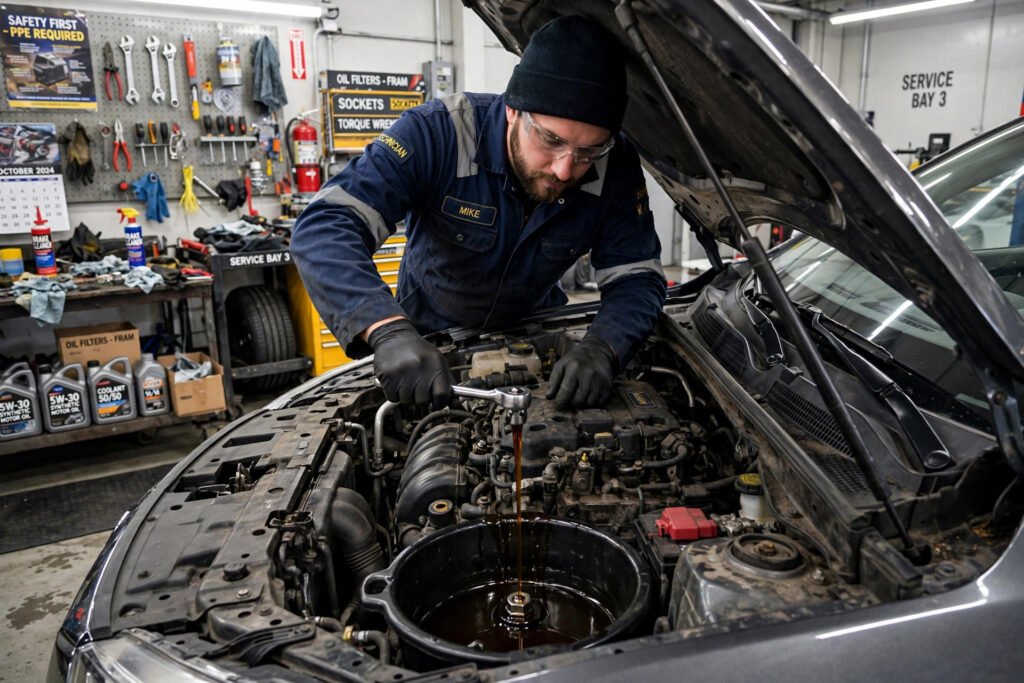
Oil Change: Dealer vs. Jiffy Lube — Which Is Cheaper?
Is it cheaper to get an oil change at the dealer or Jiffy Lube? The quick-lube shop advertises $29.99; the dealer charges $70–$100 or more. But the real comparison isn’t the sticker price — it’s what you actually get, what they try to sell you on top of it, and what happens to your warranty. Here’s the honest 2026 breakdown of dealer vs. Jiffy Lube oil changes in detail, including the options nobody advertises.
The Sticker Prices (and What They Hide)
Jiffy Lube / quick-lube shops: Advertised $29.99–$44.99 for conventional oil, but most modern cars require synthetic — real out-the-door cost is typically $60–$90 for full synthetic. The advertised price is often a loss leader; the business model depends on upsells (air filters, wipers, flushes) presented urgently at the counter.
Dealerships: $70–$120 for full synthetic, sometimes with coupons bringing it to $50–$70. Higher base price, but includes OEM oil and filters, factory-trained techs, a multi-point inspection by people who know your model, and service records that support warranty claims and resale value.
The third option: Independent mechanics ($50–$80 synthetic) often beat both on value — dealer-quality work without dealer overhead or quick-lube upsell pressure. And DIY ($30–$45 in materials) is cheapest if you’ll do it — learning basic car maintenance pays for itself with the first oil change.
The Upsell Game: Where Quick-Lube Profits Come From
This is the heart of the comparison — and where the real money changes hands. Quick-lube business models rely on high-volume throughput plus aggressive upselling: the $39.99 oil change exists to get your car on the lift, where techs (often minimally trained, frequently compensated on sales performance) recommend air filters ($25–$40 installed vs. $12 DIY), cabin filters, transmission flushes ($150–$250, often unnecessary at the suggested mileage), coolant flushes, and fuel system cleanings.
Some upsells are legitimate (your air filter may genuinely need replacement); many are premature or unnecessary. The pressure tactics — showing you a dirty filter (they all look dirty), warning of dire consequences, presenting a long “recommended” list — are the real cost of cheap oil changes. The FTC’s auto repair guidance affirms your right to decline any service and warns against deceptive practices.
Warranty and Quality Considerations
Warranty: The Magnuson-Moss Warranty Act is clear — you are NOT required to use the dealer for maintenance to keep your warranty. Any qualified shop (or DIY with receipts) preserves warranty coverage, as long as manufacturer specifications (oil type, intervals) are followed. Any dealer claiming otherwise is misinformed or lying. Keep receipts regardless of where you go.
Quality differences: Dealers use OEM filters and manufacturer-specified oil — guaranteed correct for your engine, every time. Quick-lubes use bulk oil (quality varies by franchise and supplier) and aftermarket filters (usually fine, occasionally not — and you won’t know which). The bigger quality variable is the technician: dealer techs are factory-trained on your model; quick-lube techs may have weeks of experience. Documented cases of stripped drain plugs, wrong oil, and forgotten oil caps cluster at high-volume quick-lubes — rare, but real.
Records: Dealer service records appear in manufacturer databases (valuable at resale and for warranty claims). Quick-lube records are paper receipts you’ll need to keep yourself. For leased vehicles, dealer records simplify lease-end inspections.
The Real Cost Comparison
Honest annual math (2 oil changes/year, full synthetic): Jiffy Lube: ~$140–$180/year if you decline all upsells (most people don’t — real average with typical upsells: $250–$400/year). Dealer: ~$140–$240/year, often with coupons, minimal upsell pressure, OEM parts. Independent shop: ~$100–$160/year, best value for most. DIY: ~$60–$90/year.
The verdict: the dealer’s higher sticker price often equals the quick-lube’s real out-the-door cost once upsells are included — with better parts, trained techs, and warranty-friendly records. The cheapest option is only cheapest if you say “no” to everything, every time.
The 3,000-Mile Myth: How Often You Really Need It
The quick-lube industry’s most profitable fiction is the 3,000-mile oil change — a relic from the conventional-oil era that modern synthetics made obsolete decades ago. Your owner’s manual (not the windshield sticker) specifies the real interval: typically 7,500–10,000 miles for full synthetic, sometimes more. Following the manual instead of the sticker saves most drivers one unnecessary oil change per year — $60–$120 straight to your pocket.
Why does the myth persist? Because it doubles quick-lube revenue. The sticker in your windshield corner is marketing, not engineering. Trust the engineers who built your engine: follow the manual’s interval and oil specification, use the maintenance minder if your car has one, and ignore anyone profiting from your extra visits. Severe conditions (towing, extreme dust, constant short trips) justify shorter intervals — normal commuting does not.
When Each Choice Makes Sense
Choose the dealer when: your car is under warranty (records matter), you have coupons (dealers discount aggressively to compete), you drive a luxury/performance car (specialized oil, complex service), or you value the inspection by model experts. Also consider proper disposal — the EPA’s used-oil guidelines remind us that pros handle hazardous waste correctly.
Choose quick-lube when: you need speed (15 minutes vs. 1–2 hours), you’ll firmly decline upsells, and your car is out of warranty with simple needs. Go in knowing exactly what you want: “full synthetic oil change only, no additional services.”
Choose independent when: you want the best value long-term — build a relationship with a good local mechanic and they’ll handle oil changes plus everything else honestly. Choose DIY when: you’re comfortable, have the space, and want maximum savings — plus the satisfaction of caring for your car yourself.
Conclusion
Is it cheaper to get an oil change at the dealer or Jiffy Lube? The advertised price says Jiffy Lube; the real out-the-door cost is usually a wash once upsells are counted — with the dealer offering OEM parts, trained techs, and warranty-friendly records. The actual cheapest options: a good independent mechanic for most drivers (best value, honest advice, a relationship that pays off across all repairs), or DIY if you’re handy and have the space. Whatever you choose, know your oil spec, decline what you don’t need, keep receipts, and remember — no one can void your warranty for skipping the dealer.
Frequently Asked Questions
Will getting my oil changed at Jiffy Lube void my car’s warranty?
No — the Magnuson-Moss Warranty Act prohibits requiring dealer service for warranty coverage. Any qualified service following manufacturer specs preserves your warranty. Keep receipts.
Why exactly is the dealer oil change so much more expensive?
OEM parts, factory-trained techs, facility overhead, and model-specific inspections. With coupons ($50–$70), dealer pricing often matches quick-lube real costs.
How can I avoid high-pressure upsells at quick-lube shops?
Know what you need beforehand (check your manual’s service schedule), say “oil change only, no additional services” clearly, and decline to decide on the spot — “I’ll think about it” ends pressure.
Is doing my own DIY oil change actually worth the hassle?
Financially, yes — $30–$45 vs. $60–$120. It takes 30–45 minutes once you learn. Factor in proper used-oil disposal (most auto parts stores accept it free).
How often should I really change full synthetic oil in 2026?
Follow your manufacturer’s interval (typically 7,500–10,000 miles for modern synthetic) — not the quick-lube’s 3,000-mile sticker. The manual, not the shop, determines what’s needed.