How to Travel With Pets on Midwest Road Trips (2026 Guide)
The Midwest is made for road trips — and increasingly, for road trips with the whole furry family. But traveling with pets across Michigan, Ohio, Illinois, and Wisconsin takes more planning than tossing the dog in the back seat. Rest-stop realities, hotel pet policies, winter weather swings, and hours of highway boredom all need managing. Get it right, and the road trip becomes the adventure you all remember fondly. Get it wrong, and you are cleaning the back seat at a gas station in Gary, Indiana.
Here is how to travel with pets on Midwest road trips: pre-trip preparation, car setup that keeps everyone safe, the rhythm of stops, finding genuinely pet-friendly lodging, and handling the region’s specific challenges from lake-effect snow to summer heat.
Before You Leave: The Prep Checklist
Start with a vet visit if your pet has not been seen in the last six months — confirm vaccinations are current (rabies proof is required by many hotels and all boarding-adjacent situations), refill any medications with a few extra days’ supply, and ask about motion sickness or anxiety options if your pet is a nervous traveler. Get a copy of vaccination records on your phone; some destinations and all emergencies require them. For interstate specifics, the USDA’s pet travel requirements cover documentation rules.
ID is non-negotiable: a collar with current tags plus a microchip with updated registration. More pets are lost on road trips than at home — unfamiliar rest stops, open car doors, new smells. A GPS tracker on the collar is cheap insurance. Pack a dedicated pet bag: food for the trip plus two extra days, water from home (sudden water changes upset stomachs), bowls, leash and backup leash, waste bags, medications, a familiar blanket or bed, favorite toys, and cleaning supplies. The familiar-smelling blanket does more for travel anxiety than any supplement.
Car Setup: Safety First
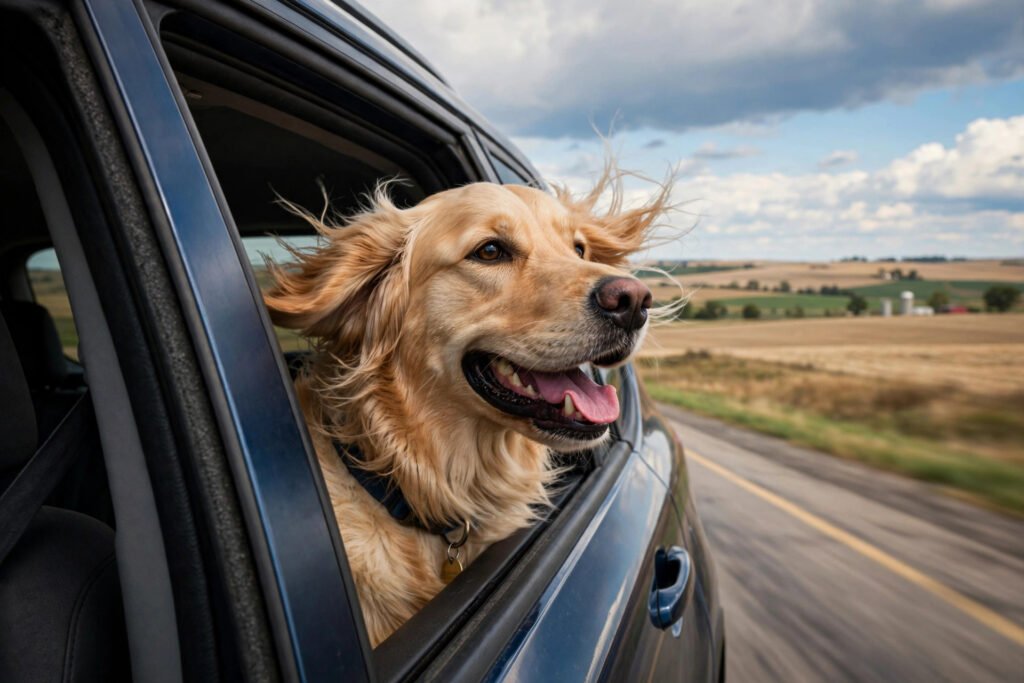
Unrestrained pets are a crash hazard — to themselves and to you. A 50-pound dog becomes a 2,000-pound projectile in a 35-mph stop. Use a crash-tested carrier for cats and small dogs (secured with the seatbelt), or a crash-tested harness attached to the seatbelt system for larger dogs. Barriers keep big dogs in the cargo area; never let dogs ride with heads fully out the window at highway speed — debris injuries to eyes are common and entirely preventable.
Set up for comfort: a non-slip mat, water available at stops (spill-proof travel bowls for the road), and temperature management. Never leave pets in a parked car — Midwest summers turn cars into ovens in minutes, a danger the American Kennel Club’s travel resources emphasize for every season, and winter turns them into freezers nearly as fast. Plan your stops so someone stays with the pet, or choose drive-through and curbside options. The same discipline behind packing an emergency kit for your car applies to pet travel — add pet-specific items like extra water, a spare leash, and any medications to the kit.
The Rhythm of the Road: Stops and Routine
Plan stops every two to three hours — for the pet’s bladder and sanity as much as yours. Midwest interstates are well-served with rest areas, many with designated pet relief zones; state welcome centers are usually the nicest stops on any route. Keep dogs leashed at all times at stops — unfamiliar territory plus highway noise is how pets bolt.
Maintain feeding routines as close to home schedule as possible, and feed smaller meals on travel days to reduce motion sickness risk. Exercise before long driving stretches: a 20-minute game of fetch at a rest area buys you two calm hours in the car. For cats, keep the carrier covered to reduce visual stress, and never open the carrier outside the car — a loose cat at an interstate rest stop is a nightmare scenario.
Finding Pet-Friendly Lodging That Is Actually Good
“Pet-friendly” on a hotel listing can mean anything from “dogs welcome, no fee” to “$150 non-refundable deposit plus $50 a night.” In the Midwest, pet-friendly chains like La Quinta, Red Roof Inn, and many Holiday Inn Express locations offer reasonable policies, but always call the specific property — franchise policies vary. Ask the exact questions: fee amount, weight limits, number of pets, unattended-pet rules, and designated relief areas.
Vacation rentals through major platforms often welcome pets with clearer terms and more space — a fenced yard beats a third-floor hotel room for most dogs. Whatever you book, research like you mean it: knowing how to find pet-friendly hotels that do not charge huge fees can save $100-plus per trip, which adds up fast on a multi-stop Midwest loop.
Midwest-Specific Challenges
Winter road trips
Lake-effect snow, black ice, and subzero wind chills define Midwest winter driving. Keep pets’ winter gear (coat, booties, paw balm) accessible, not buried in the trunk. Never leave pets in a cold car during meal stops — temperatures drop fast. And build buffer time: winter driving is slower, and rushing with a pet in the car is how mistakes happen.
Summer heat and ticks
Midwest summers bring heat, humidity, and ticks — lots of ticks. Keep preventatives current, check for ticks after stops in grassy areas, and never leave pets in parked cars. Hydration matters more than owners think: offer water at every stop, and watch for heat-stress signs (excessive panting, drooling, lethargy) in brachycephalic breeds especially.
Destination planning
The Midwest rewards pet travelers: dog beaches along Lake Michigan, pet-friendly patios in every college town, state parks with generous pet policies (leashed dogs welcome on most trails), and cities like Chicago, Madison, and Traverse City with genuine pet cultures. Research your stops’ pet rules in advance — a little planning turns a drive-through trip into a real vacation for the whole family.
Conclusion
Traveling with pets on Midwest road trips works beautifully with preparation: vet check and ID sorted before departure, crash-tested restraints in the car, stops every two to three hours, lodging researched beyond the “pet-friendly” label, and seasonal gear for whatever the Midwest sky decides to do. The region’s rest areas, state parks, and pet-welcoming towns make it one of the easiest parts of the country to explore with animals. Pack the pet bag, secure the carrier, and hit the road — the best passenger you will ever have is already drooling on the back seat.
Frequently Asked Questions
How often should I stop on a road trip with a dog?
Every two to three hours for bathroom breaks, water, and a short walk. Puppies, seniors, and dogs with medical needs may need hourly stops. Plan your route around rest areas with pet relief zones.
What is the safest way for a dog to ride in a car?
A crash-tested harness attached to the seatbelt system, or a secured crate in the cargo area. Unrestrained dogs are dangers to themselves and to human passengers in a crash — and to other drivers if they distract you.
Do Midwest hotels charge a lot for pets?
It varies enormously — from zero at some chains to $150-plus per stay elsewhere. Always call the specific property to confirm the fee, weight limits, and unattended-pet policy before booking.
Should I sedate my pet for a long road trip?
Talk to your vet first. True sedation is rarely recommended; mild anti-anxiety options or motion-sickness medication may help nervous travelers. Many pets do fine with familiar bedding, routine, and exercise — try a short practice trip before medicating.
What if my pet gets sick or lost on the road?
Carry vaccination records and your vet’s number, know that any emergency vet clinic will treat travelers, and keep ID tags and microchip registration current. A GPS collar tracker dramatically improves lost-pet recovery odds on the road.