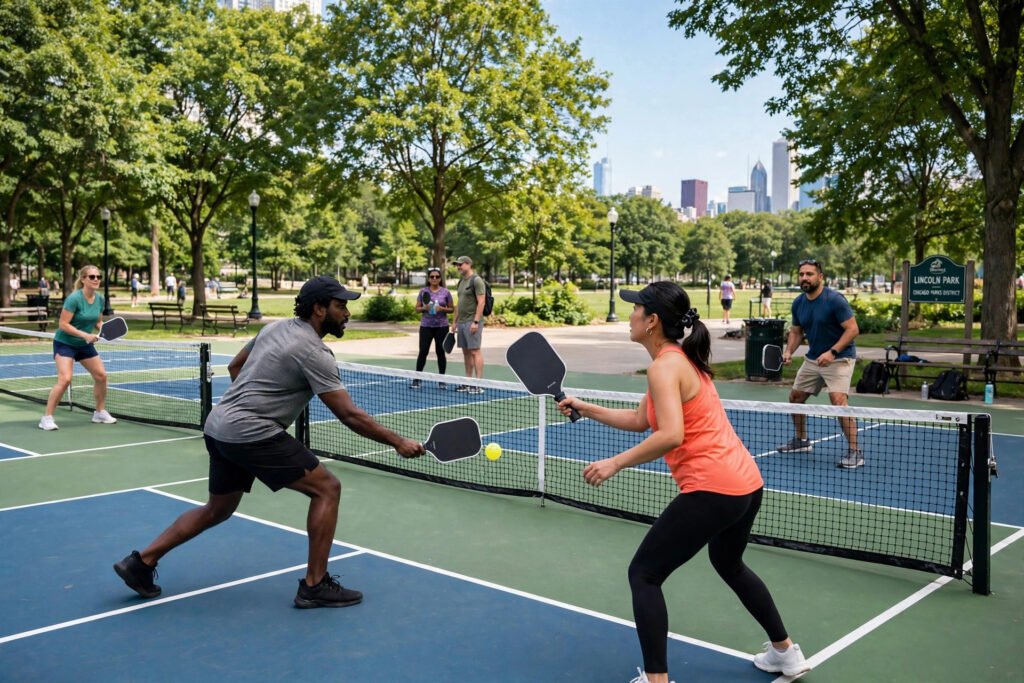
How to Start Playing Pickleball in Chicago Parks
Pickleball is America’s fastest-growing sport, and Chicago has embraced it fully — the Chicago Park District now maintains hundreds of courts across the city, from dedicated pickleball complexes to converted tennis courts in neighborhood parks. It’s the perfect beginner sport: easy to learn in an afternoon, social by design, low-impact on joints, and genuinely fun from day one. Here’s how to start playing pickleball in Chicago parks, from your first paddle to your first league.
Why Pickleball, Why Chicago Parks
Pickleball combines elements of tennis, badminton, and ping-pong on a small court with a low net, using solid paddles and a perforated plastic ball. The smaller court means less running than tennis; the underhand serve and slower ball mean rallies start immediately — beginners play real games within an hour, not weeks. It’s intergenerational by nature: 20-year-olds and 70-year-olds play together competitively.
Chicago’s park system is ideal for it. The Chicago Park District lists pickleball courts across dozens of parks, many free on a first-come basis, with open play sessions where beginners are explicitly welcome. Outdoor season runs roughly May–October; winter moves indoors to fieldhouses. Start by finding courts near you — proximity determines whether you’ll actually play regularly.
Gear: What You Actually Need
The barrier to entry is delightfully low. A beginner paddle set (two paddles + balls) costs $30–$60 — don’t overthink your first paddle; any reputable beginner set works, and honestly the differences only matter once you’re past 3.0 level. Court shoes with lateral support matter more than the paddle (running shoes roll ankles on court cuts — this is the most common beginner injury and entirely preventable). Bring water, sunscreen, and a positive attitude; leave the expensive gear obsession for later.
Upgrade later, not now: after a month of regular play, you’ll know whether you prefer a heavier control paddle or a lighter power one. Many Chicago park players will let you try their paddles — the community is famously welcoming. And learn the official rules from USA Pickleball, the sport’s national governing body, whose rulebook and tutorial videos are the definitive references.
Chicago’s Pickleball Hotspots
While the Park District publishes the official court list, certain parks have become community hubs worth knowing about. The lakefront parks (Grant, Lincoln, Jackson) draw big weekend crowds with skyline views. Neighborhood parks like Welles, Horner, and Portage have active regular groups where showing up the same time weekly makes you a familiar face fast. Indoor winter play centers on larger fieldhouses — check the Park District’s winter program guide each November, as indoor court time fills quickly.
Private facilities have also exploded across Chicagoland: dedicated pickleball clubs in the suburbs and city offer climate-controlled courts, leagues, and lessons for a membership or drop-in fee ($10–$25). These are worth it in January and February when outdoor play is impossible, and for players who want consistent competition. But start with the free park courts — they’re where the community lives.
Learning the Game: Your First Month
Week 1: learn the serve (underhand, diagonal, and it must clear the kitchen — the most-missed rule by beginners), the “kitchen” rule (no volleys in the 7-foot non-volley zone — the sport’s signature quirk that turns power players into strategists), and scoring (only the serving side scores; games to 11, win by 2; the server calls three numbers: serving score, receiving score, server number). Week 2–3: drill the fundamentals — dinking (soft kitchen shots that are the heart of high-level play), third-shot drops (the shot that transitions you from the baseline to the kitchen), and consistent serves (a missed serve helps nobody — just get it in, placement comes later). Week 4: play real games, focusing on getting serves in and keeping the ball low.
Best ways to learn: free Chicago Park District beginner clinics (check the seasonal program guide), YouTube tutorials for visual learners, and — most effectively — open play sessions where experienced players mentor newcomers. Chicago’s pickleball community actively recruits beginners; showing up is 90% of it. Protect your body as you ramp up: injury-prevention basics for new athletes apply perfectly to pickleball’s quick lateral movements.
Finding Games and Leagues in Chicago
Once you can rally, plug into the scene. Open play (drop-in games, rotating partners) runs at most park courts — just show up with your paddle and join the queue; it’s the norm, not an intrusion, and regulars expect newcomers. Chicago Park District leagues offer structured seasonal competition by skill level with playoffs and everything. Apps like PlayTime Scheduler and local Facebook groups (“Chicago Pickleball”) coordinate games across the city, and many players organize via group chats once they find their regular crew.
Skill levels run 2.0 (beginner) to 5.0+ (pro) — most park players are 2.5–3.5, and honest self-rating keeps games fun for everyone. Don’t fear better players; pickleball culture encourages mixed-skill play, and you’ll improve fastest against stronger competition. Losing 11–3 to a 4.0 player teaches you more in twenty minutes than a month of even games. For staying active between sessions, exercising with a busy schedule keeps your fitness up, and free things to do in the city rounds out an active Chicago lifestyle.
Etiquette and Park Culture
Pickleball has strong etiquette norms: call the score before serving, respect the rotation/queue system during busy open play, never walk through an active court, and retrieve stray balls promptly. The golden rule: be welcoming to beginners — someone welcomed you once. Chicago park pickleball thrives on this culture; protect it.
Noise note: pickleball’s distinctive “pop” has generated neighbor complaints nationally, and some Chicago courts now have restricted hours because of it. Respect posted hours, keep sessions within allowed times, and be a good park citizen — court access depends on community goodwill.
Conclusion
Starting pickleball in Chicago parks is simple: grab a $40 beginner set, find your nearest Park District courts, learn the serve and kitchen rule, join open play, and let the city’s welcoming pickleball community do the rest. Within a month you’ll be playing real games; within a season you may be hooked for life — planning your weekends around court time like the rest of us. See you on the courts.
Frequently Asked Questions
Where exactly can I play pickleball for free in Chicago?
Chicago Park District courts across dozens of parks offer free first-come play. Check the Park District website for court locations and open-play schedules near you.
How much does it cost to start playing pickleball?
About $30–$60 for a beginner paddle set with balls, plus court shoes. Many parks offer free courts, making total startup under $100.
Is pickleball genuinely hard to learn for a total beginner?
No — it’s famously beginner-friendly. Most people play real games within their first session. The kitchen rule and scoring take a session or two to internalize.
What is the kitchen in pickleball?
The 7-foot non-volley zone on each side of the net. You can’t hit volleys (out of the air) while standing in it — the rule that creates pickleball’s strategic dinking game.
Can I play pickleball in Chicago in winter?
Yes — play moves indoors to Park District fieldhouses and private facilities. Outdoor season is roughly May–October; check the Park District’s winter program guide.