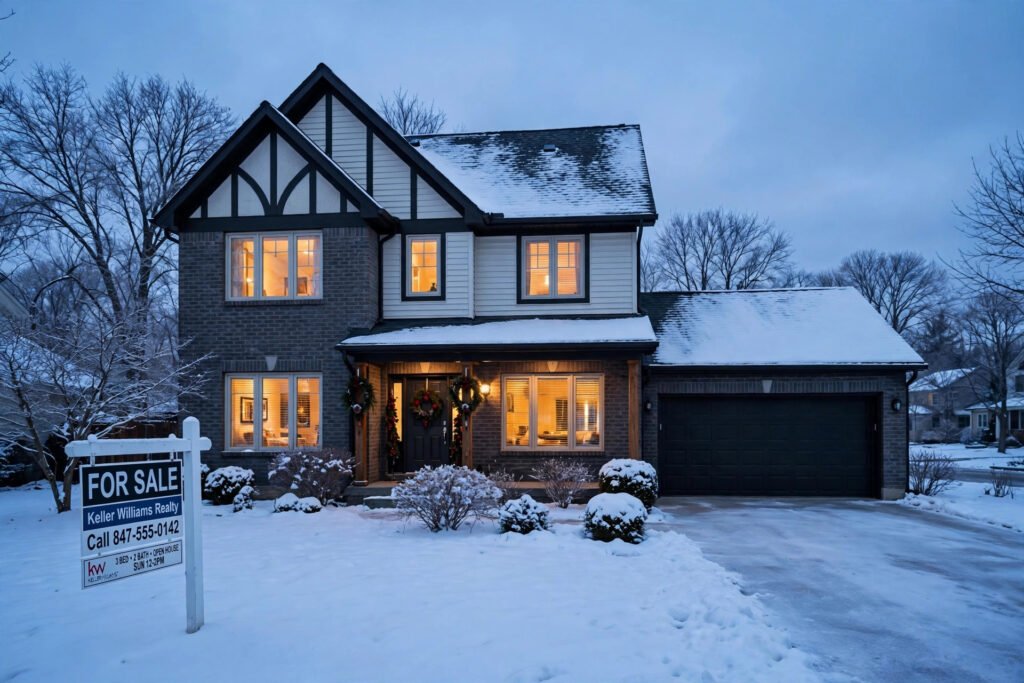
How to Sell Your House in Winter in Chicago
How to sell your house in winter in Chicago: conventional wisdom says wait for spring — but winter sellers face less competition, more motivated buyers, and often surprisingly strong results. Chicago’s winter market is thinner but serious: nobody tours homes in January for fun. Here’s how to sell your Chicago house in winter successfully, from staging against the gloom to pricing in a low-inventory market.
The Winter Advantage Nobody Talks About
Spring brings 3x the listings — and 3x the competition for buyer attention. In winter, your home competes against a fraction of the inventory, meaning more attention per listing, more showing requests per week on market, and less price pressure from undercutting comparable sales. Winter buyers are motivated by definition: relocations, job changes, lease expirations, growing families, life events — they’re buying on timelines, not whims, and they make decisions faster with less game-playing.
The data backs this up: winter listings often sell closer to asking price (fewer bidding wars, but also fewer lowball dynamics) and motivated sellers who price correctly can outperform spring averages. The key phrase is “price correctly” — winter doesn’t forgive overpricing any more than spring does. It rewards preparation more.
Winter Staging: Fighting the Gloom
Chicago winter light is the enemy — gray, dim, gone by 4:30 PM in December and January. Counter it aggressively: maximize every light source (open all blinds even on gray days — any natural light helps, add lamps to dark corners and hallways, use warm-white bulbs at the highest safe wattage), paint or touch up in warm neutrals if walls are cold gray, and schedule showings during daylight hours whenever possible. A bright, warm home in a gray season feels like sanctuary — lean into that.
Emphasize coziness deliberately: a lit fireplace (or candles) in photos and showings, throw blankets staged invitingly, warm scents (baking cookies before showings is cliché because it works). And winter curb appeal on a budget matters enormously — cleared walks, festive (not excessive) lighting, and a welcoming entryway counter the bleak streetscape. First impressions happen at the curb even in February.
Winter-Specific Prep and Maintenance
Winter exposes what summer hides — prepare accordingly. Service the furnace before listing (buyers’ inspectors will flag it; a service record preempts concerns), ensure windows seal properly (drafty windows kill winter showings psychologically), keep the home at a comfortable 68–70°F for all showings (a cold house feels neglected), and address ice dams, roof condition, and gutter issues visibly.
Handle the logistics: professional snow removal on contract (not “I’ll shovel before showings” — showings happen on no notice), salted and safe walkways (liability matters), and exterior photos taken before the deep-winter bleakness if possible — listing photos with green grass from October outperform gray February shots. If you missed the window, twilight winter shots with warm interior light glowing can look stunning.
Consider strategic updates before listing: small bathroom remodel costs help you decide whether a refresh pays off — in winter’s competitive vacuum, updated kitchens and baths stand out even more than in spring.
Pricing in a Low-Inventory Market
Winter pricing strategy differs from spring. With fewer comparables, appraisals can be trickier — price within clear supportable range, because an appraisal gap in winter (with fewer alternative buyers) hurts more. Don’t “wait for spring prices” by overpricing now — winter buyers are savvy and have less competition-driven urgency to overpay.
The sweet spot: price at fair market value based on fall comparables (adjusted for seasonality), and let the low-competition environment work for you. Well-priced winter listings often attract multiple motivated buyers — the bidding war you feared missing in spring can happen in January too, with fewer competitors diluting attention. Your agent should show you winter-specific absorption data, not just annual averages. And understand your selling costs upfront — the CFPB’s home-selling resources break down typical seller closing costs so you can price with net proceeds in mind.
Marketing When Buyers Are Indoors
Winter buyers live online — your digital presentation carries even more weight. Invest in professional photography (non-negotiable), 3D virtual tours (buyers pre-screen ruthlessly in winter — tours filter in serious ones), video walkthroughs, and floor plans. Many winter buyers start their search from relocating cities — they may buy significantly sight-unseen, making your virtual presentation the actual showing.
Highlight winter-relevant features explicitly: new furnace/HVAC, heated garage, proximity to CTA/Metra (commute matters more when driving is miserable), finished basement (winter living space), and energy efficiency — the Department of Energy’s home efficiency resources support your claims about insulation and heating costs. And market the neighborhood’s winter livability: plowed streets, nearby indoor amenities, walkable essentials.
Winter Open Houses: Making Them Work
Winter open houses need extra thought. Schedule during the brightest hours (11 AM–2 PM captures peak winter light), provide hot beverages (coffee, cocoa — the smell and warmth sell the home’s livability), lay down protective runners over floors (wet boots are inevitable — control the mess rather than fighting it), and light every fireplace and lamp. Keep the thermostat at 70°F — buyers who feel cold associate the chill with the house, not the season.
Advertise winter-specific comforts in the listing and signage: “new furnace 2024,” “heated garage,” “two blocks to Metra.” And have your agent collect feedback aggressively — with fewer showings, each one’s feedback is proportionally more valuable. In winter’s thin market, every data point counts double.
Timing Within Winter
Not all winter is equal. Early December is the dead zone (holidays dominate) — consider listing the second week of January when relocation buyers flood the market with fresh budgets. January–February brings serious corporate relocations; March sees the spring ramp begin. If you must sell in December, price for immediate action and make showing access effortless — the few buyers touring then are extremely motivated.
Conclusion
Selling your house in winter in Chicago works when you: embrace the low-competition advantage instead of fearing thin traffic, stage aggressively against winter gloom (light, warmth, coziness — the three weapons), handle winter maintenance visibly (furnace serviced, snow contracted, walkways safe), price at fair market value with appraisal awareness, and market digitally like your sale depends on it — because it does. Winter buyers are the most serious buyers of the year. Give them a warm, well-prepared home and they’ll give you a strong offer.
Frequently Asked Questions
Is winter actually a bad time to sell a house in Chicago?
Not necessarily — less competition, more motivated buyers, and strong price-to-list ratios reward well-prepared winter sellers. It punishes overpricing and poor presentation more than spring does.
When exactly in winter is the best time to list my Chicago home?
Second week of January onward — relocation buyers enter with fresh budgets. Avoid mid-December holidays. March begins the spring ramp.
How exactly should I stage my home for winter showings in Chicago?
Maximize light (lamps, open blinds, warm bulbs), emphasize coziness (fireplace, throws, warm scents), keep it 68–70°F, and maintain cleared, salted, welcoming exteriors.
Do Chicago homes really sell for less in the winter months?
Not inherently — well-priced winter listings often achieve strong price-to-list ratios due to low competition. Overpriced winter listings suffer more than in spring because buyer pools are thinner.
What winter maintenance matters before selling?
Furnace service records, sealed windows, snow removal on contract, safe salted walkways, and visible roof/gutter condition. Winter exposes deferred maintenance — fix it before inspectors find it.