How to Prepare Your Child for Kindergarten Readiness
“Kindergarten readiness” is one of those phrases that sounds like a standardized test but is really about something simpler: is your child equipped to thrive in a classroom all day? It is not about reading early or knowing math facts — those are the least of it. True readiness is a mix of social-emotional maturity, independence, physical development, and curiosity. And the good news is that almost everything on the readiness checklist is built through ordinary play, not flashcards.
This guide breaks down what kindergarten readiness actually means, how to build it naturally in the year before school, and when to consider waiting a year.
What Kindergarten Readiness Really Means
Teachers consistently rank social-emotional skills as the most important readiness factor — above academics. Can your child separate from you without prolonged distress? Take turns and share? Follow two-step directions? Manage frustration without hitting or melting down? Ask for help when needed? A child who can do these things will learn the academics; a child who cannot will struggle regardless of how many letters they know.
Independence skills come next: using the bathroom solo, opening lunch containers, dressing themselves (including coats and shoes), and managing their belongings. Physical development: holding a pencil, cutting with scissors, running and climbing without constant falls — fine and gross motor skills that make classroom life possible. Early literacy and math: recognizing their name in print, knowing some letters and numbers, counting to 20, understanding stories — helpful, but genuinely secondary. The National Association for the Education of Young Children emphasizes that readiness is about developmental fit, not academic precocity.
Building Readiness Through Play (Not Worksheets)
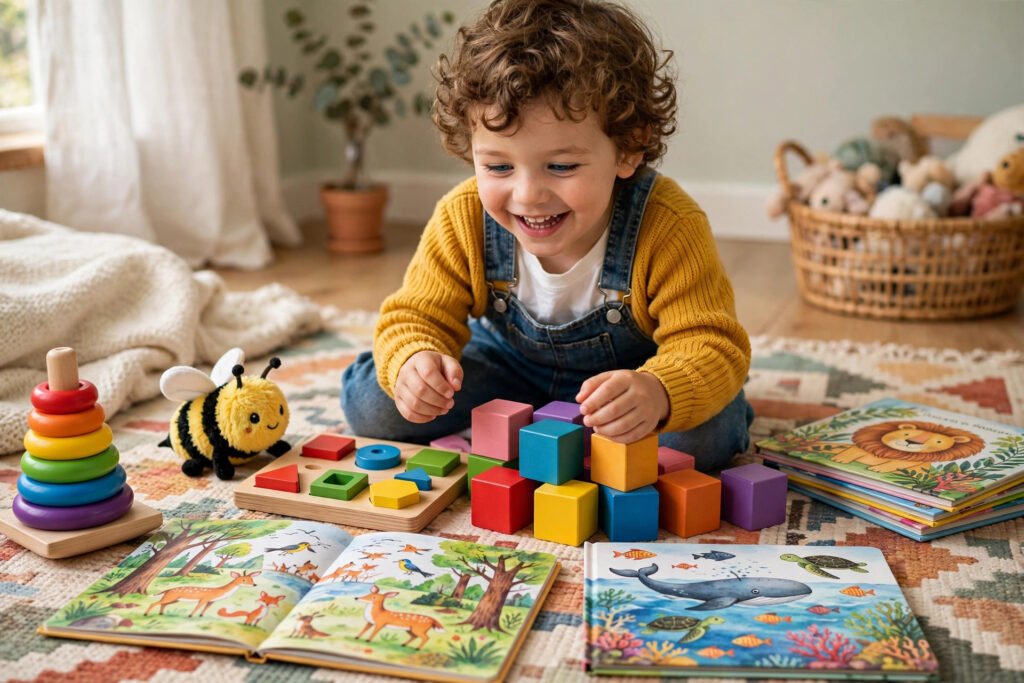
The research is unambiguous: play builds readiness better than academic drilling. For social skills: regular playdates, playground time, and group activities (library story time, sports, art classes) teach turn-taking, conflict resolution, and following group rules. For independence: let them dress themselves (even if it takes forever), pour their own cereal, and clean up their own messes — every independent task is readiness training.
For fine motor skills: play-dough, coloring, cutting, beading, building with small blocks — all develop the hand strength writing requires. For early literacy: read aloud daily (the single highest-impact activity), talk about the story, let them “read” familiar books from memory, and play rhyming and sound games. For math: count everything, sort laundry by color, cook together (measuring!), and play board games with dice. None of this requires a curriculum — it requires time and attention. For self-regulation: games with rules — board games, card games, Simon Says — teach impulse control and graceful losing better than any lecture. For language: narrate your day, ask open-ended questions, and genuinely listen to the answers. The number of conversational turns a child experiences daily is one of the strongest predictors of language development — and it costs nothing. Practice the school schedule: in the final two weeks of summer, run a mock school day — wake at school time, eat lunch at school time, sit for a story or activity for 15–20 minutes. Familiarity with the rhythm makes the first real day feel like something they have already done. Many parents also find that building healthy learning routines early makes the school years dramatically smoother.
The Routines That Matter
Two routines predict kindergarten success more than any academic skill: sleep and morning structure. A well-rested five-year-old (10–12 hours) can regulate emotions, focus, and learn; a tired one cannot, regardless of preparation. Start the school-year sleep schedule a month before school. And practice the morning routine — waking, dressing, breakfast, out the door — until it runs without negotiation. A chaotic morning sends a dysregulated child into a demanding day.
Also practice sustained attention gently: puzzles, drawing, listening to a full story without interruption. Kindergarten asks for 15–20 minute focus stretches; building up from 5 is completely normal. And give them boredom — unstructured time without screens builds the creativity and self-regulation that structured activities cannot.
Preschool: Helpful, Not Mandatory
Quality preschool helps — especially for social development — but it is not a prerequisite, and a loving home with rich interaction can absolutely prepare a child. If you use preschool, look for play-based programs with warm teachers and reasonable ratios, not academic boot camps. The “academic” preschools that drill worksheets produce kids who can perform on command but often lack the curiosity and self-direction that real learning requires. For kindergarten itself, a basic age-appropriate tech setup is plenty — five-year-olds need crayons more than computers.
Should You Redshirt? The Holding-Back Decision
For children with late birthdays (summer birthdays especially), parents often consider waiting a year — “redshirting.” The research is mixed: the youngest kids in a class do face slightly higher rates of academic and social difficulty, but the advantage of waiting fades by middle school, and being older is not universally beneficial. Consider waiting if your child is significantly behind peers socially or emotionally, has a late birthday AND seems young for their age, or their preschool teacher recommends it. Do not wait solely for athletic advantage or based on a single datapoint — and talk to the kindergarten teacher at your school, who sees hundreds of five-year-olds and calibrates well. Visit a kindergarten classroom in action if possible — seeing the actual expectations demystifies the decision. Ask what a typical morning looks like, minute by minute.
Signs of Concern (and When to Seek Help)
Most readiness gaps close with time and play. But consult your pediatrician if your child: cannot speak in full sentences by 5, struggles significantly with basic motor tasks, shows extreme difficulty with transitions or social interaction, or seems far behind peers across multiple domains. Early intervention (often free through school districts for ages 3–5) is remarkably effective — and earlier is always better. The Zero to Three organization has excellent developmental milestone resources.
The Bottom Line
Kindergarten readiness is not a test to pass — it is a developmental stage to nurture through play, routines, reading, and independence. Focus on social-emotional skills first, academics second; protect sleep fiercely; and trust that a curious, well-rested five-year-old who can share, listen, and zip their own coat is ready. They do not need to read. They need to be five, fully and joyfully.
Frequently Asked Questions
What should my child know before kindergarten?
The essentials are social-emotional: separating from parents, following directions, taking turns, and managing frustration. Academically, recognizing their name, knowing some letters and numbers, and counting to 20 are helpful bonuses — not requirements.
How do I know if my child is ready for kindergarten?
Look for independence (bathroom, dressing, lunch containers), the ability to focus for 10–15 minutes, comfort with peers, and emotional regulation. Their preschool teacher’s assessment is the single best indicator.
Should I hold my summer-birthday child back a year?
Consider it if they seem young socially/emotionally compared to peers and their teacher agrees — but the research shows advantages fade by middle school. Do not decide on age alone; maturity matters more than months.
Does my child need to read before kindergarten?
No. Most kindergarten curricula assume no reading ability on day one. Daily read-alouds and letter familiarity are the ideal preparation — formal reading instruction is the school’s job.