How to Jump-Start a Car in Freezing Temperatures
It is -10°F, the wind is howling off Lake Michigan, and your car just goes click-click-click. A dead battery in freezing temperatures is one of winter’s most common emergencies — cold thickens engine oil, slows the battery’s chemical reactions, and demands more cranking power at exactly the moment the battery can deliver least. Knowing how to jump-start correctly in the cold is not just convenient; done wrong, it can damage electronics, explode a battery, or injure you.
This guide covers how to jump-start a car in freezing temperatures safely: the exact cable order, cold-specific complications, and what to do when jumping does not work.
Safety First: Read This Before Touching Cables
Batteries produce hydrogen gas and contain sulfuric acid — respect them. Never jump a battery that is cracked, leaking, or visibly frozen (a frozen battery can explode when jumped; if the case is bulging or the electrolyte looks like ice, call for a tow instead). No smoking, sparks, or open flames near the battery. Wear eye protection if you have it. And check both owners’ manuals — some modern vehicles (especially hybrids and EVs, and some European models) have specific jump procedures or remote terminals under the hood; the battery itself may be in the trunk.
If anything looks wrong — swelling, strong sulfur smell, leaking fluid — stop and call roadside assistance. AAA and most insurers cover winter jump-starts, and a tow is cheaper than a battery explosion. Remove metal jewelry before working around the battery — a wrench bridging the terminals through a ring causes severe burns. Keep the number saved before you need it, along with the rest of your winter car emergency kit.
The Correct Jump-Start Sequence
Park the working car close enough for cables to reach, both cars off, both in park (or neutral for manuals) with parking brakes set. Then connect in this exact order:
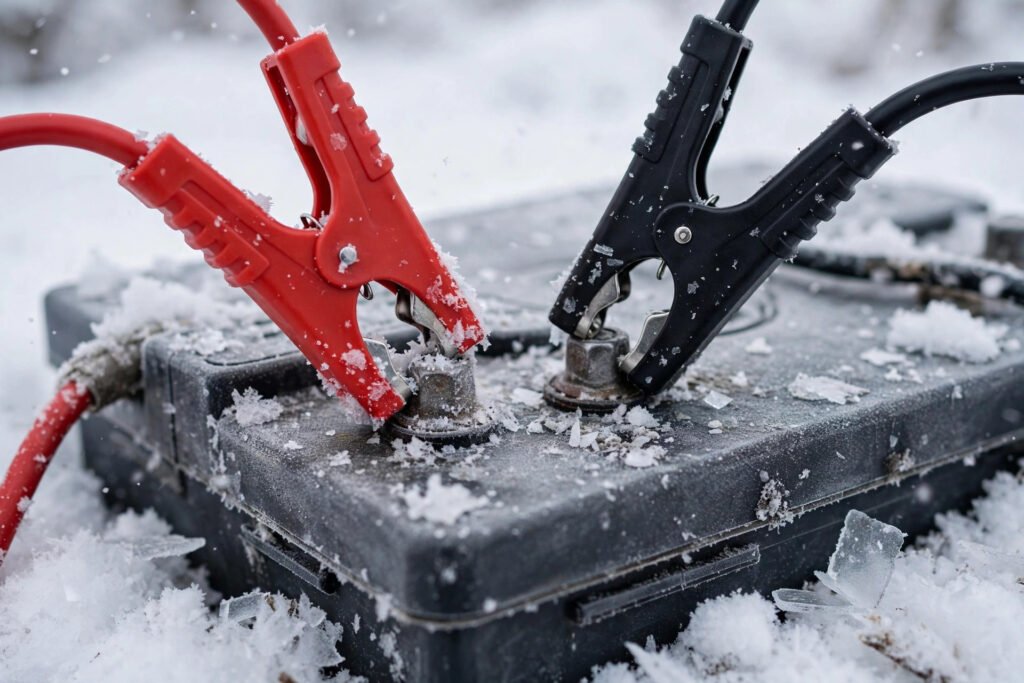
1. RED to DEAD: red clamp to the dead battery’s positive (+) terminal. 2. RED to DONOR: other red clamp to the good battery’s positive (+) terminal. 3. BLACK to DONOR: black clamp to the good battery’s negative (−) terminal. 4. BLACK to GROUND: the last black clamp to an unpainted metal surface on the dead car’s engine block or chassis — not the dead battery’s negative terminal. This grounds the circuit away from the battery, where hydrogen gas concentrates — the spark happens at the ground point, safely distant.
Start the donor car, let it run 3–5 minutes (longer in extreme cold — up to 10 minutes — to put some charge into the dead battery). Then try starting the dead car. If it does not start within 15 seconds of cranking, stop, wait two minutes, and try once more — extended cranking overheats the starter. Once started, remove cables in exact reverse order (ground black first, ending with red-from-dead), being careful clamps do not touch each other or metal surfaces.
Cold-Specific Complications
Freezing temperatures add wrinkles. Let the donor car warm up longer — its own battery is cold-weakened too, and it needs to generate surplus charge. Turn off everything electrical in both cars during the jump (lights, heater, radio, heated seats) to maximize cranking power. Expect it to take longer: at -10°F, everything is harder — be patient with the charging wait. After starting, drive — do not just idle: the alternator charges far more effectively at driving RPMs than at idle. Drive for at least 20–30 minutes (highway is ideal) to meaningfully recharge; a 5-minute idle will leave you stranded again at the next stop.
The battery may be done, not just discharged. If the car needed a jump and the battery is 4+ years old, assume it is dying — cold exposes weak batteries ruthlessly. Drive straight to an auto parts store for a free battery test rather than hoping. Battery replacement guides explain how to read the signs before the next cold snap strands you again.
Portable Jump Starters: The Better Way
Modern lithium jump starters ($60–$120) have made traditional cable jumps nearly obsolete for prepared drivers. They are pocket-sized, hold a charge for months, and let you jump yourself with no donor car — invaluable when you are alone in a parking lot at midnight. Keep it charged: check every 2–3 months (cold drains them slowly in storage — keep it inside, not in a freezing trunk). Learn your unit’s procedure before you need it — most have a boost/override button for deeply discharged batteries. This is the single best $80 a Michigan driver can spend; it belongs in every winter emergency kit alongside blankets and a shovel. Choose a unit rated for your engine size — compact cars need less cranking power than V8 trucks, and the rating matters in extreme cold.
When Jumping Does not Work
If the car will not start after proper jumping: clicking but no crank usually means the battery is too far gone or connections are corroded — clean the terminals (wire brush, baking soda solution) and try again, or replace the battery. Cranks but will not fire is not a battery problem — it is fuel, spark, or a frozen fuel line (more likely in extreme cold with low fuel — keep the tank half full). No lights, no click, nothing: check that cable connections are solid and terminals are clean; a completely dead battery may need 15+ minutes of donor charging before it takes anything.
After a successful jump, watch for warning signs: dimming lights, electrical glitches, or another dead battery the next morning all point to a failing battery or a parasitic drain — get it diagnosed rather than jumping daily. And know the basics of your car’s electrical health — learning basic car maintenance turns these emergencies from crises into errands. The NHTSA’s winter driving resources cover broader cold-weather vehicle safety.
The Bottom Line
Jump-starting in freezing temperatures follows the same red-dead, red-donor, black-donor, black-ground sequence as always — with cold-specific patience: longer donor warmup, everything electrical off, and a real 20–30 minute drive afterward. Better yet, carry a portable lithium jump starter and skip the donor car entirely. And if your battery needed a jump this winter, get it tested this week — cold does not fix weak batteries; it just exposes them.
Frequently Asked Questions
What order do jumper cables go in?
Red to dead battery positive, red to donor positive, black to donor negative, black to unpainted metal ground on the dead car (not its negative terminal). Remove in exact reverse order.
Why should the last cable go to ground, not the battery?
Batteries emit hydrogen gas, and connecting the final clamp creates a small spark. Grounding to the engine block puts that spark safely away from the battery, eliminating explosion risk.
How long should I let a car run after a jump-start in winter?
Drive (do not just idle) for at least 20–30 minutes, ideally on the highway — the alternator charges far more at driving RPMs. A few minutes of idling will not recharge enough to restart reliably.
Can you jump-start a frozen battery?
No — never jump a battery that is visibly frozen, bulging, or cracked; it can explode. If you suspect a frozen battery, call for a tow and have it replaced.