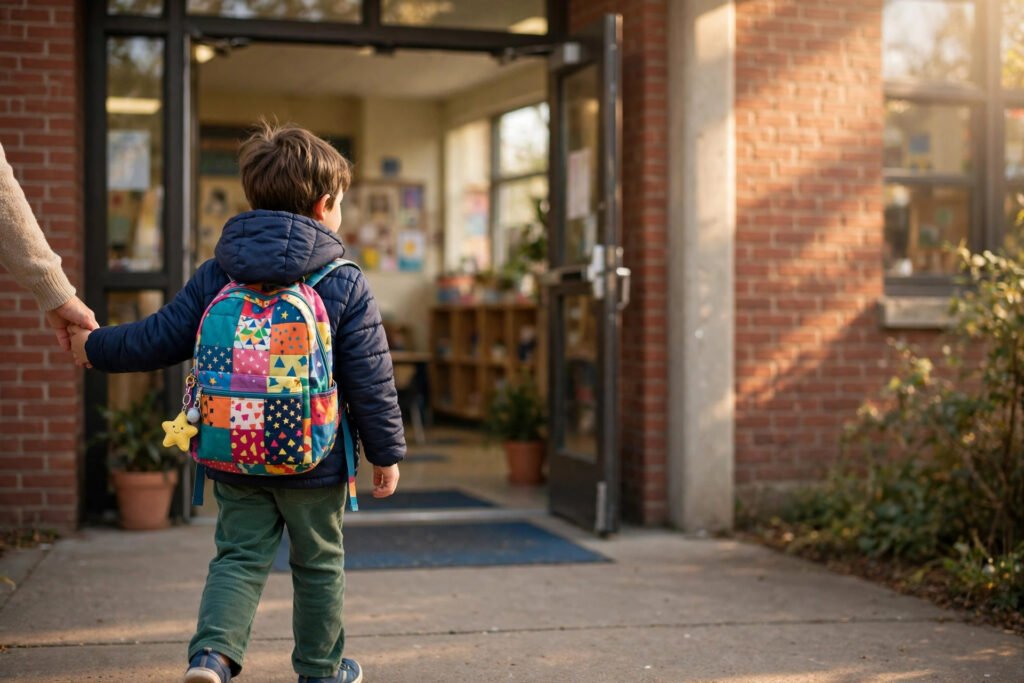
How to Help Your Kindergartner Adjust to Full-Day School
The jump from half-day kindergarten (or preschool) to full-day school is one of childhood’s biggest transitions — six-plus hours of structure, new social demands, and an afternoon energy crash that can turn the sweetest five-year-old into an evening gremlin. Most kids adjust within a few weeks, but those first weeks go dramatically better with preparation. The goal is not to eliminate the adjustment period; it is to make it shorter and gentler.
This guide covers how to help your kindergartner adjust to full-day school, from summer preparation through the first month’s routines.
Start Preparing in the Summer
The transition starts weeks before the first day. Shift the sleep schedule gradually — move bedtime and wake time 15 minutes earlier every few days until you hit the school-year target. A kindergartner who is waking at 6:45 a.m. for the first time on day one is starting at a disadvantage. Most five-year-olds need 10–12 hours of sleep; protect that fiercely.
Practice the practical skills: opening lunch containers independently, using the bathroom without help, zipping coats, putting on shoes. Teachers manage 20+ kids — the child who can handle their own lunchbox has one less daily frustration. Visit the school if orientation is offered; walking the hallways, finding the bathroom, and meeting the teacher transforms the unknown into the familiar. Read books about kindergarten together — stories normalize the experience and give your child language for their feelings.
The First Two Weeks: Expect a Dip
Here is the pattern almost every family sees: week one runs on novelty adrenaline, week two brings the crash. Your child may be weepy at drop-off, exhausted by 4 p.m., or suddenly “hating school” by day eight. This is normal. Full-day school is genuinely tiring for a five-year-old brain — the adjustment dip is a sign the transition is happening, not failing.
What helps: keep after-school time low-key for the first month. Skip the extra activities; the school day is stimulation enough. Offer a substantial after-school snack immediately — hunger plus fatigue is the meltdown formula. Protect sleep even more strictly than usual. And validate without catastrophizing: “The afternoons feel really long, huh? That makes sense — your brain is working so hard” beats “Don’t worry, you’ll love it!” The American Academy of Pediatrics emphasizes that acknowledging feelings while maintaining the routine is the core of healthy adjustment. Keep a simple log of how evenings go for the first two weeks — bedtime resistance, appetite, mood. Patterns emerge quickly, and the log gives you concrete information if you need to talk with the teacher. Most families find week three dramatically easier than week two; the log proves the progress when you are too tired to see it.
Build the Morning and Evening Routines
Kindergartners thrive on predictable routines, and the school transition is the time to lock them in. Mornings: lay out clothes and pack bags the night before, keep the sequence identical every day (wake, bathroom, dress, breakfast, teeth, shoes, out), and build in 10 minutes of buffer — rushing a five-year-old guarantees tears. A visual chart with pictures of each step lets non-readers run their own morning.
Evenings: the after-school routine matters as much as the morning. Snack, some physical play or downtime (not screens immediately — movement processes the day’s stress better), then dinner, bath, books, bed at the same time nightly. Consistency is the whole game. Having an age-appropriate tech setup at home also helps once teachers start recommending learning apps. Many families find that establishing healthy homework and screen routines early pays off for years as school demands grow.
Partner With the Teacher
Your child’s teacher is your most valuable ally — communicate early and specifically. Share anything relevant: sleep issues, anxieties, family changes, or strengths (“she opens up once she’s comfortable”). Ask how drop-off is going after the first week; teachers see a different child than the one who melts down at home, and “she’s great all day!” is genuinely reassuring.
If problems persist beyond 4–6 weeks — consistent distress at drop-off, regression, physical complaints every morning — schedule a conference. Occasionally the issue is fixable and simple: a seatmate conflict, confusion about the bathroom routine, or overtiredness from a too-late bedtime. Teachers have seen it all and usually have a solution ready.
Separation Anxiety: The Drop-Off Playbook
Some crying at drop-off is normal; prolonged daily distress needs a plan. Keep goodbyes short and warm: a consistent ritual (special handshake, two hugs, “see you after the last story”) and then go. Lingering prolongs the pain — for both of you. Never sneak out: it destroys trust and makes the next day worse. Project calm confidence: kids read your anxiety; if you believe school is safe and good, they will get there faster.
Most drop-off crying stops within minutes of the parent leaving — ask the teacher to confirm this, because knowing it transforms your whole day. If your child was in preschool or daycare, remind them they have done this before and it got good. Familiarity is the antidote to fear. Leave a comfort object: a small family photo in the backpack gives anxious kids something tangible to hold onto during the day.
Fuel and Rest: The Biological Foundations
A kindergartner’s adjustment is biological as much as emotional. Lunch: pack foods they will actually eat (this is not the week to introduce quinoa), in containers they can open, with more than you think they need — school-day appetites surprise parents. Hydration: send a water bottle; dehydration masquerades as fatigue and crankiness. Weekends: resist the urge to “make up” for the week with packed schedules. Bored, restful weekends are recovery time. The National Association for the Education of Young Children has excellent resources on developmentally appropriate expectations for this age.
The Bottom Line
Helping your kindergartner adjust to full-day school comes down to preparation (sleep, skills, familiarity), realistic expectations (the week-two dip is normal), rock-solid routines, and partnership with the teacher. Most kids turn the corner within a month — and the independence, friendships, and confidence on the other side are worth every exhausting evening. You are not just surviving the transition; you are teaching your child that they can handle big new things. That lesson lasts far longer than kindergarten.
Frequently Asked Questions
How long does it take a kindergartner to adjust to full-day school?
Most children adjust within 2–4 weeks. The first week runs on novelty, the second often brings an energy crash, and by week four most kids have settled into the routine. Persistent distress beyond 6 weeks warrants a teacher conference.
Why is my kindergartner so tired after full-day school?
A full school day demands sustained attention, social navigation, and physical regulation — exhausting work for a five-year-old brain. Ensure 10–12 hours of sleep, a solid after-school snack, and low-key afternoons during the transition.
Should I worry if my kindergartner cries at drop-off?
Brief crying that stops within minutes is completely normal and usually resolves within the first couple of weeks. Keep goodbyes short, warm, and consistent — and ask the teacher to confirm the crying stops after you leave.
How can I prepare my child for full-day kindergarten over the summer?
Shift sleep schedules gradually, practice independence skills (lunch containers, bathroom, dressing), visit the school, read kindergarten books together, and arrange playdates to build social confidence.