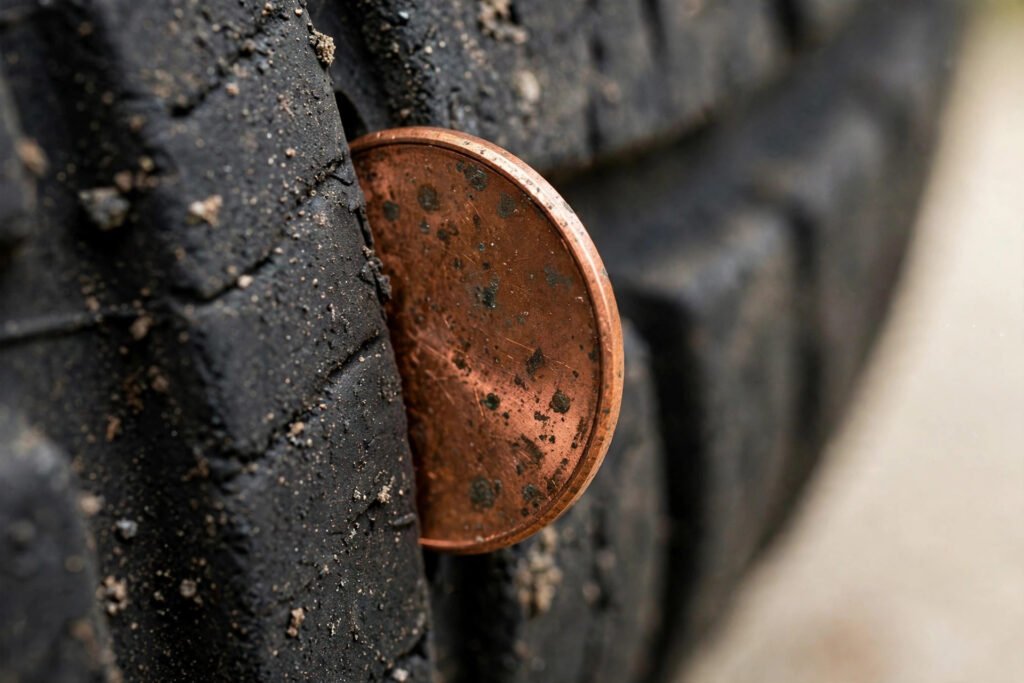
How to Check Tire Tread Depth With a Penny
The penny test is the most famous tire check in America — stick a penny upside-down into your tread, and Lincoln’s head tells you whether your tires are legal. It takes ten seconds, costs one cent, and yet most drivers do it wrong, misread it, or do not know its limits. With tires being the only thing connecting your car to the road, this tiny test deserves to be done right.
This guide explains how to check tire tread depth with a penny correctly, what the results mean, and when to upgrade from the penny to proper tools.
How to Do the Penny Test (Correctly)
Step 1: take a standard U.S. penny and hold it so Lincoln’s head faces you, upside down. Step 2: insert it into a tread groove — the deep channels running around the tire, not the shallow decorative sipes. Step 3: look at how much of Lincoln’s head is visible. If you can see all of Lincoln’s head (the top of his head is exposed above the tread), your tread is at or below 2/32 of an inch — the legal minimum in most states — and the tire needs replacement. If the tread covers part of Lincoln’s head, you have more than 2/32″ remaining.
The details that matter: test multiple spots — the center, inner edge, and outer edge of each tire, on all four tires. Tires wear unevenly (alignment issues wear edges, overinflation wears centers), and the penny test is only as good as its worst reading. Test the main grooves, not worn patches or shoulders. Do it in good light — misreading by a sixteenth in a dark garage is easy. And check when tires are cool and dry for the clearest reading. This test pairs naturally with seasonal tire decisions — check tread before winter arrives, when marginal tires become dangerous.
What the Results Mean
Above 4/32″ (tread covers Lincoln’s forehead and more): healthy. Keep driving and recheck every few months. Around 2/32″–4/32″ (Lincoln’s head partially visible): the caution zone. Legal, but wet-weather performance is degrading — hydroplaning risk rises sharply below 4/32″. Start shopping; replace within the next few thousand miles, or immediately before rainy season. At or below 2/32″ (full head visible): replace now. These tires are legally worn out in most states, dangerous in rain, and effectively useless in snow.
Uneven readings tell their own story: worn inner or outer edges suggest alignment issues (get an alignment with the new tires or you will repeat the wear); center wear suggests chronic overinflation; patchy wear suggests balance or suspension problems. The penny test diagnoses the tire; the wear pattern diagnoses the car. Understanding these basics is part of basic car maintenance every driver should know.
The Penny Test’s Limits (Important)
The penny test is a legal-minimum test, not a safety test. At 2/32″, a tire is already severely compromised in rain — studies show wet stopping distances increase dramatically as tread wears below 4/32″. In snow, the picture is worse: winter tires need at least 6/32″ for their sipes to function, meaning a tire that “passes” the penny test can still be dangerously inadequate for winter. The penny tells you when tires are illegal; it does not tell you when they are unsafe.
It also cannot detect: age degradation (tires older than 6–10 years need replacement regardless of tread — check the DOT date code on the sidewall), sidewall damage (bulges, cracks, and cuts are immediate-failure risks no tread test catches), or uneven internal wear. Use the penny test as a quick screen, not a comprehensive inspection. Check the DOT date code: the last four digits show the week and year of manufacture. Tires older than six years deserve professional inspection regardless of tread; beyond ten years, replace them. The NHTSA’s tire safety guidance covers the full picture including age and pressure.
Upgrade: The Quarter Test and Tread Gauges
The quarter test: insert a quarter upside-down into the tread; if the tread touches Washington’s head, you have at least 4/32″ — a better safety threshold than the penny’s legal minimum. Many tire professionals prefer the quarter test for exactly this reason: 4/32″ is where prudent drivers start planning replacement.
A tread depth gauge ($5–$10): the definitive tool — a simple probe that reads in 32nds of an inch. More precise than coins, and it lets you track wear over time (measure new tires at installation, then every oil change; the wear rate tells you when replacement is coming months in advance). Built-in wear bars: most tires have raised bars molded into the grooves at 2/32″ — when the tread wears flush with the bars, the tire is done. Between the wear bars, the quarter test, and a gauge, you will never guess about tires again. Log your readings: jotting tread depth at each oil change takes seconds and reveals wear rates — you will see replacement coming months away instead of discovering it at inspection time.
When to Check
The AAA recommends monthly tire inspections as part of routine vehicle care. Make tread checks a habit: monthly (takes two minutes during a fuel stop), before long road trips, at every season change (especially going into winter — marginal all-seasons plus first snow is a bad combination), and whenever handling feels off (longer wet stopping distances, hydroplaning sensations, or new vibration). Pair the check with a pressure check — underinflation accelerates wear and is the more common problem. Keep both in your routine alongside your car emergency preparations, and tires become something you manage rather than something that surprises you. Teach new drivers: the penny test takes ten seconds to demonstrate and gives teen drivers a lifelong safety habit. Make it part of every oil-change visit. Your tires are the only thing touching the road — treat them that way.
The Bottom Line
The penny test is simple: Lincoln’s head fully visible means 2/32″ or less — replace the tire. But treat it as the legal floor, not the safety standard: plan replacement around 4/32″ (the quarter test), check all four tires in multiple spots, watch for uneven wear patterns, and remember that age and sidewall damage matter as much as tread. Ten seconds with a penny, once a month, is the cheapest safety inspection you will ever perform.
Frequently Asked Questions
How do you do the penny test on tires?
Insert a penny upside-down (Lincoln’s head first) into a tread groove. If you can see the top of Lincoln’s head, tread is at or below 2/32″ and the tire needs replacement. Test multiple spots on all four tires.
What is a good tire tread depth?
New tires have 10/32″–12/32″. Above 4/32″ is healthy; 2/32″–4/32″ is the plan-replacement zone (wet performance degrades); at or below 2/32″ is legally worn out in most states.
Is the penny test accurate?
It is accurate as a legal-minimum check (2/32″), but it does not assess wet/snow safety margins, tire age, or sidewall condition. A $5 tread gauge or the quarter test (4/32″ threshold) gives a better safety picture.
How often should I check tire tread?
Monthly, before long trips, and at season changes — especially before winter. It takes two minutes and catches wear before it becomes dangerous.