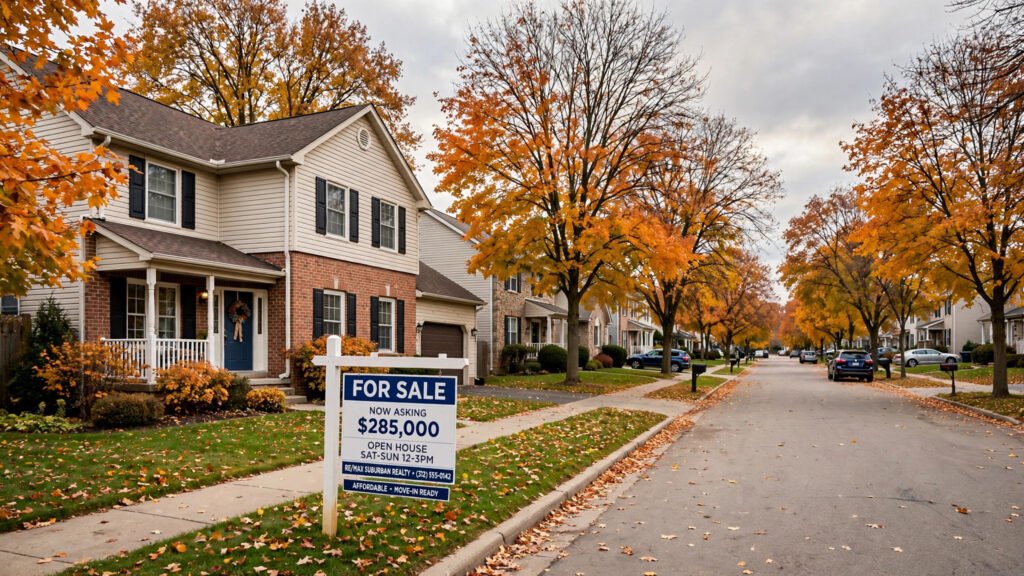
How to Buy a Chicago Suburbs House Under 300K in 2026
Three hundred thousand dollars in the Chicago suburbs — in a market where the median suburban home pushes well past $400,000, that budget sounds impossible. It’s not. It requires strategy: knowing which suburbs still offer sub-$300K homes, which property types stretch your dollar, and how to compete without overpaying. In 2026, buyers are finding condos, townhomes, and single-family homes under $300K in solid Chicago suburbs every week. Here’s exactly how to do it.
Where Sub-$300K Still Exists in Chicagoland
The geography of affordability follows a pattern: south and west suburbs offer the most sub-$300K inventory, northwest suburbs have pockets, and the North Shore is essentially off the table at this budget. Suburbs like Berwyn, Cicero, Waukegan, Joliet, Elgin, Aurora, Harvey, and Chicago Heights regularly list homes under $300K — many with Metra access to downtown and genuinely livable neighborhoods with shops, parks, and community character. Even closer-in suburbs have condo and townhome options in range.
But price isn’t the whole equation: property taxes in Illinois are among the nation’s highest, and they vary wildly by suburb — a $280K home with $7,000 annual taxes costs more monthly than a $300K home with $4,000 taxes. Research the full monthly picture before falling for a list price, and plan for the cosmetic updates older affordable homes usually need — see how to improve curb appeal without spending a fortune. Get pre-approved with an Illinois lender who understands local tax prorations.
Property Types That Make $300K Work
Condos and Townhomes: Your Best Bet
Condos are the most realistic sub-$300K path in desirable suburbs — two-bedroom units in well-kept buildings frequently list at $180K–$280K. Townhomes split the difference, offering more space and sometimes small yards at $250K–$300K. The trade-off: HOA fees ($200–$500/month is typical) and special assessments. Scrutinize HOA finances — request the budget, reserve study, and meeting minutes. A cheap condo in a broke HOA is a trap; a fairly priced one in a healthy HOA is a smart buy.
Single-Family Homes: Smaller, Older, Further Out
Single-family homes under $300K exist but require compromise: smaller square footage (900–1,300 sq ft), older construction (1950s–1970s), or locations further from the Loop. These can be excellent values — older Chicago-area homes are often solidly built — but budget realistically for updates to kitchens, bathrooms, flooring, paint, and major systems. Before offering on any older home, study what to check in an older fixer-upper so inspection surprises don’t blow your budget.
Financing Strategies for Tight Budgets
At this price point, loan choice matters enormously. FHA loans (3.5% down) keep upfront costs low — on a $280K home, that’s under $10,000 down plus closing costs. Illinois Housing Development Authority (IHDA) programs offer down payment assistance up to $10,000+ for qualifying first-time buyers, which can be combined with FHA financing. Some buyers use the MCC (Mortgage Credit Certificate) for an ongoing federal tax credit on mortgage interest.
Get pre-approved — not just pre-qualified — before touring, and consider a pre-underwritten approval, which makes your offer nearly as strong as cash in competitive situations. Compare at least three lenders on rate and fees; on a $280K loan, a 0.25% rate difference costs or saves thousands over time. The CFPB’s home-buying toolkit walks through comparing loan estimates line by line. And choose your agent carefully — at this budget you need a buyer’s agent who works these suburbs daily, not someone learning on your dime. (On agents generally, see the debate on whether AI will replace real estate agents — for sub-$300K negotiations, a sharp human agent still earns their keep.)
The Real Monthly Budget: Beyond the Mortgage
First-time buyers routinely underestimate the true monthly cost. On a $280,000 home with 3.5% down at 2026 rates, principal and interest run roughly $1,650–$1,750/month — but that’s just the start. Add Illinois property taxes ($350–$750/month depending on suburb), homeowner’s insurance ($100–$175/month), PMI ($100–$200/month until you hit 20% equity), and HOA fees for condos ($200–$500/month). The all-in number often lands at $2,400–$3,200/month.
Then budget 1–2% of the home’s value annually for maintenance — older sub-$300K homes skew higher, so plan $3,000–$5,000 per year for the inevitable furnace repair, roof patch, or plumbing surprise. Lenders qualify you on PITI (principal, interest, taxes, insurance), but you should qualify yourself on PITI plus maintenance plus a savings buffer. The buyers who thrive at this budget are the ones whose total housing cost stays under 28–30% of gross income with room to save.
Winning Without Overpaying
Sub-$300K homes in good suburbs attract competition, including investors paying cash. Your advantages as an owner-occupant: FHA/owner-occupant financing (sellers often prefer buyers who’ll live there), flexible closing timelines, and personal letters (where legal). Tactics that work: tour new listings within 24–48 hours, make clean offers (fewer contingencies where safe — but never waive inspection on older homes), and consider escalation clauses that automatically outbid competitors up to your max.
Know your walk-away number before you fall in love, and stick to it — bidding wars are where budgets die. If you lose three bidding wars, widen your suburb radius or property-type criteria rather than stretching your budget. And don’t overlook off-market opportunities: tell everyone you know you’re buying, drive target neighborhoods looking for for-sale-by-owner signs, and ask your agent about coming-soon listings. Patience is a strategy: new sub-$300K listings appear weekly, and the buyer who can wait for the right one beats the buyer who overpays for the wrong one. HUD’s homebuyer loan resources can help you understand every federal program available at your price point.
Conclusion
Buying a house in the Chicago suburbs under $300K in 2026 is absolutely achievable for prepared buyers: target south and west suburbs (plus condo/townhome pockets elsewhere), factor Illinois property taxes into every calculation, use FHA plus IHDA assistance to minimize upfront costs, get pre-underwritten to compete with cash, budget honestly for the full monthly cost including maintenance, and never waive inspections on older homes. Compromise on square footage, age, or distance — never on financial safety or your must-have list. The right sub-$300K home is out there waiting; this proven plan finds it.
Frequently Asked Questions
What Chicago suburbs have homes under $300,000?
Berwyn, Cicero, Waukegan, Joliet, Elgin, Aurora, Harvey, and Chicago Heights regularly offer sub-$300K homes, including many with solid Metra connections for commuters. Condos and townhomes under $300K appear in many more suburbs, including closer-in areas.
Can I buy a single-family home for $300K in the Chicago suburbs?
Yes, but expect compromises: smaller/older homes or locations further from downtown. Condos and townhomes offer more options at this budget in desirable areas.
How much are property taxes on a $300K home in Illinois?
It varies dramatically by suburb — roughly $4,000–$9,000 per year. Always calculate taxes into your monthly payment before making an offer; they can swing affordability more than the purchase price.
What down payment do I need for a $280K home?
With FHA financing, 3.5% down is under $10,000, plus 2–5% in closing costs. IHDA down payment assistance can cover much of this for qualifying first-time buyers.
Should I waive inspection to win a bidding war?
On older sub-$300K homes, no — inspection surprises on 1950s–70s construction can cost tens of thousands. Compete with clean terms, escalation clauses, and pre-underwriting instead.