How to Unclog a Drain Without Harsh Chemicals
How to Unclog a Drain Without Harsh Chemicals
Chemical drain cleaners are nasty stuff — they can burn skin, damage pipes (especially older ones), kill septic systems, and they’re terrible for the environment. And here’s the secret: they often don’t even work on real clogs. Mechanical methods clear drains better, cost less, and won’t eat your pipes.
Here are six chemical-free methods, in the order you should try them.
Start Simple: Plunger, Boiling Water, and Baking Soda
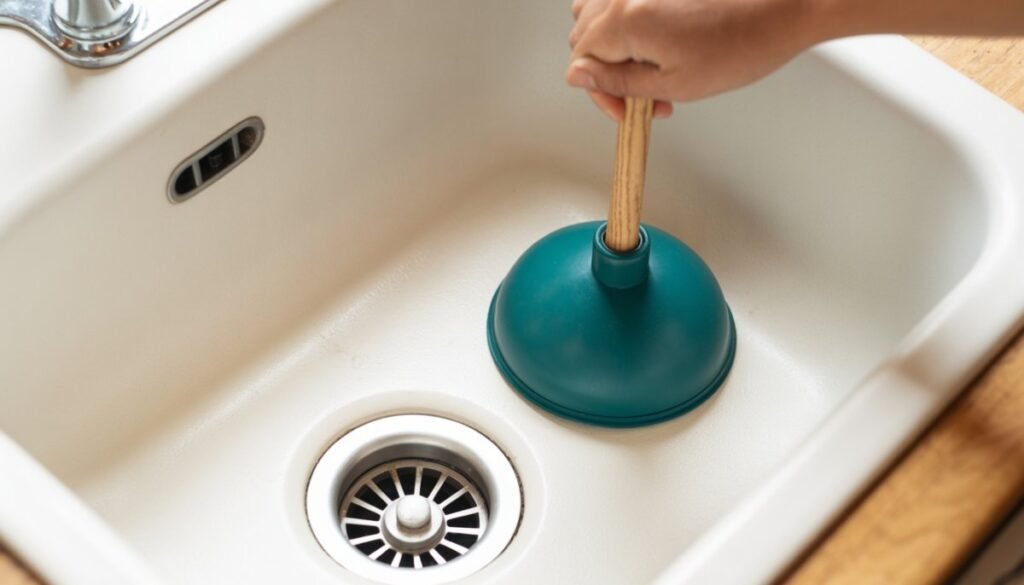
The humble plunger fixes more clogs than any chemical. For sinks and tubs, seal the overflow drain with a wet rag (this focuses the pressure), fill the basin with a few inches of water, and plunge vigorously 15 to 20 times. The push-pull action dislodges most soft clogs — hair, soap, grease. For toilets, use a flange plunger (the one with the extra rubber flap), not a cup plunger.
Boiling water dissolves grease clogs: pour a kettle slowly in stages, letting it work between pours. Don’t use boiling water on PVC pipes (it can soften joints) or porcelain toilets (thermal shock can crack them) — very hot tap water is safer there. The baking soda and vinegar volcano? It’s satisfying but weak — the fizz doesn’t generate enough force to clear real clogs. It works as a freshening maintenance rinse, not a clog-buster. Save it for after the drain is flowing.
Step Up: Drain Snakes and Hair Tools
When plunging fails, a drain snake (auger) is the real tool. A $25 manual hand auger from the hardware store reaches 25 feet — enough for most sink, tub, and shower clogs. Feed it in slowly, crank when you feel resistance, and pull the clog out rather than pushing it deeper. For bathroom sinks and tubs, the clog is almost always hair near the top; a $5 plastic hair snake (a barbed strip) yanks it out in seconds. It’s gross. It’s glorious.
Remove the drain stopper or strainer first — hair wraps around them, and half of all “deep clogs” are actually right there. Clean the stopper assembly, reassemble, and test. For kitchen sinks with garbage disposals, never put your hand in the disposal; use the snake through the drain and make sure the disposal is off and unplugged if you need to clear it manually.
Prevent the Next Clog
Prevention beats every cure. In bathrooms: a $3 mesh drain cover catches hair before it enters — the single highest-ROI plumbing purchase in existence. Clean it weekly; it takes ten seconds. In kitchens: never pour grease down the drain, ever. Pour it into a can, let it solidify, trash it. Wipe greasy pans with a paper towel before washing. Run hot water for 30 seconds after each use.
Monthly maintenance: flush drains with very hot water and a squirt of dish soap to keep grease moving. Enzyme-based drain cleaners (not chemical ones — look for bacterial/enzyme products) are safe for pipes and septic systems and genuinely help with organic buildup over time. And know when to call a pro: multiple drains backing up simultaneously means a main-line clog ($150 to $400 for a plumber with a power auger), and recurring clogs in the same drain may mean a venting problem or pipe damage that needs a camera inspection.
Chemical-Free Drain Clearing, In Order
Try these before reaching for anything in a bottle:
- Plunger: seal the overflow, use water, 15-20 vigorous plunges.
- Remove and clean the stopper or strainer — the clog is often right there.
- Boiling water in stages for grease (not on PVC or porcelain).
- Plastic hair snake for bathroom drains ($5, deeply satisfying).
- Manual drain auger for deeper clogs ($25, reaches 25 feet).
- Enzyme cleaner for maintenance — safe for pipes and septic.
- Call a plumber for multiple backed-up drains or recurring clogs.
The Bottom Line
You don’t need harsh chemicals to unclog a drain — a plunger, a $5 hair snake, and a $25 auger handle 95% of clogs better and safer than any bottle. Chemicals risk your pipes, your skin, and your septic system for results that are often worse.
Buy the mesh drain covers today. Future you, standing over a freely-draining sink, says thanks.
Septic Systems and Chemical Cleaners: Why It Matters
If you’re on a septic system, chemical drain cleaners aren’t just bad for pipes — they’re bad for your entire wastewater system. The caustic chemicals kill the beneficial bacteria your septic tank needs to break down waste, potentially causing system failure that costs $5,000-$20,000 to fix. That $8 bottle of drain cleaner can trigger a five-figure disaster. Septic owners should never use chemical cleaners, period — mechanical methods and enzyme treatments only.
Even on municipal sewer, those chemicals cause problems downstream. They don’t fully neutralize in treatment, they corrode aging infrastructure, and plumbers charge extra (sometimes refusing the job) when they encounter chemical-treated drains — the residual chemicals burn skin and eyes when pipes are opened. Tell your plumber upfront if you’ve used chemicals; it’s a safety issue for them. Many pros add a hazard surcharge for chemical-treated lines.
The enzyme alternative deserves emphasis: bacterial-enzyme drain treatments ($10-$15) actually digest organic buildup (hair, soap, grease) over days of use, they’re safe for all pipes and septic systems, and monthly use prevents the clogs that send people reaching for chemicals. They’re maintenance, not emergency tools — but used regularly, emergencies become rare. Pair enzyme maintenance with mesh drain covers and grease discipline, and chemical cleaners become a product you never buy again.
Quick Answers
Are chemical drain cleaners safe for septic?
No — they kill the beneficial bacteria septic systems need and can cause catastrophic system failure. Never use them with septic.
Will baking soda and vinegar clear a real clog?
No — it’s a mild freshening rinse, not a clog-buster. Use a plunger or snake for actual clogs.
How do I prevent kitchen clogs?
Never pour grease down the drain, wipe pans before washing, run hot water after use, and use enzyme treatments monthly.
The garbage disposal deserves its own warning in the chemical-free conversation. Chemical cleaners and disposals are a particularly bad combination — the chemicals sit in the disposal chamber, corroding the metal components and degrading the rubber splash guard, while the disposal’s grinding action can splash caustic residue. For disposal maintenance, the safe methods work better anyway: grind ice cubes with salt monthly (scours the chamber), follow with citrus peels (freshens naturally), and run cold water 15 seconds after each use (solidifies grease so the disposal can chop it rather than letting it coat pipes). A maintained disposal rarely clogs; a chemically-abused one fails early and expensively.
Further reading: the EPA on safer cleaning products, Family Handyman drain guides.