Gary Barlow at 55: The Take That Songwriter’s Net Worth, Wife, Children and Career
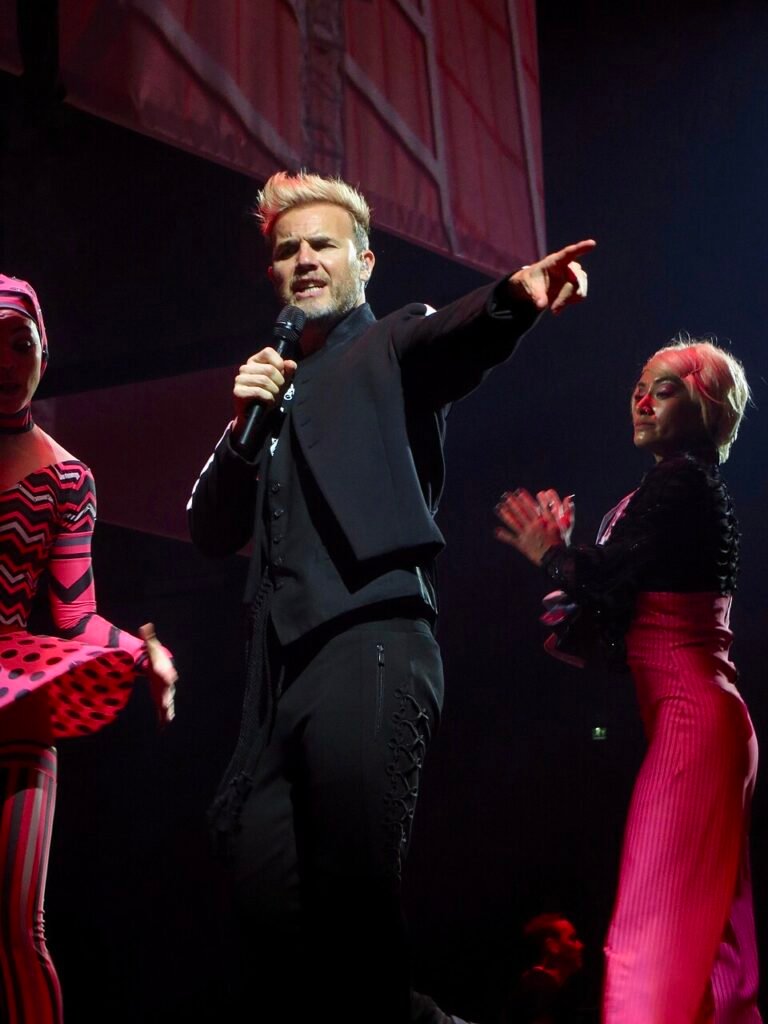
Gary Barlow at 55: The Take That Songwriter’s Net Worth, Wife, Children and Career
Gary Barlow at a Glance
| Gary Barlow at a Glance | Details |
|---|---|
| Born | January 20, 1971, Frodsham, Cheshire, England |
| Age | 55 |
| Height | 5 ft 9 in |
| Net Worth | $125 million (Celebrity Net Worth) |
| Weight | No reliable published figure |
| Wife | Dawn Andrews (married January 12, 2000) |
| Children | Daniel (born 2000), Emily (born 2002), Daisy (born 2009) |
| @officialgarybarlow |
A Frodsham Boy With Music at the Centre
Gary Barlow grew up in Frodsham, a small market town in Cheshire, in the northwest of England. His father, Colin Barlow, and his mother, Marjorie, raised him in a household where music quickly became the center of the boy’s life. He taught himself piano as a youngster and started writing his own songs while he still attended Frodsham High School, and he spent his teenage years playing keyboards in working men’s clubs and pubs around the region. Those club dates paid small fees, but they gave him something more valuable: years of practice at reading a room and holding an audience.
A BBC Christmas song competition carried his composition “Let’s Have It” deep into its rounds while he still attended school, and the result convinced him that writing, rather than performing, offered his surest route into the business. He entered songwriting competitions as a teenager and kept placing his own material at the heart of every act he joined. By the late 1980s he worked as a professional songwriter and session musician, and a demo of his singing and writing reached manager Nigel Martin-Smith, who built a new vocal group around him. Barlow joined Take That in 1990 as lead singer and principal songwriter, a role that turned a club keyboard player from Cheshire into the writing engine of the biggest British pop act of the decade. His father died on October 15, 2009, a loss Barlow has discussed openly in interviews and in his autobiography, and his mother remains a regular presence in accounts of his early life in Frodsham.
How Take That Made Gary Barlow Its Songwriter
1990–1995: Take That and the First Run of Hits
Take That released their debut album, Take That & Party, in 1992, and Barlow wrote or co-wrote the bulk of the material from the start. The group’s second album, Everything Changes, arrived in 1993 and produced a run of number one singles, including “Pray” and a cover of “Relight My Fire.” Barlow wrote “Pray” himself, and the song collected major songwriting honors. The third album, Nobody Else, followed in 1995 and carried “Back for Good,” a Barlow composition that topped charts around the world and remains his signature song. In July 1995 Robbie Williams, the Take That bandmate whose departure that summer started the group’s unravelling, left the line-up, and the remaining four members completed their commitments before the group split in February 1996.
1997–2004: Solo Records and the Songwriting Years
Barlow launched his solo career with Open Road in 1997, and the album reached number one in the UK alongside the singles “Forever Love” and “Love Won’t Wait.” His second solo album, Twelve Months, Eleven Days, followed in 1999 and performed modestly, and his record deal ended soon afterward. He stepped away from performing and built a second career behind the desk, writing and producing for other artists and running his own publishing and production interests. The work kept his name inside the industry’s credits even while his public profile shrank, and the publishing income from his Take That catalog kept earning throughout the quiet years.
2005–2013: The Reunion, The Circus and The X Factor
Take That re-formed as a four-piece in 2005 and released Beautiful World in 2006, an album of entirely new Barlow-led material that produced “Patience” and “Shine.” The Circus followed in 2008 with “Greatest Day” and “Rule the World,” the group’s song for the film Stardust. Williams rejoined for the 2010 album Progress and the record-breaking Progress Live tour of 2011. Barlow also joined the judging panel of The X Factor in 2011 and stayed for three series, and he organized the Diamond Jubilee concert outside Buckingham Palace in 2012. The Queen’s Birthday Honors that year brought him an OBE for services to the entertainment industry and to charity. His third solo album, Since I Saw You Last, arrived in 2013 and reached number two.
2012–2017: Jubilee Songs, Musicals and Talent Shows
Barlow co-wrote “Sing” with Andrew Lloyd Webber for the Diamond Jubilee in 2012, and choirs from across the Commonwealth performed the song at the celebrations. He then carried his writing into musical theater: he composed the score for Finding Neverland, which opened on Broadway in 2015, and he co-created The Girls, the musical drawn from the Calendar Girls story, which reached London’s West End in 2017. The Band, a musical built around Take That’s songs, toured from 2017 and transferred into the West End. He also fronted his own television talent search, Let It Shine, in 2017, hunting for performers to star in that stage production. The theater work matters to his biography because it proved his writing traveled: the same melodic craft that filled stadiums also held a Broadway stage and a West End auditorium.
2014–2026: A Working Songwriter Still
Take That continued as a trio after Jason Orange left in 2014, releasing III that year and Wonderland in 2017, and the group’s ninth studio album, This Life, arrived in 2023. Barlow released the orchestral solo album Music Played by Humans in 2020 and took his one-man stage show, A Different Stage, around theaters in 2022. He signed an exclusive global publishing agreement with BMG in February 2026, a deal that underlines where his long-term value sits: in the songs themselves. Take That touring activity continued through 2026, more than three decades after the club singer from Frodsham first sat down at a piano in a Cheshire pub.
His influence on British pop extends past his own records. A generation of boy bands and solo singers grew up studying the Take That template — five personalities, one principal writer, harmonies built for arenas — and talent shows still cast hopefuls in roles his career defined. The Ivor Novello Awards honored his songwriting across multiple decades, and fellow writers name “Back for Good” as a masterclass in economical melody: a song anyone can sing after one hearing; he built it from parts any songwriter can analyze but few can assemble. Barlow himself teaches the craft publicly now, breaking down his own hits in interviews and masterclasses with the air of a man who regards songwriting as a trade rather than a mystery.
Dawn Andrews, Three Children and Twenty-Five Years
Barlow married Dawn Andrews on January 12, 2000. Andrews worked as a dancer, and she toured with Take That on the 1995 Nobody Else tour, where the couple’s relationship began. The marriage has now run for more than twenty-five years, and Barlow credits the stability of that home life with carrying him through the lean years after his first solo career stalled. The couple have three children: a son, Daniel, born in 2000; a daughter, Emily, born in 2002; and a daughter, Daisy, born in 2009. Their fourth child, a daughter named Poppy, died at birth in August 2012, and Barlow has spoken about that grief with care in the years since, including in his memoir. He keeps his children’s lives largely private, and they appear in his public accounts only at the points he chooses himself. His Instagram account, @officialgarybarlow, mixes tour news, studio photographs and family milestones that he selects for publication.
Charity runs through his public life as more than decoration. He organized the Children in Need Rocks concerts, performed for military charities, and climbed Kilimanjaro in 2009 with a celebrity team that raised millions for Comic Relief. The Gary Barlow Foundation channels funds toward causes he selects, and his benefit singles and concerts have raised sums that rival a mid-sized artist’s entire career earnings. The giving matters to a profile of his fortune for a simple reason: it shows a man treating wealth as a tool with several jobs, only one of which involves keeping it.
Songwriting, Reunion Tours and a $125 Million Fortune
Celebrity Net Worth estimates Barlow’s fortune at $125 million, and that figure leads most coverage of his wealth. The Sunday Times Rich List tells a different story: secondary reporting of the list puts him at £90 million. The two numbers come from different publications, different methods and different dates, and neither publication presents its total as an audited account. No Forbes net-worth total for Barlow exists. Readers should treat the $125 million and the £90 million as two published estimates standing side by side, not as figures anyone has reconciled.
His books add a smaller but real stream. His first autobiography, My Take, arrived in 2006, and A Better Me followed in 2018 and reached the top of the bestseller lists; both books sold on the strength of an unusually candid account of failure, grief and weight, and they keep selling in paperback. He also founded his own label, Future Records, and signed and developed younger artists through it, taking an owner’s share of other people’s careers as well as his own. None of these ventures rivals the catalog, but together they show a man who converts every chapter of his working life — performer, writer, judge, author, label owner — into an asset that pays him more than once.
The structure underneath the estimates is clearer than the totals. Barlow wrote the songs, and songwriting royalties pay the writer every time a track sells, streams, airs or appears in a film or advertisement. “Back for Good,” “Patience,” “Rule the World” and the rest of his catalog generate publishing income year after year, and his February 2026 global publishing agreement with BMG organizes that catalog as a long-term business asset. Touring adds the second engine: Take That’s reunion tours rank among the highest-grossing British live runs of their era, and the Progress Live tour of 2011 set UK box-office records. Tour grosses count as income, not wealth, but they explain how a songwriter rebuilt a fortune after his solo performing career faltered at the end of the 1990s. Television fees from his X Factor years, his solo albums and his theater work sit on top of those two main pillars.
The Hitmaker Who Lost the Spotlight and Won It Back
Barlow’s career holds an unusual shape. He wrote the hits, lost the spotlight, rebuilt himself as a working songwriter for hire, and then returned to arenas with the same group that made him famous. Very few British pop figures have run that full circle, and fewer still have done it while holding the publishing rights that keep paying between tours.
At 55, he stands as the steady center of Take That and as one of the most successful British songwriters of his generation. The published estimates disagree about the exact size of his fortune, but both describe the same reality: a club keyboard player from Frodsham turned a talent for melody into a catalog, and the catalog turned into lasting wealth.