Dolly Parton (1946–2026): The Fortune, the Songs and the Legacy She Left
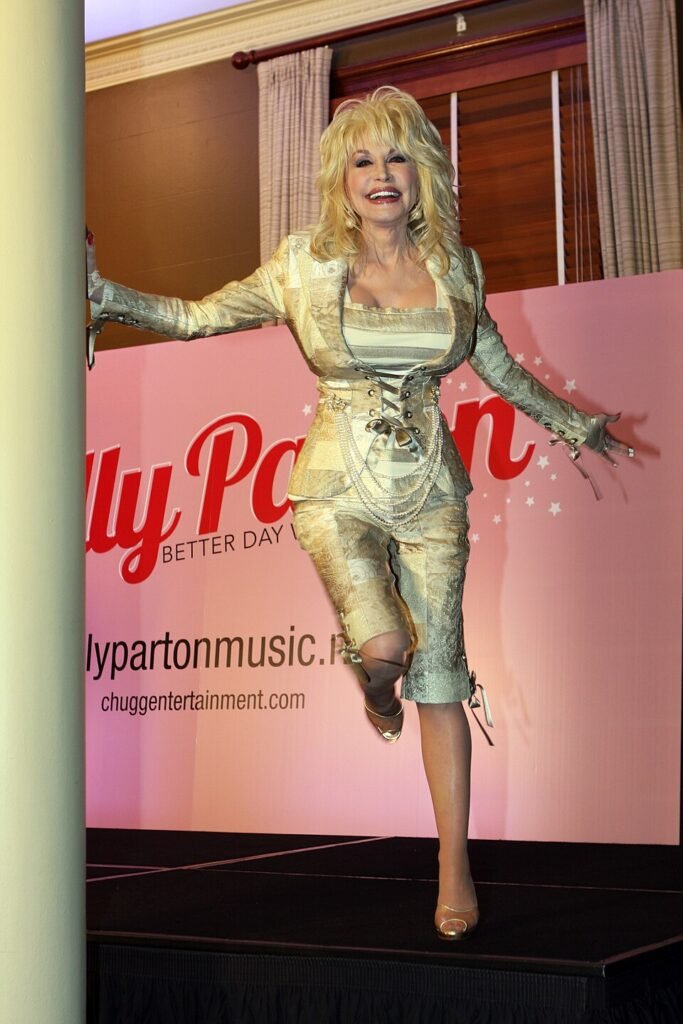
Dolly Parton (1946–2026): The Fortune, the Songs and the Legacy She Left
Dolly Parton at a Glance
| Dolly Parton at a Glance | Details |
|---|---|
| Born | 19 January 1946, Pittman Center, Tennessee; died 25 August 2026, Nashville, Tennessee |
| Age | 80 at death (died 25 August 2026) |
| Height | 5 ft 0 in (1.52 m) |
| Net Worth | Unresolved: $450 million (Forbes) vs $650 million (Celebrity Net Worth) at death |
| Weight | No reliable published figure |
| Husband | Carl Thomas Dean (married 30 May 1966; he died 3 March 2025) |
| House | Willow Lake Plantation, Brentwood, Tennessee (see What the Fortune Rests On) |
| @dollyparton |
A Smoky Mountains Girl in a One-Room Cabin
Dolly Rebecca Parton entered the world on 19 January 1946 in Pittman Center, Tennessee, in the foothills of the Great Smoky Mountains. Her father, Robert Lee Parton Sr., farmed tobacco and worked construction; he never learned to read or write, a fact his daughter cited for the rest of her life. Her mother, Avie Lee Parton, born Owens, kept the home and sang the old mountain songs that formed her daughter’s first repertoire. The family lived in a one-room cabin on the banks of the Little Pigeon River, and money ran short in every season.
Parton sang in church, performed on local radio and television while still at school, and appeared on the Grand Ole Opry stage at thirteen, where Johnny Cash introduced her. She graduated from high school in 1964 and moved to Nashville the same day, carrying her songs and a plan she rarely deviated from afterward: write, sing, own. Her father died in 2000 and her mother in 2003, both having lived to see the cabin years converted into one of the great self-made careers in entertainment. She died on 25 August 2026 in Nashville, aged eighty, and her family laid her to rest beside her husband at Woodlawn Memorial Park in Nashville after a private funeral on 28 August 2026. Major outlets including the BBC, The Guardian, the Associated Press, Reuters, The Times, USA Today, and The Tennessean reported her death, and this profile writes about her in the past tense throughout, as the record requires.
How Porter Wagoner Launched Dolly Parton
1967 — Hello, I’m Dolly
Parton built her Nashville start as a songwriter. She co-wrote hits for other singers, signed with Monument Records, and released her debut album, Hello, I’m Dolly, in 1967. Porter Wagoner then hired her as the female singer on his television program and recorded a long run of duets with her. The partnership gave her weekly national exposure for seven years and taught her the television craft she later used better than anyone in her field.
1971 — Coat of Many Colors
Coat of Many Colors (1971) turned her own upbringing into her signature song: a mother’s patchwork coat, sewn from rags, worn with pride into a schoolroom that mocked it. The song anchored an album of the same name and fixed her public identity permanently. She wrote from her own material, in her own dialect of plain storytelling, and audiences trusted her for it ever after.
1974 — Jolene and I Will Always Love You
Parton left Wagoner’s organization in 1974 and marked the departure with I Will Always Love You, a farewell she wrote for him and a song that later earned fortunes in other voices as well as her own. Jolene arrived the same season, a plea to a beautiful rival that became her most covered composition. Both songs came from the album Jolene, and both demonstrated her central business instinct: she kept her publishing. Every later recording of those songs, by anyone, paid the writer in Tennessee.
1980 — 9 to 5
The title song of the workplace comedy 9 to 5 gave Parton a pop number one in 1980 and an Oscar nomination, and the picture itself introduced her to audiences who never followed country radio. Here You Come Again had already crossed her over in 1977, and Islands in the Stream, her 1983 duet with Kenny Rogers, topped the pop chart outright. She moved between Nashville and the pop mainstream for the rest of her career without surrendering either audience.
1986 — Dollywood
Parton bought into a struggling theme park in Pigeon Forge in 1986 and relaunched it as Dollywood. The park grew into one of the most visited attractions in the Southeast and the largest employer in its county. She held a part-ownership stake rather than the whole enterprise, a distinction this profile maintains carefully in the fortune section below: only her stake ever counted toward her own wealth, and whole-park valuations never described her personal position.
1993 — The Duet with Reba McEntire
Parton joined Reba McEntire on Does He Love You in 1993, and the duet topped the country chart and won a Grammy Award; readers can follow that partnership in Reba McEntire’s net worth profile. The recording paired the two defining female voices of their country generations, and it arrived in a decade when Parton also recorded acclaimed acoustic and bluegrass albums that returned her to the mountain music of her upbringing.
1995 — The Imagination Library
Parton founded the Imagination Library in 1995 in honor of her father, and the program mails free books to young readers under five in communities across several countries. The library grew from a county initiative into one of the largest literacy programs in the world, and it delivered its two hundred millionth book during her lifetime. She funded it steadily and promoted it tirelessly, and obituaries in August 2026 treated it as a legacy equal to the songs.
2026 — The Final Year
Parton kept working into her final year, overseeing Dollywood’s expansions, recording, and writing from her Tennessee base even as public appearances thinned. Her death on 25 August 2026 closed a career that ran, without a fallow decade, from a 1964 bus ride to Nashville to the age of streaming. Tributes arrived from across music, politics, and the reading public her library served, and the Grand Ole Opry dedicated a performance to her memory within the week.
1977 — Here You Come Again
Here You Come Again gave Parton her pop breakthrough in 1977. Barry Mann and Cynthia Weil wrote the title song, and it topped the country chart, reached number three on the pop chart, and won her a Grammy Award. The album behind it sold in the millions and repositioned her from a Nashville star with crossover hopes into a mainstream entertainer whose records pop radio claimed as its own. She hosted network specials, filled arenas far outside the South, and built the national audience the 1980s then inherited.
1987 — Trio
Parton joined Emmylou Harris and Linda Ronstadt on Trio in 1987, an album the three singers had attempted for a decade before schedules and labels allowed it. The record topped the country chart, sold in the millions, and won a Grammy Award, and its harmonies set a standard that vocal groups still study. A sequel, Trio II, followed in 1999. The Trio records demonstrated her range in the opposite direction from the pop hits: three voices, acoustic instruments, and material drawn from the same mountain tradition she had carried out of Pittman Center in 1964.
1999 — The Grass Is Blue and the Honors Years
The Grass Is Blue (1999) returned her fully to bluegrass and won the Grammy Award for Best Bluegrass Album, the first of a late run of acoustic records critics ranked with her finest work. The honors then accumulated at a pace that matched the hits of earlier decades: induction into the Country Music Hall of Fame in 1999, a Kennedy Center Honor in 2006, and induction into the Rock and Roll Hall of Fame in 2022, an honor she first tried to decline on the grounds that she had not earned it in rock, and then accepted and answered with Rockstar, a 2023 rock album that debuted at number three. The sequence captures her public character exactly: reluctance, humor, and then a record.
Carl Dean, Fifty-Eight Years and a Quiet Marriage
Parton married Carl Thomas Dean on 30 May 1966 in Ringgold, Georgia, in a small ceremony the couple kept deliberately quiet. Dean ran an asphalt-paving business and avoided the spotlight with a consistency that became famous in itself: he attended almost no public events across fifty-eight years of marriage, and Parton protected that privacy as fiercely as she promoted her own work. He died on 3 March 2025 in Nashville, aged eighty-two, and she spoke afterward about grief wearing her down and about neglecting her own health while she cared for him. She survived him by less than eighteen months.
Her parents frame the family’s public record. Robert Lee Parton Sr. died in 2000; Avie Lee Parton died in 2003. Parton built the Imagination Library as a memorial to her father’s illiteracy and quoted her mother’s sayings in interviews for sixty years. The family she came from remained the compass of the public life she built: the cabin in the Smokies, the church singing, and the storytelling discipline all trace directly to Pittman Center. Her Instagram account, @dollyparton, carried the announcement of her death and now carries statements from her estate.
Songs, Dollywood and a $450 Million Fortune
The two named sources disagree, and this profile prints the disagreement unresolved, exactly as the record stands. Forbes counted Parton at $450 million in its 2025 America’s Richest Self-Made Women listing, a figure obituaries repeated after her death. Celebrity Net Worth counts $650 million at death. The gap runs largely through methodology: Forbes valued her song catalogue at roughly $120 million, while Celebrity Net Worth values the same catalogue nearer $200 million, and the two trackers treat her business holdings differently as well. No probate figure reconciles the two counts in public, because much of the estate sits outside any published accounting. Readers deserve both numbers and the reason they differ, and this profile gives them both rather than a false precision.
The components, at least, stand clear. Her catalogue of some three thousand songs, held through her own publishing, generated income from every era of recording and from covers by other artists across six decades. Dollywood contributed through her part-ownership stake only; valuations of the whole enterprise describe a business she shared with partners, not her personal wealth, and this profile never counts them as hers. Touring grosses across her career ran enormous and belong in the earnings column, not the wealth column. Books, licensing, and her later business ventures added steady income. The fortune, on either count, ranks her among the wealthiest self-made women in entertainment history, and she built it while giving away sums that would constitute a fortune on their own.
The House
Willow Lake Plantation in Brentwood, Tennessee, served as her principal home: roughly sixty-three acres she bought in 1999 and held for the rest of her life. Post-death coverage cited a Realtor.com estimate of around $8.8 million for the property, and this profile labels that figure exactly as its source presents it, an estimate that coverage reported after her death, not a valuation from any wealth source.
The Songs, the Park and the Library She Left
Parton’s legacy divides into the work and the example. The work fills a catalogue of songs other artists still record, a park that employs her home county, and a library that mails books to young readers under five across the world. The example may travel further: a performer from genuine poverty who kept her publishing, owned her businesses, controlled her image for sixty years, and converted fame into literacy funding at a scale governments rarely match.
Her estate now holds the position her lifetime built: a catalogue that keeps earning, a stake in a thriving park, and a charitable program designed to outlive its founder. Whether the final accounting reads $450 million on the Forbes count or $650 million on the Celebrity Net Worth count, the direction of the money tells the story either way. Dolly Parton earned it in public, kept what she earned with unusual discipline, and aimed a remarkable share of it at strangers’ bookshelves. The industry she entered in 1964 will not see her like again soon.