Bruce Willis: Net Worth, Wife Emma, Five Daughters and the Career That Defined an Era
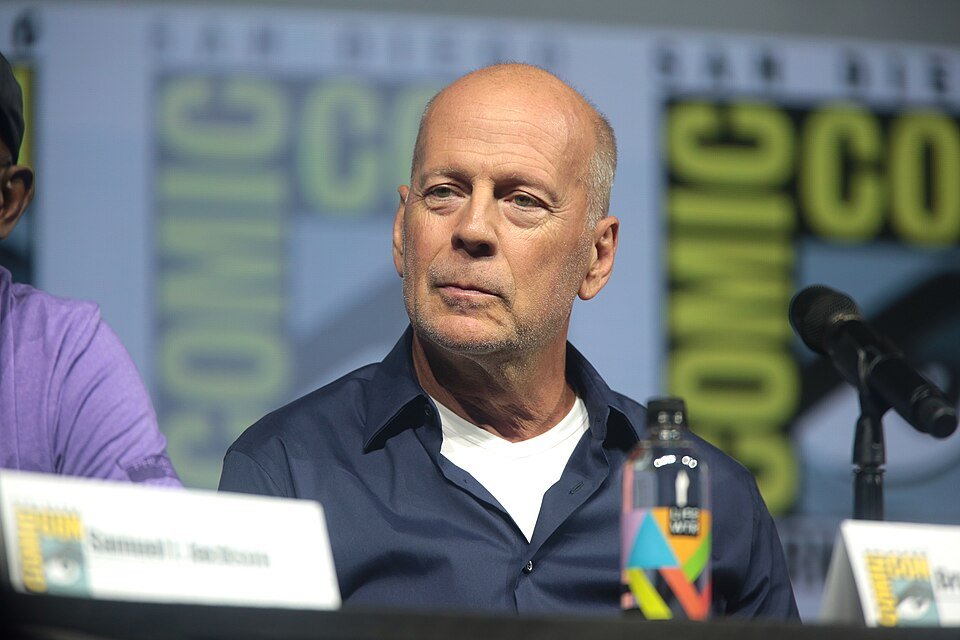
Bruce Willis: Net Worth, Wife Emma, Five Daughters and the Career That Defined an Era
Bruce Willis at a Glance
| Bruce Willis at a Glance | Details |
|---|---|
| Born | 19 March 1955, Idar-Oberstein |
| Age | 71 |
| Height | 6 ft 0 in |
| Net Worth | $250 million (Celebrity Net Worth) |
| Weight | No reliable published figure |
| Wife | Emma Heming Willis, married 21 March 2009 |
| Children | Five daughters: Rumer (b. 1988), Scout (b. 1991), Tallulah (b. 1994), Mabel (b. 2012), Evelyn (b. 2014) |
| Parents | David Willis (d. 2009); Marlene Willis (née Kesper) |
| No verified personal account |
Bruce Willis defined a kind of stardom. The smirk, the vest, the ordinary man in the wrong place at the wrong time: for three decades he was the action hero audiences believed, because he played heroes as working men rather than supermen. He retired from acting in 2022, and his family has since shared, in its own words and at its own pace, the story of his health. He is living, and family-sourced reports across 2025 and 2026 corroborate that status. Celebrity Net Worth puts his fortune at $250 million. This profile follows the verified record: the beginnings, the career, the family, the houses, and what the money rests on.
A New Jersey Boy Who Tended Bar
Bruce Willis was born on 19 March 1955 in Idar-Oberstein. His father was David Willis, and his mother was Marlene Willis, née Kesper. The family moved to New Jersey when he was a small boy, and it was there — in Penns Grove, in a working household — that he grew up. School gave him an unexpected gift: he discovered that performing dissolved a stammer that had troubled him, and the boy who struggled to speak fluently found, on a stage, that the words came. It is the kind of detail that sounds invented and is not; Willis has told the story himself for years.
After school came the working years — security guard, factory shifts, bartending in New York while the auditions accumulated. His father David died in 2009, by which time his son had been one of the most famous men in the world for two decades. The route matters to the persona: Willis built his screen character, the wisecracking everyman who refuses to let anything impress him, from the ordinary jobs he had actually held himself, and audiences sensed the truth of it from the first.
How Moonlighting and Die Hard Made Willis a Star
1985–1988: Moonlighting and Die Hard
The breakthrough was television: Moonlighting, from 1985, in which his rapid-fire sparring with Cybill Shepherd made him a star and won him the industry’s top honours. Then, in 1988, came Die Hard. Willis was not the obvious choice for an action lead — he was the comic actor from the detective show — and the film’s genius was to use exactly that: John McClane was a tired, frightened, funny man in a vest, and the picture rewrote what an action hero could be. Observers considered his reported fee for it, $5 million, remarkable at the time; the sequels that followed made the role, and the fee structure, considerably larger.
1994–2000: Pulp Fiction to The Sixth Sense
The 1990s showed the range inside the stardom. Pulp Fiction (1994) placed him at the centre of the decade’s most influential film; The Fifth Element (1997) took the persona into science fiction; Armageddon (1998) was one of the biggest hits of its year. The Sixth Sense (1999) then revealed the quiet actor inside the action star — a restrained, sorrowful performance in a film that became a phenomenon. His deal on it is the stuff of industry legend: a reported $14 million salary plus a participation in the profits took his total compensation to a reported figure of around $100 million, the largest single payday of his career, recorded here as earnings history rather than as present wealth. Unbreakable (2000) reunited him with the same director in a darker key.
2010–2022: the elder action statesman
The Expendables films gathered Willis with the other giants of his action generation, among them Sylvester Stallone’s net worth profile subject Sylvester Stallone, in a franchise built on the audience’s affection for exactly that company. Glass (2019) completed a trilogy begun nineteen years earlier with Unbreakable. Through the 2010s he worked constantly, the biggest name on many a marquee, until in March 2022 his family announced that he was stepping away from acting after an aphasia diagnosis. In February 2023 the family shared the fuller diagnosis of frontotemporal dementia, explaining in their own words that challenges with communication are only one symptom of the condition he faces.
The craft behind the persona rewards a closer look. Willis acts with economy: a raised eyebrow does the work other actors give to a speech, and his comic timing — honed on Moonlighting, where the dialogue flew at screwball speed — lets him land a joke in the middle of an explosion without breaking the scene’s reality. Directors used that economy in different registers. Quentin Tarantino cast him as the boxer Butch in Pulp Fiction and drew a performance of patience and sudden violence. Luc Besson put him at the centre of The Fifth Element’s operatic science fiction. M. Night Shyamalan, in The Sixth Sense and Unbreakable, asked for the quietest work of his career and received performances built almost entirely on listening. The action films paid the largest fees, but the dramatic work explains the longevity: audiences trusted him in any register, so studios kept casting him in all of them, for thirty-five years.
Emma Heming, Five Daughters and a Second Marriage
Willis’s wife is Emma Heming Willis, whom he married on 21 March 2009 in a ceremony in Turks and Caicos, followed by a civil ceremony in Beverly Hills days later; the marriage continues. He was married before, to Demi Moore, from November 1987 until courts finalised their divorce in 2000, and the two have remained on close terms — a fact the whole family’s public life has demonstrated repeatedly in the years since his diagnosis.
He has five daughters. Rumer (born 1988), Scout (born 1991) and Tallulah (born 1994) are his daughters with Moore; Mabel (born 2012) and Evelyn (born 2014) are his daughters with Emma Heming Willis. The five, together with their mothers, form the circle that has surrounded him since his retirement, and the family’s public photographs from birthdays and holidays show a clan that gathers often and laughs easily in one another’s company, and the family’s openness about his condition — with his wife’s advocacy leading it — has won wide credit for raising public understanding of frontotemporal dementia.
The family’s own account, given to ABC News in an interview with Diane Sawyer in August 2025, describes his present arrangements in their words: he lives in a separate single-storey residence near the family residence, with round-the-clock professional care; the family are there daily; and he is mobile and in good health in other respects. Family interviews in the autumn of 2026 described him as very present. This profile uses the family’s wording, as they have given it, and adds nothing to it: no speculation, and no figures for the cost of care, which the family has not published and this profile does not guess. He has no verified personal Instagram account; updates come through family accounts, principally his wife’s.
His influence on the business outlasts the fees. Before Die Hard, action heroes arrived as supermen; after it, studios spent a decade casting ordinary men in extraordinary trouble, and Willis’s own career supplied the template’s finest examples. The film also changed star economics: his reported $5 million fee in 1988 startled the industry, and the profit participations that followed across the 1990s — above all The Sixth Sense arrangement — showed leading actors how much value a global hit could return to the face on its poster. Agents still cite those deals when they negotiate for today’s stars. Willis earned the money the films made, and then, in a sense, he earned a second fortune for everyone who followed him into the genre he reshaped.
Action Films and a $250 Million Fortune
Celebrity Net Worth puts Bruce Willis’s net worth at $250 million, a figure the tracker has carried essentially unchanged for many years. There is no competing total from Forbes or the Sunday Times Rich List, so the $250 million stands as the named source’s estimate, stable and undisputed in the published record.
The fortune rests on the peak years of a particular kind of stardom. Willis was, for roughly fifteen years, one of the few actors in the world who could carry a film to a worldwide audience on his name, and the industry paid him accordingly — beginning with the reported $5 million for Die Hard in 1988 and reaching its summit with The Sixth Sense, where the reported combination of a $14 million salary and profit participation produced total compensation of around $100 million from a single film. Those are earnings, and this profile records them as earnings; but earnings at that scale, across that many hits — the Die Hard series, Armageddon, the Shyamalan films, decades of leading roles — are precisely what a quarter-billion-dollar fortune comes from. His income from acting ceased on his retirement in 2022; the fortune is now the accumulated capital of the career, held for a family whose size and devotion this profile sets out above.
Houses
The documented property record includes the Brentwood Park family residence bought in 2019 at a reported $9.8 million; the nearby single-storey residence where he now lives, for which nobody has published a price and this profile guesses none; the Parrot Cay compound, sold in 2019 at a reported $27 million; and an Idaho ranch, sold in 2018. These are reported transactions for individual properties, recorded as such, and this profile constructs no inventory total from them.
The Ordinary Hero of the Action Era
The lasting picture of Bruce Willis is double, and both halves are honourable. The first is the career: the bartender from New Jersey who became the defining action star of his era by playing heroes as ordinary men, and who proved, in The Sixth Sense and Unbreakable, that the ordinary man could carry silence and sorrow as powerfully as he carried a wisecrack. John McClane alone would secure the reputation; the filmography around him makes it unassailable.
The second is the retirement, and the manner of it: a family that announced his condition in its own words, asked for and received the public’s kindness, and has turned private difficulty into public advocacy that has genuinely informed millions about a little-understood illness. At 71, surrounded by his wife, his former wife and his five daughters, with a fortune of $250 million built entirely in the years when he could work, Bruce Willis’s position is that of a man whose career is complete and whose family is, by every account the family itself gives, exactly where he would want it: close.