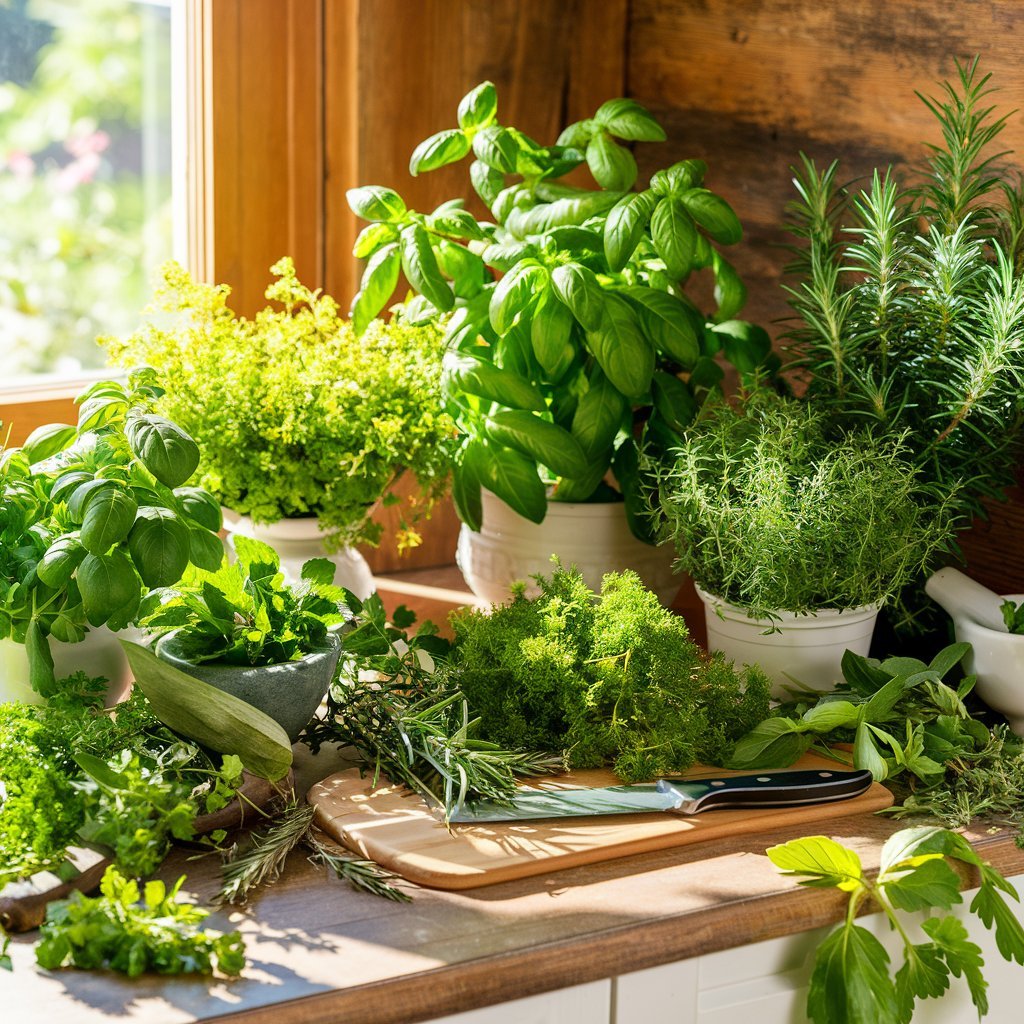
How to Keep Fresh Herbs From Going Bad So Fast
How to Keep Fresh Herbs From Going Bad So Fast
Buying fresh herbs feels great until day three, when the cilantro is slime and the basil is black. Americans throw away an absurd amount of fresh herbs — and at $3 to $4 a bunch, that adds up. But herbs don’t have to die fast; most wilt from bad storage, not age.
Here are six methods that actually work, matched to each herb type.
The Bouquet Method: For Tender Herbs
Tender herbs — parsley, cilantro, dill, mint — want to be treated like flowers. Trim the stems, stand them in a jar with an inch of water, loosely cover with a plastic bag, and refrigerate (except basil — see below). Change the water every couple of days. Stored this way, parsley and cilantro last 2 to 3 weeks instead of 3 days. It’s the single biggest herb-storage upgrade and it takes 60 seconds.
The damp-paper-towel variation: wrap the herbs loosely in a slightly damp paper towel, seal in a zip bag with some air, and refrigerate. This works well for herbs you use in small amounts — you grab what you need without disturbing the rest. Either method beats the default (leaving them in the produce bag to suffocate), which is how most herbs die. The enemy is trapped moisture and ethylene; airflow plus humidity control wins.
Basil Is Special (and Woody Herbs Are Easy)
Basil hates the cold — refrigeration turns it black. Keep basil like cut flowers on the counter: stems in water, at room temperature, loosely tented with a plastic bag. It lasts 7 to 10 days this way and you get a fragrant little bouquet as a bonus. If you must refrigerate basil, the paper-towel-and-bag method in the warmest part of the fridge (the door) minimizes damage.
Woody herbs — rosemary, thyme, oregano, sage — are the low-maintenance ones. Wrap in a dry (not damp) paper towel, seal in a bag, refrigerate: 2 to 3 weeks easily. Their low moisture content is why they last. Chives follow the tender-herb rules. The pattern: match the method to the herb’s structure, not one-size-fits-all.
When Fresh Isn’t Happening: Preservation
For herbs about to turn, preservation beats the trash. Freezing: chop tender herbs, pack into ice cube trays with olive oil or water, freeze, then bag the cubes — instant flavor bombs for cooking (not for garnish; texture changes). This works brilliantly for basil, cilantro, and parsley. Pesto freezes beautifully for the same reason — make a batch when basil is abundant.
Drying suits woody herbs: hang bundles upside down in a dark, airy spot for 1-2 weeks, then crumble into jars. Dried rosemary, thyme, and oregano are genuinely good (use 1/3 the amount of fresh). And the ultimate waste-killer: herb compound butter — chop any mixed herbs into softened butter, roll into a log, freeze, slice off coins for steak, vegetables, or bread. It uses up odds and ends deliciously and keeps for months.
Herb Storage Cheat Sheet
Match the method to the herb:
- Tender (parsley, cilantro, dill, mint): stems in water, bag-tented, fridge. 2-3 weeks.
- Basil: stems in water on the COUNTER, not the fridge. 7-10 days.
- Woody (rosemary, thyme, oregano): dry paper towel, sealed bag, fridge. 2-3 weeks.
- Freezing in oil cubes: best for basil, cilantro, parsley past their prime.
- Drying: best for woody herbs; hang 1-2 weeks.
- Compound butter: the delicious way to use up odds and ends.
The Bottom Line
Keeping fresh herbs from going bad fast is about matching storage to the herb: water-jar in the fridge for tender herbs, countertop water-jar for basil, dry-towel bag for woody herbs. Seconds of effort buys weeks of freshness.
And when they’re fading anyway, freeze them in oil or make compound butter. The only bad outcome is the trash can.
Growing Your Own: The Endless Herb Supply
The ultimate solution to wilting store herbs is growing your own — and it’s easier than the gardening industry suggests. A sunny windowsill (6+ hours of light) supports basil, mint, chives, and parsley year-round in small pots. Total startup: $15 in pots and soil, $3 in seeds or $4 nursery starts. A $4 basil plant produces $50+ worth of basil over a season. The economics are absurd — in your favor.
The low-maintenance approach: buy nursery starts (not seeds — faster gratification), use pots with drainage, water when the top inch is dry, and harvest regularly (pinching basil tops makes it bushier — harvesting is maintenance). Mint deserves its own pot always — it invades everything. In summer, move pots outside; they’ll explode with growth. Bring them in before first frost. Even a tiny balcony becomes a serious herb garden with 4-5 pots.
No outdoor space or light? A $30 LED grow light on a timer turns any corner into a herb garden — 14-16 hours of light daily mimics summer. Hydroponic countertop gardens ($80-$150) are the foolproof premium option: self-watering, self-lighting, harvest in weeks. They’re genuinely set-and-forget. Between windowsill pots and a small grow light, most households can be herb self-sufficient for under $50 — and fresh-cut herbs beat stored ones every time.
Quick Answers
What’s the easiest herb to grow indoors?
Mint (nearly indestructible), chives, and basil in good light. Start with nursery plants, not seeds, for fastest results.
Why does my indoor basil keep dying?
Usually insufficient light or overwatering. Basil wants 6+ hours of strong light and soil that dries slightly between waterings.
Can I freeze fresh herbs?
Yes — chop and freeze in oil or water in ice cube trays. Perfect for cooking (texture changes, so not for garnish). Basil, cilantro, and parsley freeze best.
Here’s a preservation trick most people don’t know: herb salt. Layer fresh herbs with coarse salt in a jar (roughly 1 part herbs to 3 parts salt), and within days you have intensely flavored seasoning salt that keeps for months at room temperature. Rosemary salt, thyme salt, sage salt — they’re phenomenal on roasted vegetables, meats, and eggs, and they make excellent gifts. The salt draws moisture from the herbs, preserving their flavor compounds far better than air-drying alone.
Another underused method: herb-infused oils and vinegars. Pack a clean bottle with herbs (rosemary, thyme, or basil), cover with good olive oil or vinegar, and in 1-2 weeks you have flavored oil for dressings and cooking. One safety note: fresh herbs in oil at room temperature can harbor botulism risk — refrigerate herb oils and use within a week, or use dried herbs for shelf-stable versions. For longer storage, freezing herbs in oil (as cubes) is the safe path. These preserved forms extend your herb investment from days to months.
Further reading: the USDA on storing fresh produce, FoodSafety.gov on produce safety.