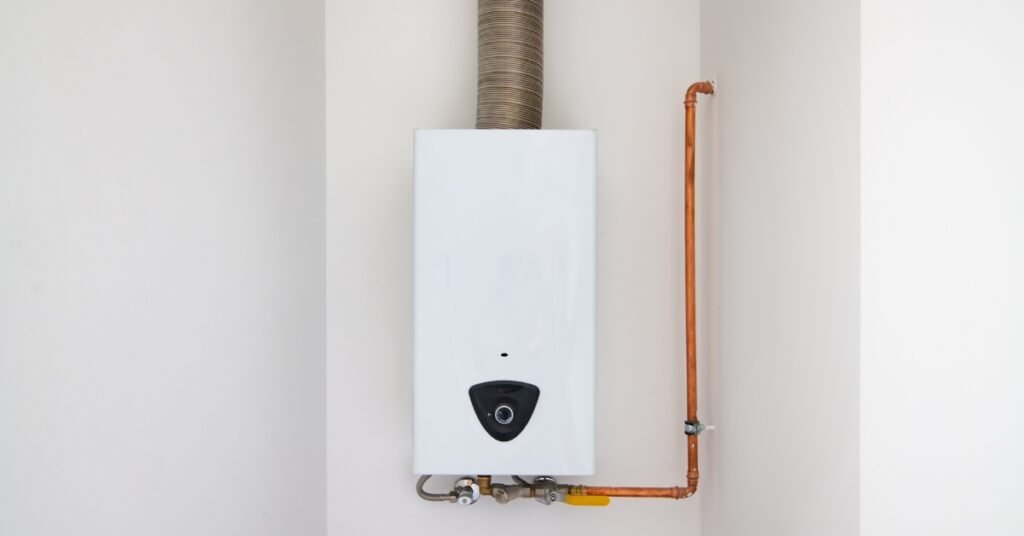
Is Upgrading to a Tankless Water Heater Worth It?
Is Upgrading to a Tankless Water Heater Worth It?
Tankless water heaters promise endless hot water, lower energy bills, and a unit the size of a suitcase instead of a bulky tank. They also cost two to three times more installed. So is the upgrade actually worth it, or is it expensive hype?
I’ve run the numbers both ways. Here’s the honest answer.
The Real Benefits
Endless hot water is the headline benefit and it’s genuinely real — a properly sized tankless unit heats water on demand indefinitely. No more scheduling showers around the tank’s recovery, no more cold surprises when guests visit. For households that regularly run out of hot water, this alone justifies the upgrade.
The other benefits: 20+ year lifespan (vs. 10-12 for tanks), about 30% less space, no catastrophic tank-failure flooding risk (a ruptured 50-gallon tank is a homeowner’s nightmare), and energy savings of $100 to $200 a year since you’re not keeping 50 gallons hot 24/7. Gas tankless units are the efficiency stars; electric whole-house tankless often requires major panel upgrades that erode the value.
The Honest Costs and Drawbacks
Installed cost: $2,000 to $4,500 for most homes, versus $900 to $1,800 for a tank. The premium isn’t the unit — it’s the retrofit: upgraded gas lines (tankless needs more gas flow than a tank), new venting (often stainless steel), and sometimes electrical work. In homes already set up for tankless, the math improves dramatically.
The drawbacks nobody advertises: the “cold water sandwich” (a brief slug of cold water when hot water demand stops and restarts), minimum flow requirements (a trickling faucet may not trigger the burner), hard water scaling that demands annual descaling maintenance ($100 to $200 professionally, or DIY with vinegar), and higher repair costs (complex electronics vs. a tank’s simple parts). In cold climates, incoming water is colder, so you need a larger (pricier) unit to hit the same output — sizing matters enormously.
The Payback Math
Here’s the arithmetic: the tankless premium over a tank is roughly $1,500 to $2,500. Annual energy savings: $100 to $200. Simple payback: 8 to 15 years. But that’s not the whole picture — factor in one avoided tank replacement (tanks last 10-12 years, tankless 20+), and the lifetime economics tilt further toward tankless for long-term homeowners.
It’s worth it if: you’re staying 10+ years, your household outgrows a tank’s capacity regularly, space is tight, or your current setup needs replacement anyway (the incremental cost over a scheduled tank replacement is smaller than a mid-life switch). It’s not worth it if: you’re selling soon, your hot water needs are modest, you have very hard water and won’t maintain it, or your home needs $2,000+ in gas/electrical upgrades to support it. Get the total installed quote — not the unit price — before deciding.
Tankless Decision Checklist
Worth it when most of these are true:
- You’re staying in the home 10+ years.
- Your household regularly runs out of hot water.
- Your gas line and venting need minimal upgrading (get a quote).
- Space savings matter (small utility areas).
- You’ll commit to annual descaling in hard-water areas.
- Not worth it: selling soon, modest hot water needs, or $2,000+ in required upgrades.
- Always compare total installed cost, not unit price.
The Bottom Line
Upgrading to a tankless water heater is worth it for long-term homeowners who value endless hot water and will stay long enough for the 8-to-15-year payback. It’s not worth it as a short-term play or when the retrofit costs balloon.
The key is the installed quote for your specific house. Same unit, different homes, wildly different totals — get the real number before you decide.
Tankless for Specific Situations
Certain situations make tankless an obvious yes. Large families with back-to-back shower needs: a properly sized gas tankless ends the hot-water schedule negotiations forever — the defining quality-of-life upgrade for households of 5+. Vacation homes: no tank of water sitting for months growing Legionella-friendly lukewarm conditions or risking catastrophic leaks while you’re away; tankless only heats on demand. Tiny utility spaces: wall-mounted tankless frees 10+ square feet of floor space — in small homes, that’s a meaningful gain.
And situations where it’s an obvious no: homes with very hard water and owners who won’t descale annually (the heat exchanger will choke — this is the #1 tankless killer); households with minimal hot water use (a single person who showers briefly gains almost nothing); homes needing $3,000+ in gas line and venting upgrades (the payback stretches past the unit’s life); and off-grid or power-outage-prone areas — most tankless units need electricity for controls and ignition, so no power means no hot water (tanks with standing pilots keep working).
The point-of-use alternative deserves mention: small electric tankless units ($150-$300) under a distant sink or for a single bathroom solve the ‘wait forever for hot water’ problem without whole-house commitment. They need only a 30-amp circuit and install in an afternoon. For the common complaint of a far bathroom with slow hot water, a point-of-use unit or a hot-water recirculation pump ($200-$400) often satisfies better than whole-house tankless at a fraction of the cost.
Quick Answers
Do tankless water heaters need maintenance?
Yes — annual descaling (vinegar flush) is critical, especially with hard water. Skip it and efficiency plummets within years.
Can a tankless heater run out of hot water?
No — it heats on demand indefinitely. But it has a max flow rate; exceed it (3 showers + dishwasher simultaneously) and temperature drops.
Are electric tankless heaters worth it?
Rarely for whole-house — they need massive electrical upgrades. Gas tankless is the proven value; electric suits point-of-use applications.
The cold-water sandwich deserves a fuller explanation because it surprises new tankless owners. When you turn off hot water briefly (soaping up in the shower) and turn it back on, the unit must re-fire — during those seconds, the hot water already in the pipes arrives first, then a slug of cold water that sat in the heat exchanger, then hot water resumes. The result: hot-cold-hot. It’s brief and harmless, but startling if unexpected. Recirculation systems ($500-$1,000) with a small buffer tank eliminate it entirely — worth considering during initial installation when the incremental cost is lowest.
Sizing is where tankless purchases succeed or fail. Units are rated by temperature rise at a given flow rate — a unit that delivers 9 GPM in Texas (70°F groundwater, small rise needed) might deliver only 4 GPM in Minnesota (40°F groundwater, huge rise needed). Size for your groundwater temperature plus simultaneous peak demand (showers + dishwasher + laundry). Undersized units cause the dreaded lukewarm-shower-when-laundry-runs syndrome. A good installer does this calculation; a bad one sells you whatever’s in stock. Ask specifically: ‘What flow rate will this deliver at my winter groundwater temperature?’ If they can’t answer, find another installer.
Further reading: the Department of Energy on tankless water heaters, Energy Star water heater guidance.