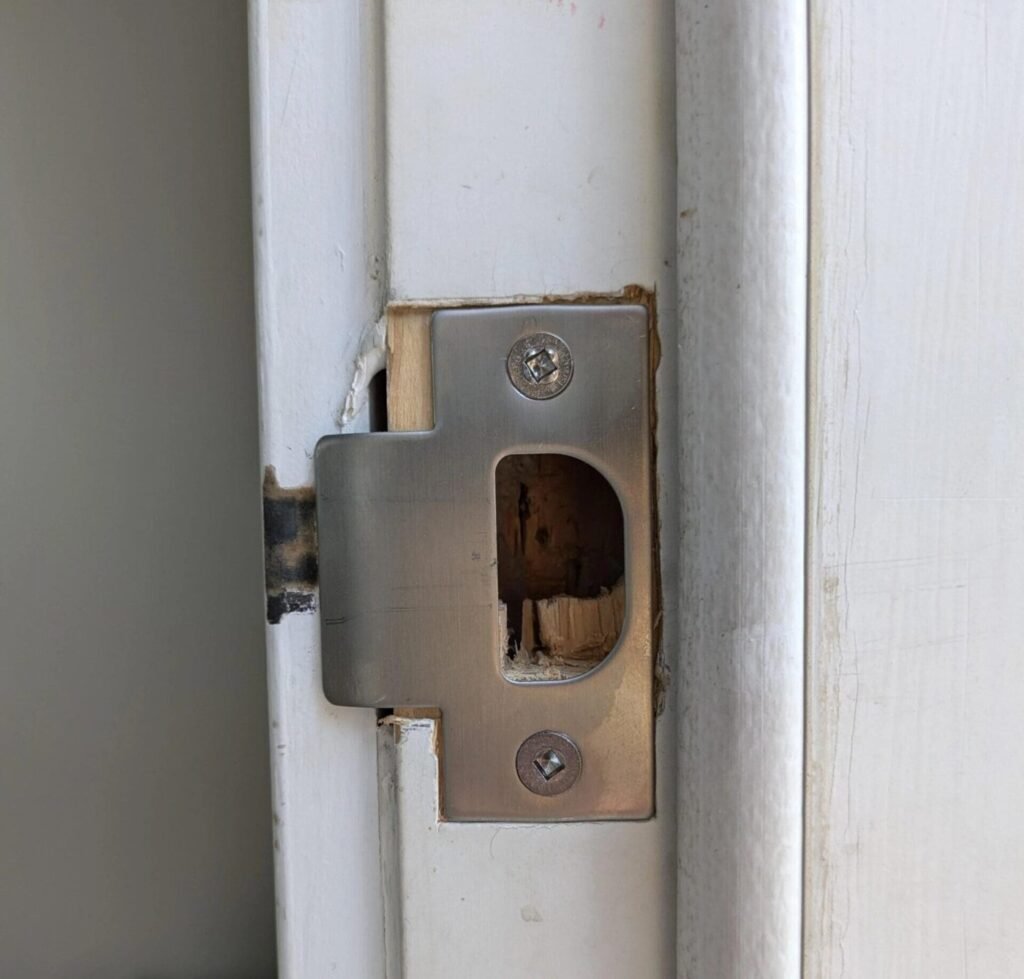
How to Fix a Door That Won’t Latch Properly
How to Fix a Door That Won’t Latch Properly
A door that won’t latch is one of those small annoyances that degrades daily life — the bathroom door that swings open, the bedroom that won’t stay shut. The good news: it’s almost always a simple alignment issue, fixable in 10 to 30 minutes with basic tools.
Here’s how to diagnose and fix it, in order of likelihood.
Diagnose: Where Is It Hitting?
Close the door slowly and watch where the latch meets the strike plate. The lipstick trick makes this precise: smear lipstick or chalk on the latch bolt, close the door, and check where the mark lands on the strike plate. Above the hole? The door has dropped. Below? It’s risen. Off to the side? It’s shifted horizontally. This 30-second test tells you exactly what to fix.
The most common cause by far: loose top hinge screws letting the door sag. Open the door and try to lift it by the handle — if it moves, the hinges are loose. Check the hinge screws; in many cases they’ve stripped out of the soft door-frame wood and the hinge is barely holding. Seasonal swelling is the other big one — doors stick in humid summer and shrink in dry winter. If the door worked fine in January and won’t latch in August, it’s moisture, not hardware.
Fix the Hinges First
Tighten every hinge screw. If screws spin without gripping (stripped holes), the classic fix: remove the screw, squirt wood glue into the hole, tap in a wooden golf tee or dowel, let it dry, trim flush, and re-drive the screw. It holds like new. For the top hinge specifically, replace one short screw with a 3-inch deck screw driven into the wall stud behind the frame — this single screw fixes most sagging doors permanently by anchoring the hinge to structure instead of just trim.
If the door still sags after the hinges are solid, you can slightly bend the hinge knuckles: remove the hinge pin, lay the hinge on a hard surface, and tap the knuckles with a hammer to close them slightly — this shifts the door’s angle. It’s an old carpenter’s trick that works surprisingly well for minor misalignment. Rehang, test, repeat if needed.
Adjust the Strike Plate and the Door Edge
If the latch hits above or below the strike plate hole after the hinges are fixed, move the strike plate: unscrew it, chisel the mortise slightly in the needed direction (a sharp 3/4-inch chisel and patience), and reinstall. For small misalignments (1/8 inch or less), just file the strike plate hole larger in the needed direction with a metal file — five minutes, no chiseling.
If the door binds against the frame (swelling or paint buildup), mark the rub spot with the lipstick trick, remove the door, and plane or sand the edge — take off a little at a time and test frequently. Seal the sanded edge with paint or polyurethane immediately; bare wood absorbs moisture and swells again. For chronic seasonal swelling in humid climates, a dehumidifier near the problem door or switching to a solid-core door eventually solves it permanently.
Door Latch Fix Sequence
Do these in order:
- Diagnose with the lipstick/chalk test — find exactly where it hits.
- Tighten all hinge screws; fix stripped holes with glued dowels.
- Drive a 3-inch screw through the top hinge into the stud.
- File or reposition the strike plate for small misalignments.
- Plane/sand binding edges a little at a time; seal bare wood.
- Consider humidity control for chronic seasonal swelling.
The Bottom Line
A door that won’t latch is usually fixed at the hinges — tighten, repair stripped holes, and anchor the top hinge to the stud. The whole job takes 10 to 30 minutes with a screwdriver and maybe a chisel.
Diagnose first with the lipstick trick so you’re fixing the actual problem. Small, precise adjustments beat guesswork every time.
Preventing Door Problems Long-Term
Doors go out of alignment for reasons — address the causes and the fixes last. Humidity is the #1 cause of seasonal sticking: maintain indoor humidity at 30-50% with HVAC or dehumidifiers, and ensure bathroom/kitchen exhaust fans vent outside (dumping moist air into attics or wall cavities causes endless moisture problems). Paint or seal all six sides of exterior doors — the top and bottom edges are often left bare, absorbing moisture and swelling. This single neglected step causes a huge share of door problems.
Foundation movement causes the persistent misalignments: doors that gradually worsen year over year, especially on one side of the house, may signal settling. Monitor with the penny test (can you slide a penny under the door gap consistently, or does it vary by season?). Seasonal variation is normal; steady one-direction worsening warrants a foundation check. Don’t plane a door to fit a moving frame repeatedly — you’ll eventually plane away the door while the real problem progresses.
The 5-minute annual door maintenance: tighten all hinge screws, lubricate hinges and lock mechanisms with graphite or silicone spray (never oil — it gums up), check weatherstripping, and touch up paint on exterior doors before finish failure exposes wood. This tiny ritual prevents nearly all common door problems. Doors are simple machines — hinges, latch, frame — and simple machines last indefinitely with basic care.
Quick Answers
Why does my door stick in summer but not winter?
Humidity — wood absorbs moisture and swells in summer, shrinks in dry winter air. Maintain 30-50% indoor humidity to minimize it.
Can I fix a sagging door without removing it?
Often yes — tightening hinges and driving a long screw through the top hinge into the stud fixes most sagging with the door in place.
What’s the lipstick trick for doors?
Smear lipstick on the latch, close the door, and see where the mark lands on the strike plate — it shows exactly where the misalignment is.
The strike-plate reinforcement is the security upgrade hiding inside this repair. While you have the strike plate off for adjustment, consider upgrading to a reinforced strike plate with 3-inch screws driven into the wall stud ($12-$15 for the kit). Standard strike plates use 3/4-inch screws into soft door-frame wood — a firm kick defeats them. The reinforced version anchored to the stud resists kick-ins dramatically better. It’s the single highest-ROI home security upgrade: $15, 15 minutes, and your door goes from decorative to genuinely resistant. Since you’re already adjusting the plate for the latch fix, the incremental effort is nearly zero.
Further reading: This Old House door repair guides, Family Handyman door fixes.