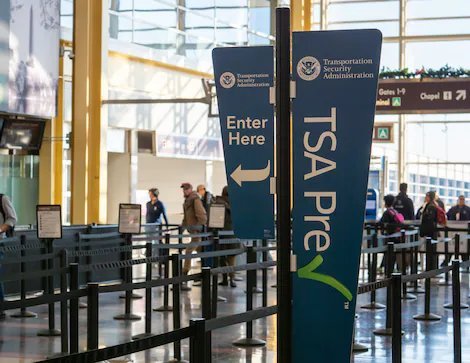
TSA PreCheck for Twice-a-Year Flyers: Worth It? (2026)
TSA PreCheck for Twice-a-Year Flyers: Worth It? (2026)
Is it worth getting tsa precheck if I fly twice a year? Here’s the real deal, based on what actually works rather than what sounds good.
At $78 for five years, TSA PreCheck costs less than $16 a year. But if you only fly twice annually, is skipping the regular line twice a year worth even that? I ran the numbers — and found the free loopholes.
Here's the honest answer for infrequent flyers.
What really matters
The math: $78 ÷ 5 years ÷ 2 trips = $7.80 per trip
PreCheck costs $78 for five years (often $70 on renewal). At two roundtrips a year, that's 20 airport visits over five years — under $4 per screening. The question isn't really money; it's whether 10-30 minutes saved per trip matters to you. For most people, one stressful sprint to a gate avoided pays for the whole five years.
The real value isn't time — it's stress
PreCheck lines are shorter, but the bigger win is predictability: shoes stay on, laptop stays packed, no liquid-bag ritual. For anxious flyers, parents with kids, or tight connections, removing security uncertainty transforms the airport experience. My twice-a-year-flying dad calls it 'the best $78 I've spent on travel' — and he's the cheapest man I know.
Related reading: Las Vegas Weekend Budget: How Much Spending Money You Need
The free loopholes: credit cards that reimburse it
Many travel credit cards (Chase Sapphire Reserve, Amex Platinum, Capital One Venture X, and others) include a PreCheck/Global Entry fee credit every 4-5 years. If you hold one, PreCheck is literally free — there's no reason not to get it. Check your card benefits before paying out of pocket; you might already be covered.
Consider Global Entry instead ($120, includes PreCheck)
If either of your two annual trips is international, Global Entry ($120/5 years) includes PreCheck plus expedited US customs — a massive upgrade for international arrivals. The math: $24/year for both. For domestic-only flyers, PreCheck alone is the right call. One interview, five years of both.
The enrollment reality: 10 minutes + one appointment
Apply online (10 minutes), then schedule a 10-minute in-person appointment at an enrollment center (many airports and Staples locations). Approval usually takes 3-5 days. Total effort: under an hour, once every five years. The 'hassle' is wildly overstated — it's easier than renewing your driver's license.
My honest take
I fly 6-8 times a year and PreCheck is a no-brainer for me — but I recommended it to my twice-a-year parents, and they love it most of all. Infrequent flyers find airports the most stressful; PreCheck removes the worst part. Frequency isn't the metric — stress reduction is.
FAQs: Is it worth getting tsa precheck if I fly twice a year?
Here are the questions I hear most often about this topic:
How long does TSA PreCheck approval take?
Most applicants are approved in 3-5 days; some take up to 60 days. Apply at least a month before your next trip to be safe.
Does TSA PreCheck work for international flights?
Yes for departing US airports — PreCheck lanes apply to international itineraries too. For returning through US customs faster, you need Global Entry.
Can my family use my PreCheck?
Kids 12 and under can go through with an enrolled parent. Everyone 13+ needs their own enrollment — teens can't piggyback.
The bottom line
At under $4 per screening over five years — or free via credit card credits — TSA PreCheck is worth it even at twice a year. The time savings are nice; the stress elimination is the real product. Enroll once, breeze through for five years.
For deeper background, check out the official TSA PreCheck page — both are solid, reputable resources worth bookmarking.
More from Daily Magazine 24
- Las Vegas Weekend Budget: How Much Spending Money You Need
- Keep Your Belongings Safe at a Crowded Beach (10 Tips)
One more thing worth knowing
Packing philosophy that changed my travel life: lay out everything you plan to bring, then remove a third. Almost everyone overpacks by 30-40%, and every extra item is weight you carry through airports, up stairs, and into taxis. The things you truly need on a trip fit in less space than you think — and anything you forget can usually be bought at your destination, often cheaper and as a fun souvenir.
One more thing worth knowing
Money tip that applies everywhere: notify your bank of travel dates, carry two different cards (kept separately), and keep some emergency cash hidden apart from your wallet. Card blocks from 'suspicious foreign activity' have derailed more trips than pickpockets have. A five-minute call or app notification before departure prevents the dreaded declined-card moment abroad.
One more thing worth knowing
Finally, build buffer into your itinerary — the unplanned half-day, the slower morning, the margin around connections. Rushed travel is stressed travel, and the buffer is where the magic happens: the long lunch that becomes a memory, the wrong turn that finds the viewpoint. Some of my best travel stories come from the gaps in the plan, not the plan itself.
One more thing worth knowing
One more thing: document as you go, lightly. A few notes each evening — where you ate, what surprised you, what you'd do differently — takes five minutes and becomes priceless later. Photos capture sights; notes capture feelings. Future-you, planning the next trip or just reminiscing, will be grateful for the specifics your memory will absolutely lose.
One more thing worth knowing
And remember why you're going in the first place. It's easy to turn a trip into a checklist to optimize — sights seen, photos taken, boxes ticked. But the trips I treasure most are the ones where I slowed down enough to actually be somewhere: the unhurried coffee, the long walk with no destination, the conversation with a stranger. See the sights, yes — but also just be there.
One more thing worth knowing
One thing seasoned travelers learn fast: the best trip is rarely the most expensive one — it's the best planned one. An hour of research before you go routinely saves hundreds of dollars and multiple headaches. Read recent reviews (not just the glowing ones), check seasonal quirks, and learn three local customs. Preparation doesn't kill spontaneity; it funds it, by removing the preventable disasters that eat your time and budget.