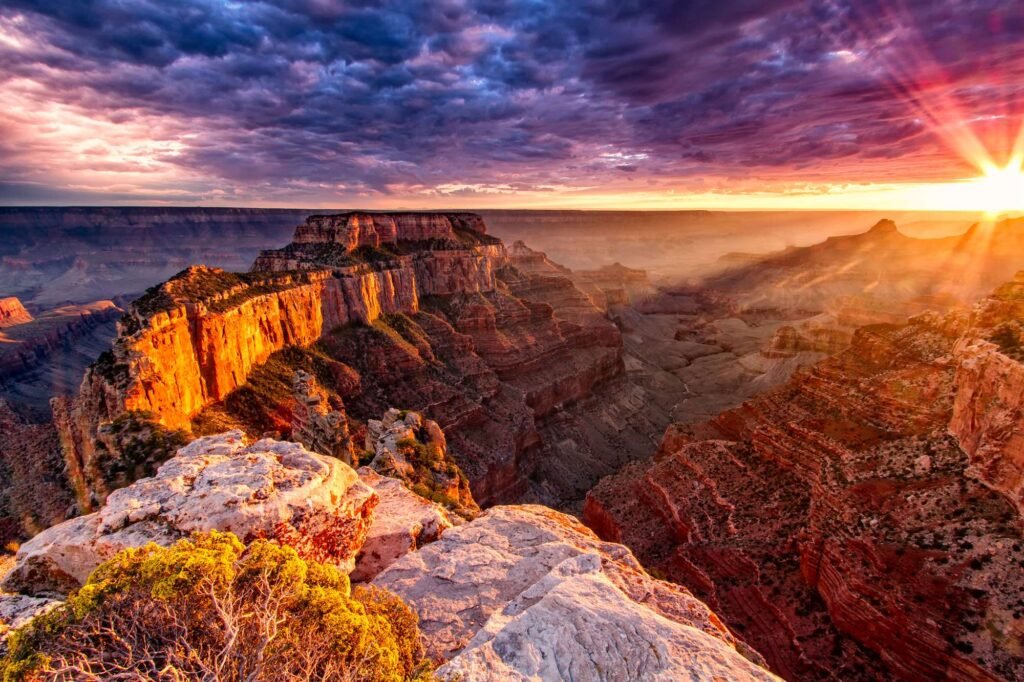
Best Time to Visit the Grand Canyon (Month-by-Month Guide)
Best Time to Visit the Grand Canyon (Month-by-Month Guide)
What is the best time of year to visit the grand canyon? Good news: it’s more doable than it looks. Here’s what actually works.
I visited the Grand Canyon in July once: 105°F at the river, crowds at every viewpoint, and a parking nightmare. My April visit: 65°F, wildflowers, and elbow room at sunset. Same canyon, completely different trip.
Timing is everything here. Here's the month-by-month truth.
Breaking it down
The sweet spots: April-May and September-October
Spring (April-May): 60-75°F at the rim, wildflowers, moderate crowds, all facilities open. Fall (September-October): similar temps, golden light, thinning crowds after Labor Day. These shoulder seasons offer the best weather-crowd-price triangle. If you can only pick one window, late September is my personal favorite — perfect hiking weather and summer's chaos gone.
Summer: go only with a heat strategy
June-August brings 100°F+ inner-canyon temps, monsoon storms (July-September afternoons), and peak crowds. It's doable — start hikes at dawn, carry a gallon of water per person, never hike to the river and back in one day — but it's the hardest season. The rim at 7,000 feet stays pleasant; the canyon floor does not. Respect the heat: it kills hikers every year.
Related reading: Pacific Coast Highway Road Trip: The Complete Planning Guide
Winter: the underrated season
December-February: rim temps 20-45°F, possible snow (beautiful on the canyon), tiny crowds, cheapest lodging. The South Rim stays open year-round; the North Rim closes mid-October to mid-May. Winter sunrises over snow-dusted canyon walls are spectacular — and you'll have viewpoints nearly to yourself. Just pack real winter gear and check road conditions.
North Rim vs. South Rim timing
South Rim: open year-round, 90% of visitors, more services. North Rim: open mid-May to mid-October only, 10% of visitors, higher elevation (8,000 ft), wilder feel. North Rim's short season means booking lodging far ahead. If visiting in the North's window, it's worth the extra drive for the solitude.
Booking windows and crowd tactics
Book South Rim lodging 6+ months ahead for spring/fall (it sells out). Enter before 9am or after 4pm to dodge peak crowds and get the best light. The shuttle system is mandatory and efficient — use it. For the iconic sunrise/sunset: arrive 45 minutes early; the popular points fill up. Weekdays beat weekends dramatically.
My honest take
My April sunrise at Hopi Point — 40 people instead of 400, crisp air, the canyon lighting up layer by layer — is a top-five travel memory. The July trip gave me heat exhaustion and a parking ticket. Month choice isn't a detail here; it's the trip.
FAQs: What is the best time of year to visit the grand canyon?
Here are the questions I hear most often about this topic:
How many days do I need at the Grand Canyon?
Two full days minimum: one for rim viewpoints and sunset, one for a below-rim hike. Three days lets you add the North Rim or a longer trail without rushing.
Can you visit the Grand Canyon in one day?
You can see the highlights, but it's rushed — and the drive from Phoenix/Vegas is 4-5 hours roundtrip. An overnight stay transforms the experience (sunrise/sunset are the magic hours).
Is the Skywalk worth it?
It's on tribal land west of the park (not in the national park), costs $80+, and you can't bring cameras on it. Most visitors find the national park viewpoints superior and free with park entry.
The bottom line
Aim for April-May or September-October, respect summer heat with a dawn strategy, consider winter for solitude, and book lodging months ahead. The Grand Canyon is always magnificent — but the right month makes it magical instead of miserable.
For deeper background, check out the National Park Service's Grand Canyon page and Wikipedia's Grand Canyon overview — both are solid, reputable resources worth bookmarking.
More from Daily Magazine 24
- Pacific Coast Highway Road Trip: The Complete Planning Guide
- Las Vegas Weekend Budget: How Much Spending Money You Need
One more thing worth knowing
Here's my golden rule for any trip: plan the skeleton, leave the flesh loose. Book the non-negotiables (flights, first-night stay, must-do tickets) and leave deliberate gaps for discoveries — the restaurant you stumble into, the viewpoint a local mentions, the detour that becomes the highlight. Over-planned trips feel like work; under-planned ones waste precious days. The sweet spot is structure with breathing room.
One more thing worth knowing
A quick word on travel insurance, since it comes up constantly: for cheap, flexible domestic trips you can usually skip it, but for expensive or complicated itineraries it's the cheapest peace of mind in travel — typically 4-8% of trip cost. Check your credit card benefits first; many premium cards already include solid trip protection. Don't double-pay for coverage you already have.
One more thing worth knowing
Packing philosophy that changed my travel life: lay out everything you plan to bring, then remove a third. Almost everyone overpacks by 30-40%, and every extra item is weight you carry through airports, up stairs, and into taxis. The things you truly need on a trip fit in less space than you think — and anything you forget can usually be bought at your destination, often cheaper and as a fun souvenir.
One more thing worth knowing
Money tip that applies everywhere: notify your bank of travel dates, carry two different cards (kept separately), and keep some emergency cash hidden apart from your wallet. Card blocks from 'suspicious foreign activity' have derailed more trips than pickpockets have. A five-minute call or app notification before departure prevents the dreaded declined-card moment abroad.
One more thing worth knowing
Finally, build buffer into your itinerary — the unplanned half-day, the slower morning, the margin around connections. Rushed travel is stressed travel, and the buffer is where the magic happens: the long lunch that becomes a memory, the wrong turn that finds the viewpoint. Some of my best travel stories come from the gaps in the plan, not the plan itself.