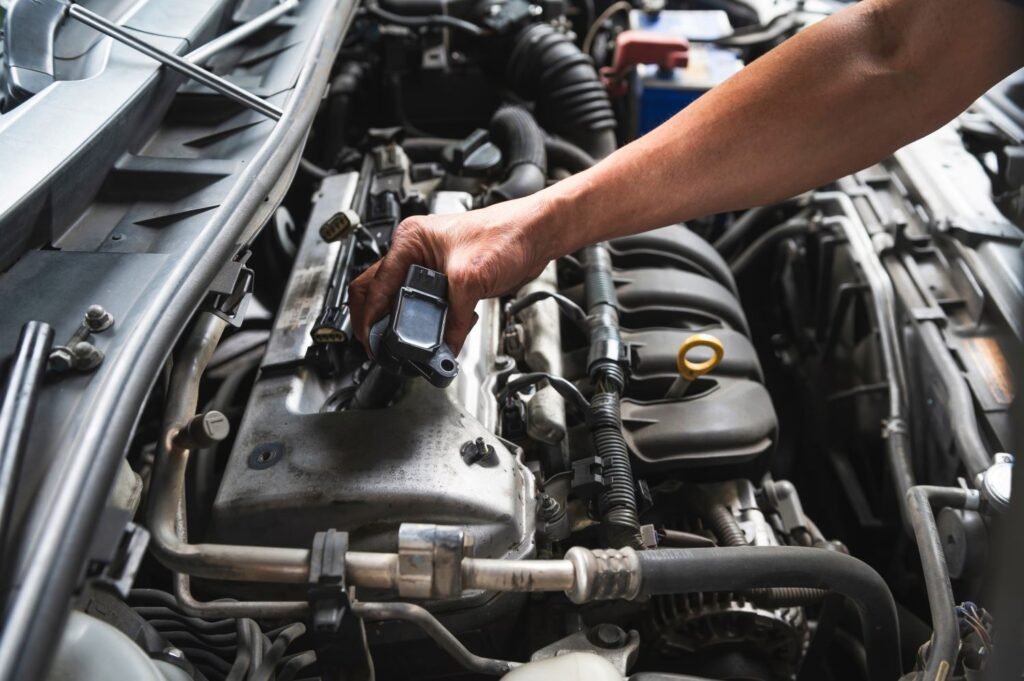
Learn Basic Car Maintenance the Easy Way (Beginner’s Guide)
Learn Basic Car Maintenance the Easy Way (Beginner's Guide)
What is the easiest way to learn basic car maintenance? It’s one of the most common questions I hear — and the honest answer is simpler than you’d think.
I paid a shop $80 to replace my cabin air filter. Later I learned it's a 5-minute job with a $15 part and no tools. That was the moment I decided to learn basic car maintenance.
You don't need to become a mechanic. Seven skills cover 90% of what car owners actually need. Here's the learning path.
What actually works
Start with the 'no-tools' skills: fluids and filters
Checking oil, topping off washer fluid, checking tire pressure, replacing wiper blades and the cabin air filter — these need zero mechanical skill and save real money. Your owner's manual shows every location with diagrams; it's the most under-read book in America. I learned all five in one Saturday afternoon with YouTube. Total savings so far: hundreds.
YouTube is your mentor: find your car's channels
Search '[your car model] + [task]' and you'll find someone doing exactly your job on exactly your car. Channels dedicated to specific models are goldmines. Watch the full video once before touching anything — twice for anything involving jacks. The visual walkthrough removes 90% of the intimidation.
Related reading: How to Save Money on Groceries Without Ever Clipping a Coupon
Buy a basic tool kit gradually, not all at once
Start with: tire pressure gauge ($10), jumper cables or jump starter, basic socket set ($40), jack stands (never work under a car on just a jack). Buy tools per-project as you learn new skills — the kit builds itself. My $60 starter kit has handled everything I've attempted in two years.
Learn the warning signs before the breakdowns
Squealing brakes, grinding noises, dashboard lights, fluid spots where you park, vibrations at speed — learn what these mean before they strand you. A $5 bottle of UV dye finds leaks; a free auto-parts-store code reading decodes check-engine lights. Catching problems early is where DIY saves the most — a $30 belt beats a $3,000 engine.
Know your limits: what's NOT DIY
Leave to professionals: anything involving airbags, AC refrigerant (regulated), transmission internals, and timing belts (mistakes destroy engines). Also anything you're unsure about after research — a $150 shop visit beats a $1,500 mistake. Smart DIYers know the boundary; the boundary is what keeps DIY profitable.
My honest take
That $80 cabin filter was my tuition payment. Since then I've done my own wipers, air filters, battery replacement, and tire rotations — probably $600 saved. Each job took one YouTube video and less time than driving to the shop. The intimidation was the only real barrier.
FAQs: What is the easiest way to learn basic car maintenance?
Here are the questions I hear most often about this topic:
How long does it take to learn basic car maintenance?
The core skills (fluids, filters, wipers, tire pressure) take one afternoon. Each additional skill is one YouTube video plus 30-60 minutes of doing.
Will DIY maintenance void my warranty?
No — the Magnuson-Moss Warranty Act protects your right to do your own maintenance. Keep receipts for parts and fluids as proof.
What's the first tool I should buy?
A quality tire pressure gauge. It's $10, you'll use it monthly, and proper tire pressure saves gas, extends tire life, and keeps you safe.
The bottom line
Start with fluids, filters, and wipers using your owner's manual and YouTube. Build your tool kit per-project. Learn the warning signs. Respect the boundary of what's pro-only. In one weekend, you'll go from intimidated to capable — and your wallet will feel the difference immediately.
For deeper background, check out AAA's car maintenance guides — both are solid, reputable resources worth bookmarking.
More from Daily Magazine 24
- How to Save Money on Groceries Without Ever Clipping a Coupon
- Make Your Home Smell Amazing Without a Single Candle
One more thing worth knowing
A quick word on perfectionism, because it derails more good intentions than laziness ever does. You don't need the perfect version of this — you need the done version. The slightly messy attempt beats the flawless plan that never leaves your head. I've seen people research the ideal approach for months while doing nothing; meanwhile the person who just started imperfectly is already reaping benefits. Start ugly, refine later.
One more thing worth knowing
If you live with other people, get them on board early — not with a lecture, but by making the new way easier than the old way. Systems that depend on everyone caring equally will fail; systems where the right choice is the lazy choice succeed. Put the thing where it belongs, remove friction from the good habit, add friction to the bad one. Design beats discipline, especially in shared spaces.
One more thing worth knowing
Budget-wise, remember that most of these improvements cost little or nothing — the expensive part is usually indecision, not implementation. I've spent more money 'thinking about' solutions than on the solutions themselves. Set a small budget, pick the highest-impact move, and do it this weekend. Future-you, enjoying the results, will wonder why you waited.
One more thing worth knowing
Finally, give any change a fair trial before judging it. Three weeks is my minimum — the first week you're fighting old habits, the second you're adjusting, and only in the third do you see the real payoff. I've almost abandoned routines on day five that became favorites by day twenty. Commit to the trial period upfront, evaluate honestly at the end, and keep what earns its place.
One more thing worth knowing
One more practical note: take a 'before' snapshot — a photo, a quick note about how things feel now. We adapt to improvements fast and forget how far we've come, which makes it tempting to abandon systems that are quietly working. Six months from now, that before-photo will remind you why you started. Progress you can see is progress you'll protect.