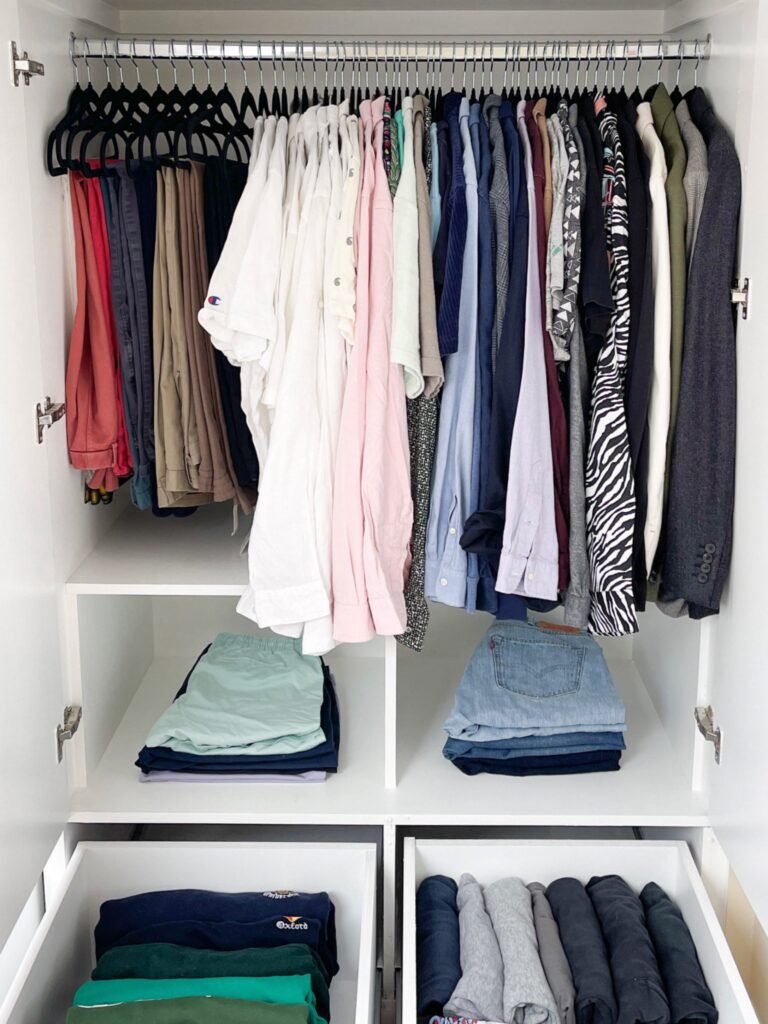
Small Closet Organization: Fit More Clothes in Less Space
Small Closet Organization: Fit More Clothes in Less Space
A small closet isn’t a storage problem — it’s an organization problem. I’ve lived with a closet the size of an airplane bathroom and one the size of a bedroom, and the small one actually worked better once I stopped fighting it and started engineering it.
Professional organizers have this down to a science: capacity comes from systems, not square footage. Here’s how to double what your small closet holds.
Step Zero: Edit Before You Organize
No organizing system overcomes too much stuff. Before buying a single hanger, pull everything out and sort ruthlessly: keep (worn regularly, fits, loved), maybe (seasonal, sentimental — box these), donate/sell (unworn a year, wrong size, ‘someday’ items). The average person wears 20% of their closet 80% of the time; the rest is just occupying expensive real estate.
Be honest about the fantasy items — the aspirational sizes, the occasion-wear for a life you don’t lead, the duplicates. Every item you remove gives the remaining clothes breathing room, which is literally what makes a closet feel bigger. Organizers call this ‘editing,’ and it’s the highest-ROI hour you’ll spend.
Box the off-season immediately. If it’s summer, winter coats and heavy sweaters don’t belong in prime closet real estate — vacuum bags under the bed or on a high shelf. Seasonal rotation alone can free 30–40% of a small closet.
How Can I Organize a Small Closet to Fit More Clothes? The System
Zone by category and frequency: daily wear at eye level and arm’s reach, occasional wear higher or lower, formal/specialty together. Within zones, organize by type then color — the visual order makes everything findable and makes the closet look twice as big. Arrange hang direction consistently; visual chaos reads as clutter even when it’s organized.
The slim hanger swap is the single biggest capacity win: replacing bulky plastic and wire hangers with slim velvet hangers (about $15 for 30) can free 30–50% of rod space. It sounds like marketing until you do it — the difference is genuinely dramatic. Hang one item per hanger (no doubling) for visibility; doubled hangers hide clothes into unworn oblivion.
Go vertical relentlessly: double-hang rods (a $15 tension rod or hanging doubler instantly creates two tiers — tops above, bottoms below), shelf dividers to stack folded items without avalanches, over-door hooks and organizers for accessories, and the floor for shoe racks or rolling bins. Closet walls and doors are free square footage most people waste.
Folding and Storage Tricks
File-fold (KonMari style) everything in drawers and bins: fold items into rectangles and stand them upright like files. You see every item at once, nothing gets buried, and drawers hold 50% more. It takes practice for a week, then becomes automatic.
Use the ‘prime real estate’ rule: the most accessible spots go to the most-worn items. Eye-level rod space is gold — reserve it for daily wear. High shelves for off-season and occasion wear (labeled bins, not mystery piles). Floor level for shoes and heavy items. Back corners for the rarely-worn — or better, relocate those out entirely.
Contain the small stuff: drawer dividers for underwear/socks, small bins for accessories, a dedicated spot for belts/scarves (a pull-out rack or over-door hooks). Loose small items create disproportionate chaos — containment is calm. And leave 10–20% breathing room deliberately; a packed-to-bursting closet, however organized, feels stressful and wrinkles everything.
Maintenance: Keeping It That Way
The one-in-one-out rule prevents slow re-clutter: every new item means one leaves. It’s the only maintenance system that actually works long-term, because closets fill by accumulation, not by single bad decisions. Make it a habit at purchase time, not a yearly purge.
Do a 10-minute weekly reset: rehang strays, refold the avalanche shelf, return the chair clothes (we all have the chair). Weekly micro-maintenance beats quarterly overhauls — the closet never degrades past ‘slightly lived-in.’ Seasonal swaps (30 minutes, twice a year) keep the active wardrobe matched to the weather.
And the mindset shift: a small organized closet beats a large chaotic one every time. Getting dressed takes minutes when everything is visible and fits. Constraints force curation, and curation is what great personal style actually is. For making the most of a curated wardrobe, see our guide to KonMari method official site.
The Seasonal Swap: How to Do It in an Hour
Twice a year, the seasonal swap keeps your small closet matched to the weather — and it takes about an hour when systematized. The process: pull everything out (yes, everything — the reset is the point), sort into three piles (current season stays, off-season gets stored, donate/sell the ones you didn’t wear last season — the honest cull), then clean before storing (moths love dirty wool; wash or air everything going into storage).
Storage that works in small spaces: vacuum bags for bulky winter items (they shrink to flat packs that slide under beds), labeled bins for the rest (labels prevent the mystery-box problem in six months), and cedar blocks or lavender sachets in every container (pest prevention that smells good). Store off-season in the least accessible spot — high shelves, under beds, top of closets — since you won’t need it for months.
The swap is also your twice-yearly audit: what did you never wear? (Donate it — a full season of unworn is a verdict.) What’s worn out? (Replace intentionally, not impulsively.) What do you actually need next season? (Make a short list and shop it deliberately.) An hour twice a year prevents the slow closet chaos that makes small spaces feel impossible.
The Takeaway
Edit ruthlessly, swap to slim hangers, double the rods, go vertical, file-fold, and maintain with one-in-one-out. A small closet holds plenty — it just demands a system.
Start with the hanger swap and the seasonal rotation. Those two moves alone transform most small closets in an afternoon.