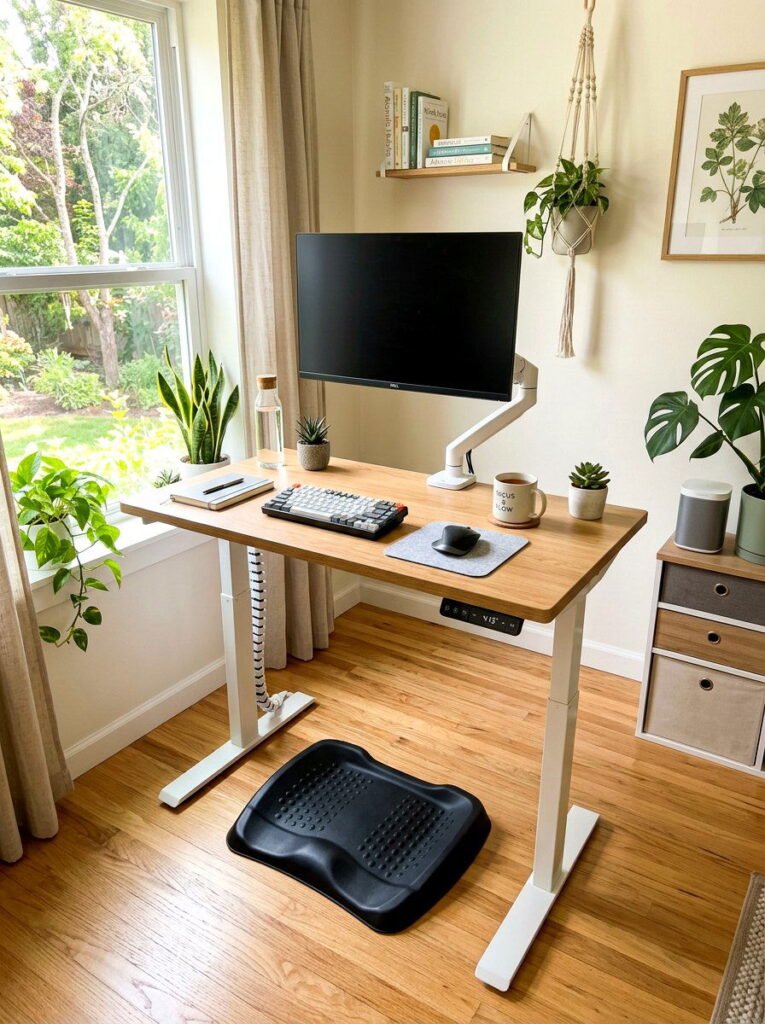
Is a Standing Desk Worth It for Back Pain? An Honest Look
Is a Standing Desk Worth It for Back Pain? An Honest Look
Your lower back aches by 3 p.m. every day, and everyone online swears a standing desk fixed theirs. At $300 to $800 for a decent electric model, it’s not a casual purchase — so is it actually worth it for back pain, or is it an expensive placebo with good marketing?
I’ve worked at both sitting and standing setups for years, and my answer is: it helps, but not how the ads promise. Here’s the honest breakdown.
What Standing Desks Actually Do for Your Back
The core idea is sound: humans aren’t built to sit for ten hours straight. Prolonged sitting shortens hip flexors, weakens glutes, and loads the lumbar discs in ways that produce that familiar dull ache. Standing breaks up that static posture and gets your postural muscles doing their job again.
The research backs modest benefits. A well-known 2018 review in Applied Ergonomics found that sit-stand desks reduced self-reported back discomfort, particularly in the lower back, compared to sitting all day. Office workers in several trials also reported less neck and shoulder tension. But — and this is the part ads skip — the effect sizes are moderate, and standing all day brings its own problems: foot pain, varicose vein risk, and fatigue.
The real win isn’t standing; it’s switching. Alternating between sitting and standing every 30 to 60 minutes beats either position held all day. A standing desk is really a ‘position-changing desk,’ and people who buy one and then stand rigidly for eight hours often end up with new aches to replace the old ones.
Is It Worth Getting a Standing Desk for Back Pain? Who Benefits Most
You’ll likely get the most value if your pain is the classic desk-worker pattern: dull lower-back ache that builds through the workday and eases with movement, weekends, or vacations. That pattern screams ‘static posture problem,’ which is exactly what sit-stand desks address.
You’ll get less value if your back pain has a specific medical cause — herniated disc, sciatica with leg symptoms, spinal stenosis, or pain from an injury. A desk won’t fix those, and standing longer can aggravate some of them. If your pain shoots down a leg, causes numbness, or doesn’t change with position, see a doctor or physical therapist before buying furniture.
Also be honest about your habits. The desk only helps if you actually change positions. Studies show many owners gradually revert to sitting all day within months. If you’re not the type to set a timer and stand up, a cheaper intervention you will actually use beats an expensive one you won’t. The Mayo Clinic's office ergonomics guide has solid guidance on desk ergonomics that applies whether you stand, sit, or alternate.
Cheaper Fixes to Try Before You Spend $500
Before buying anything, try the free version for two weeks: set a phone timer to stand, walk, and stretch for five minutes every hour. Walk to get water, take calls standing, do a doorway chest stretch. If your back improves meaningfully, you have your answer — movement was the missing ingredient, and a desk just makes it convenient.
Next cheapest: fix your sitting setup. Most back pain blamed on ‘sitting’ is really ‘sitting badly.’ Feet flat, knees at 90 degrees, lumbar support in the chair’s curve (a rolled towel works), monitor at eye level so you’re not craning down. I’ve seen people eliminate their pain with a $20 lumbar pillow and a monitor riser made of books.
If you want to test standing cheaply, a sturdy box or stack of books on your desk works for a trial week. Uncomfortable? You’ll know standing isn’t your thing before spending real money. Comfortable? Then invest. Also consider a convertible riser ($150–$300) that sits on your existing desk — cheaper than a full desk and easier to resell if it doesn’t stick.
If You Buy: What Actually Matters
Skip the gimmicks and focus on three things: height range (it must go low enough for sitting and high enough that your elbows hit 90 degrees standing — check against your height), stability (wobble at standing height is maddening; read reviews specifically about wobble), and a motor with memory presets (you’ll switch positions far more often if one button does it).
Budget reality: manual crank desks start around $150, decent electric frames around $300–$400, and premium full setups $600+. An anti-fatigue mat ($40–$70) isn’t optional if you’ll stand daily — it’s the difference between comfort and sore feet by Thursday. Good shoes or barefoot on the mat; standing in dress shoes on hard floor is a recipe for new pain.
Set it up right on day one: elbows at 90 degrees, monitor top at or slightly below eye level, and start with short standing intervals — 20 to 30 minutes — building up over weeks. Your feet and legs need conditioning just like any new activity.
The Alternation Schedule That Actually Works
The research consensus is clear: the benefit comes from switching, not from standing. The schedule with the best evidence and compliance is roughly 30 minutes sitting, 30 minutes standing, alternating through the day — or even simpler, stand for the first 15 minutes of every hour. Set a phone timer or use a free break-reminder app until the rhythm becomes automatic.
Match position to task, because different work suits different postures. Standing works well for: phone calls, reading, sorting email, and brainstorming — active, high-energy tasks. Sitting suits: deep writing, detailed spreadsheet work, and anything requiring fine mouse control. Let the task trigger the switch rather than the clock alone; it feels natural instead of forced.
Build up gradually. Week one: stand 15–20 minutes at a time, a few times daily. Add 10 minutes per interval each week. Your feet, calves, and lower back need conditioning — jumping to hours of standing on day one is how people conclude ‘standing desks don’t work.’ They work; the transition was just too aggressive. An anti-fatigue mat from day one is non-negotiable.
The Takeaway
A standing desk is worth it if your pain is the classic builds-through-the-workday desk ache and you’ll actually alternate positions. It’s not worth it as a magic cure, and it won’t help pain with a medical cause.
Try the free movement breaks first. If they help, buy the desk with confidence — and budget for the anti-fatigue mat too.