What Is the Cheapest Way to Advertise a Local Service Business?
What Is the Cheapest Way to Advertise a Local Service Business?

You’ve got a service business and a marketing budget of basically zero. Every agency wants $1,000/month, and Facebook ads feel like burning money. What is the cheapest way to advertise a local service business that actually brings in paying customers — not just ‘exposure’?
Here’s the truth the ad industry won’t tell you: for local services, the cheapest methods are also the most effective. Trust-based, proximity-based marketing beats paid ads for plumbers, cleaners, mowers, and every other local service. Ranked by cost, starting at free.
What is the cheapest way to advertise a local service business?
The Free Tier: Google, Reviews, and Community
Google Business Profile (free) is the single highest-ROI marketing for any local service. When someone searches ‘plumber near me,’ the map pack decides who gets called — and it’s winnable without spending a dime: complete profile, correct categories, photos of real work, and a steady stream of reviews. This alone can fill a schedule. Pair it with systematically collecting reviews — see how to get Google reviews — because review count and rating directly determine map rankings.
Nextdoor and local Facebook groups (free): be a helpful neighbor first, business second. Answer questions, and when someone asks for recommendations, your happy customers tag you — that’s advertising you can’t buy. Referral program (free to start): offer existing customers $25–$50 off for every new client they send. Referred customers convert highest and cost you nothing until they pay you. Yard signs at job sites ($5–$10 each): ‘Another beautiful lawn by [Your Business] 555-1234’ — your work advertises itself to every neighbor who sees it.
The Cheap Tier: Under $200/Month
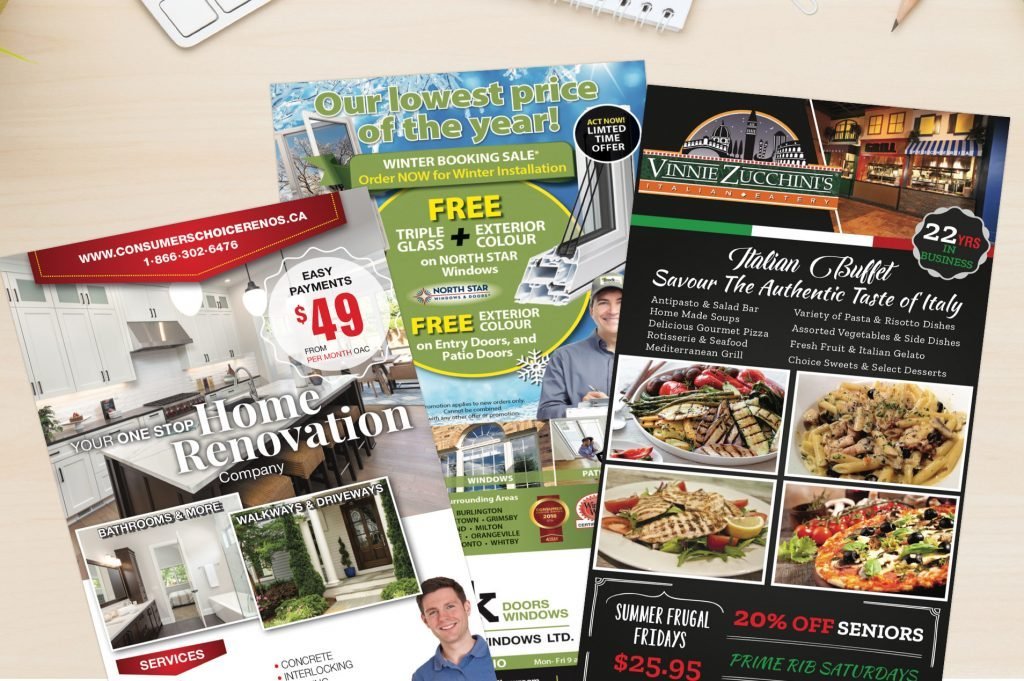
Door hangers/flyers ($50–$100 for 500): target specific neighborhoods, include a clear offer and before/after photos. For home services, this remains shockingly effective — you’re reaching homeowners at home, thinking about their homes. Vehicle magnets or lettering ($30–$100): your truck is a billboard that goes everywhere you do. A simple website ($100–$200/year for domain + hosting): you don’t need fancy — one page with services, prices, photos, reviews, and a phone number. It exists to convert the Google traffic you’re already getting.
Facebook/Instagram ads ($5–$10/day): the only paid ads worth testing at small budgets — hyper-target by zip code with before/after photos. Start at $150/month, track every lead, kill what doesn’t convert in 30 days. Thumbtack/Angi: pay-per-lead ($15–$60/lead) — expensive per lead, but you’re paying only for inquiries; good for filling gaps while organic grows.
What to Skip (and the Real Priority)
Skip: radio, newspaper, and Valpak-style coupon mailers (wrong era, wrong targeting, real money for vague returns), SEO agencies promising page one ($500+/month for what your Google Business Profile does free), and fancy branding before you have customers (a logo doesn’t book jobs; reviews do). Also skip spreading thin — pick two channels and do them well rather than seven poorly.
The real priority order for a new local service business: 1) Google Business Profile + reviews (free, highest impact), 2) referral program (free, highest conversion), 3) Nextdoor/Facebook presence (free, community trust), 4) yard signs and door hangers (cheap, hyper-local), 5) simple website (cheap, converts searchers), 6) targeted social ads (test small, scale what works). Do these in order, and most local service businesses never need anything else. For service-specific plays, see getting first cleaning clients — the principles transfer to any home service.
Quick Answers
- Free: Google Business Profile + review collection — the #1 local marketing channel.
- Free: referral program ($25–$50 credit per referred client).
- Free: Nextdoor + local Facebook groups — helpful presence, not spam.
- ~$5–$10 each: yard signs at completed job sites.
- $50–$100: 500 door hangers in target neighborhoods.
- $30–$100: vehicle magnets — your truck is a moving billboard.
- $5–$10/day: hyper-local Facebook/Instagram ads with before/after photos.
- Skip: radio, newspaper, coupon mailers, SEO agencies, fancy branding before customers.
The Bottom Line
The cheapest way to advertise a local service business is also the most effective: a complete Google Business Profile fed by consistent reviews, a referral program, community presence on Nextdoor and Facebook, and yard signs at job sites. Total cost: under $200, mostly one-time.
Local services run on trust and proximity, not ad spend. Be findable (Google), be recommended (reviews + referrals), be visible (signs, truck, neighborhood presence) — and watch the phone ring without ever buying a billboard.
Frequently Asked Questions
How much should a small service business spend on advertising?
Start with 5–10% of revenue as a ceiling, but spend $0 until the free channels (Google Business Profile, referrals, community presence) are maxed out — most new local services can fill their schedule without paid ads. When you do spend, test small ($150–$300/month on one channel), track every lead’s source, and scale only what proves ROI. The businesses wasting money on advertising are the ones spending before the free foundations exist.
Are Facebook ads worth it for local services?
They can be — at small, tightly targeted budgets. $5–$10/day targeting your service zip codes with before/after photos and a clear offer (not brand awareness fluff) generates real leads for home services. The keys: hyper-local targeting, visual proof of work, a specific call to action, and a landing page or Messenger flow that captures the lead. Test for 30 days, measure cost per lead, kill it if the math doesn’t work. Don’t boost posts aimlessly — that’s donating to Meta.
Should I pay for Thumbtack or Angi leads?
As a supplement, carefully. Pay-per-lead ($15–$60/lead) is expensive, and you’re competing with 4 other pros on every lead — conversion rates are low. It works best for filling schedule gaps while organic marketing compounds, not as a primary channel. Set a strict monthly cap, respond to leads within minutes (speed wins the platform game), and track ROI ruthlessly. Many pros use these platforms for their first 10 reviews, then graduate to direct channels. Never depend on a platform that taxes every customer acquisition.
How important is a website vs. just Google Business Profile?
The Profile gets you found; the website closes the sale. Many customers check your website after finding you on Google — no website (or a terrible one) kills trust at the decision moment. But ‘website’ doesn’t mean $5,000 custom build: a clean one-pager with services, prices, photos, reviews, and a click-to-call button converts fine. Spend $100–$200/year on domain + hosting, not thousands on design, until revenue justifies more. The dynamics of local search show why the map pack matters more than organic rankings for service businesses — win the map, then support it with a solid site.