What Should I Put on a Simple Invoice for Freelance Work?
What Should I Put on a Simple Invoice for Freelance Work?

You did the work, the client’s happy, and now you need to get paid. But staring at a blank invoice template, you’re unsure what actually needs to be on it. What should I put on a simple invoice for freelance work? Too little and you look unprofessional (or don’t get paid); too much and it’s overkill.
A good freelance invoice has about ten elements — no more. Here’s exactly what to include, the payment terms that get you paid faster, and the mistakes that delay payment.
What should I put on a simple invoice for freelance work?
The 10 Elements Every Freelance Invoice Needs
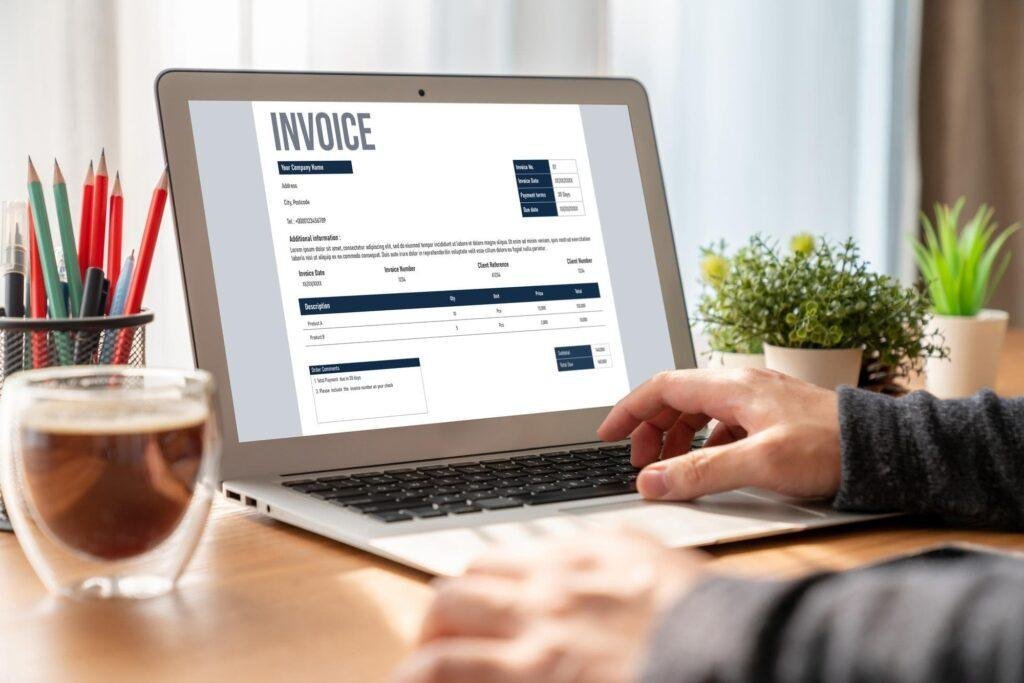
1. Your business name, address, email, and phone. 2. The word ‘INVOICE’ prominently displayed (yes, really — it matters for records and some clients’ AP systems). 3. A unique invoice number (INV-001, date-based, whatever — just sequential and unique). 4. Invoice date and payment due date. 5. Client’s name and billing address. 6. Line-item description of work: what you did, in specific terms (‘Blog post: 1,200 words on X’ beats ‘writing services’). Include dates or hours if hourly. 7. Rates and quantities per line item. 8. Subtotal, taxes if applicable, and total due. 9. Payment methods accepted with details (how exactly do they pay you?). 10. Payment terms and late fee policy.
That’s it. One page. Anything more — elaborate terms and conditions, company mission statements — belongs in your contract, not your invoice. The invoice is a payment request; make it scannable in 15 seconds. A busy AP clerk should find the total, the due date, and how to pay without hunting.
Payment Terms That Get You Paid Faster
Terms matter enormously. ‘Net 30’ (due in 30 days) is standard but slow — for freelancers, ‘Net 15’ or ‘due upon receipt’ is fair and common. State the due date explicitly (‘Due: March 15, 2026’), not just ‘Net 15’ — it removes ambiguity. Include a late fee (1.5% per month is standard) — you may never enforce it, but its presence speeds payment measurably.
Make paying frictionless: list every method you accept (ACH/bank transfer, PayPal, Zelle, check) with the actual details or links. Every extra step between ‘received invoice’ and ‘money sent’ costs you days. For new clients, consider requiring 50% upfront — it’s standard in freelancing and filters out non-serious clients. And send the invoice promptly: same day the work is delivered, not ‘when you get around to it.’ Late invoices signal that late payment is acceptable.
Tools and Templates (Free Options)
You don’t need paid invoicing software to start. Free options: Wave (free invoicing + accounting), PayPal invoices (free, clients can pay by card), Google Docs/Sheets invoice templates, or Canva’s invoice templates for something polished. When you’re ready to scale, FreshBooks or QuickBooks Self-Employed ($15–$25/month) add time tracking and automatic reminders.
Number invoices sequentially from day one and save copies — you’ll need them at tax time (see handling taxes for freelance gigs). Send as PDF (not editable formats), keep the filename clear (‘INV-042_ClientName_Mar2026.pdf’), and follow up politely but firmly: a reminder at 7 days overdue, firmer at 14, and pause work at 30. Chasing payment is part of freelancing — systematize it so it’s not emotional. And keep your bookkeeping tied to invoice numbers for clean records.
Quick Answers
- Include: your info, ‘INVOICE’ label, unique number, dates, client info, line items, rates, totals, payment details, terms.
- Describe work specifically: ‘Blog post: 1,200 words on X’ beats ‘writing services.’
- Terms: Net 15 or due-on-receipt; explicit due date; 1.5%/month late fee stated.
- New clients: 50% upfront is standard and filters out flakes.
- Send same-day as delivery — late invoices invite late payment.
- Free tools: Wave, PayPal invoices, Google Docs templates. PDF format, clear filenames.
- Follow up: polite reminder at 7 days, firm at 14, pause work at 30.
The Bottom Line
A simple freelance invoice needs ten elements: your info, invoice label and number, dates, client info, specific line items, totals, payment instructions, and terms. Keep it to one scannable page, send it the day work is delivered, and make payment frictionless.
The invoice is where freelancing meets reality — great work means nothing if the invoice is confusing, late, or missing payment details. Systematize it once with a template, then it’s a five-minute task that gets you paid faster, every time.
Frequently Asked Questions
Should I charge sales tax on freelance invoices?
It depends on your state and what you sell — most states don’t tax professional services, but some do (looking at you, Hawaii, New Mexico, South Dakota). Digital products and some creative work can be taxable in certain states. Check your state’s department of revenue site for your specific service type. When in doubt, consult a CPA for 30 minutes — getting sales tax wrong creates liabilities that compound. Don’t guess; the rules are specific and the penalties aren’t worth it.
What if a client refuses to pay?
Escalate systematically: friendly reminder at 7 days, firm reminder at 14 (mention the late fee in your terms), pause all work at 30 days, then formal demand letter. For amounts under $5,000–$10,000 (varies by state), small claims court is cheap ($30–$100 filing), doesn’t require a lawyer, and freelancers win the vast majority of documented cases. The best defense is prevention: 50% upfront for new clients, clear contracts, and never let arrears accumulate across multiple projects.
How do invoice numbers work — can I just make them up?
They need to be unique and sequential — that’s it. INV-001, 2026-001, or date-based formats all work. Sequential numbering matters for your records and looks professional; gaps raise eyebrows (deleted invoices suggest hidden income). Never reuse numbers. Your invoicing tool usually auto-numbers — let it. At tax time, sequential invoices make revenue reconciliation trivial instead of archaeological.
Should my invoice include my SSN or EIN?
Never put your full SSN on invoices — it’s an identity theft risk if the invoice gets forwarded through client AP departments. An EIN (free from the IRS, 5 minutes) is the professional alternative for the W-9 clients will request. Get the EIN when you start freelancing; it costs nothing and protects your SSN from circulating through corporate paperwork. Your invoice needs your business name and contact info, not your Social Security number. The fundamentals of invoicing cover the standard elements every professional invoice includes — master these once and reuse forever.