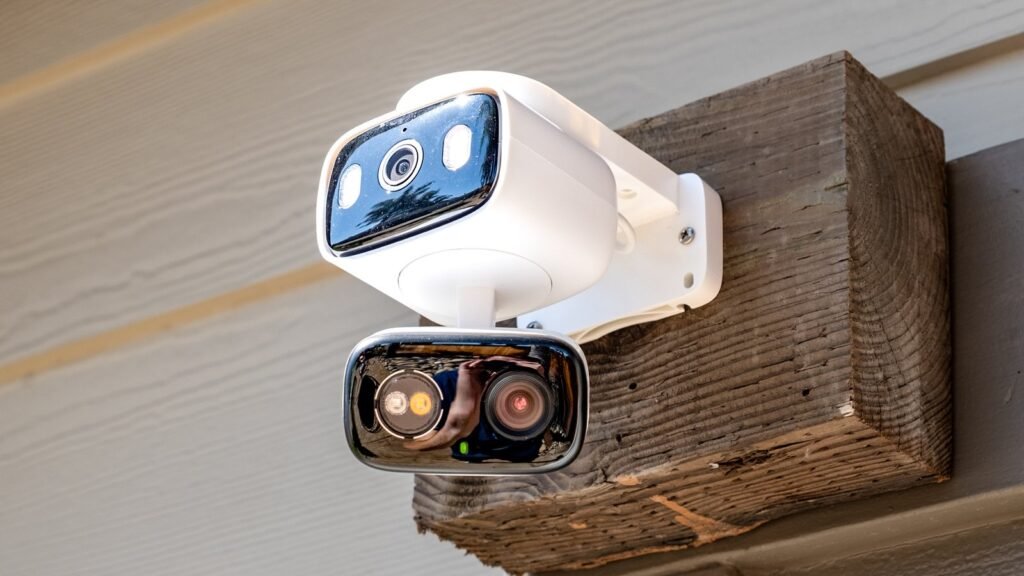
How Much Does a Basic Home Security Camera System Cost to Install?
How Much Does a Basic Home Security Camera System Cost to Install?

After the third ‘porch pirate’ video in your neighborhood group, you’re thinking about cameras. But the quotes range from $100 to $2,000, and you can’t tell what’s reasonable. How much does a basic home security camera system cost to install — really, all-in, no surprises?
I’ve priced this out for homeowners and renters multiple ways. The honest range for a basic system: $150 to $600 DIY, or $500 to $1,500 professionally installed. Here’s where every dollar goes and how to avoid overpaying.
How much does a basic home security camera system cost to install?
DIY Systems: $150–$600 All-In
The DIY route has never been better. A solid basic setup — say, 3–4 cameras covering the front door, back door, and driveway — runs $150–$400 in equipment. Blink, Wyze, and Eufy dominate the budget end ($30–$60 per camera); Ring and Google Nest sit mid-range ($80–$180 per camera). Add a video doorbell ($60–$180 — see our doorbell camera cost guide) and you’re at a complete system.
Installation is genuinely DIY: mount with screws or adhesive, connect to Wi-Fi, done in an afternoon. No wiring needed for battery cameras (recharge every 2–6 months) or wire-free models. The hidden cost is subscriptions: Ring Protect ($5–$20/month), Nest Aware ($8–$15/month) for video history. Eufy and some Reolink models store locally with no fee — over three years, that saves $180–$720. Always calculate the 3-year total, not just the sticker price.
Professional Installation: $500–$1,500
Pro install makes sense for wired PoE (Power over Ethernet) systems — the gold standard for reliability. A 4-camera PoE kit (Reolink, Amcrest, Lorex) costs $250–$500; professional installation adds $200–$600 depending on your home’s layout (running cables through attics and walls is labor-intensive). Total: $500–$1,100 for a system with no monthly fees, local recording, and no Wi-Fi dependence.
When is pro worth it? Large homes where Wi-Fi cameras struggle, anyone wanting 24/7 continuous recording (battery cameras only record motion clips), or if you just don’t do ladders and drills. Get three quotes — prices vary wildly. And be wary of the big alarm companies’ ‘free equipment’ deals: the hardware is free because you’re signing a 3–5 year monitoring contract at $30–$60/month. That’s $1,080–$3,600 over the contract. ‘Free’ is the most expensive option.
What You Actually Need (Don’t Overbuy)
For most homes, 3–4 cameras cover it: front door (package theft), back door or patio (break-ins), driveway/garage, and optionally a doorbell camera. More cameras mean more subscription fees, more batteries to charge, and more footage you’ll never watch. Start with the front door and expand only if you identify a real blind spot.
Prioritize these features over camera count: 2K resolution minimum (1080p is blurry for license plates), color night vision, person detection (cuts false alerts from cats and shadows), and local storage options. Weather rating matters for outdoor units (IP65+). And check your Wi-Fi reaches each camera location — weak signal means missed recordings, which defeats the purpose. Our Wi-Fi dead zone guide helps here.
Quick Answers
- DIY basic system (3–4 cams): $150–$600 equipment + $0–$20/month subscriptions.
- Pro-installed PoE system: $500–$1,500 all-in, usually no monthly fees.
- Big alarm companies: ‘free’ equipment + $30–$60/month × 3–5 years = $1,080–$3,600. Read contracts.
- 3-year total cost is the real comparison — subscriptions add up fast.
- Start with 3–4 cameras: front door, back door, driveway. Expand only for real blind spots.
- Key features: 2K+, color night vision, person detection, local storage option.
- Renters: battery cameras + adhesive mounts; take it all when you move.
The Bottom Line
A basic home security camera system costs $150–$600 DIY or $500–$1,500 professionally installed. The DIY route with 3–4 cameras covers most homes, and choosing local-storage brands avoids the subscription trap that doubles your 3-year cost.
Don’t let an alarm company scare you into a 5-year contract, and don’t buy eight cameras when four will do. Start simple, cover the doors, and expand based on actual gaps — not hypothetical ones. The best security system is the one that’s actually recording when something happens, and a $200 DIY setup that works beats a $2,000 system you never finished configuring.
Frequently Asked Questions
How many cameras do I really need?
Three to four for most homes: front door (package theft is the #1 use case), back door/patio (break-in entry point), and driveway/garage. Add a doorbell camera if you want face-level footage at the entrance. More cameras mean more subscription fees, more batteries to charge, and more footage nobody watches. Start with the doors, add only for demonstrated blind spots — not hypothetical ones.
Are wired or wireless cameras better?
Wired PoE (Power over Ethernet) wins on reliability — no Wi-Fi dropouts, no batteries, continuous 24/7 recording. Wireless/battery wins on ease — 15-minute DIY install, no drilling, portable. For a basic system, wireless is fine and what most people buy. Choose wired if: large property, you want continuous recording, or your Wi-Fi is spotty at camera locations. It’s the ‘buy once, cry once’ option for people who hate fiddling.
Do security cameras deter crime?
Yes, measurably — studies consistently show visible cameras reduce opportunistic crime (package theft, break-ins) because criminals prefer unwatched targets. They’re less effective against determined professionals, but most residential crime is opportunistic. Visibility is the deterrent: mount cameras where they’re seen, add a yard sign, and let the neighborhood know. A hidden camera records crime; a visible one prevents it.
What about privacy laws and neighbors?
You’re generally allowed to record your own property, including video of public areas visible from it. Audio recording has stricter rules — several states require all-party consent, so disable audio or check your state’s wiretapping laws. Don’t aim cameras directly into neighbors’ windows or private spaces; it’s rude and potentially illegal. If you have renters or HOA rules, check those too. When in doubt, video-only, aimed at your property — that’s the safe zone everywhere. The fundamentals of home security systems cover the legal landscape in more depth.
Cloud storage vs. local storage — which is better?
Local storage (Eufy, Reolink with NVR) means no monthly fees and footage stays in your house — cheaper long-term, private, but vulnerable to theft (steal the recorder, lose the footage). Cloud (Ring, Nest) means offsite backup and easy app access, but $5–$20/month forever. The ideal for many: local primary + cloud backup for critical clips. Calculate the 3-year total before choosing — subscriptions are the hidden cost that doubles cheap cameras’ real price.