What Should I Check Before Buying a Used Gaming Console?
What Should I Check Before Buying a Used Gaming Console?

A used PS5 for $300 or a Switch for $180 is tempting — new consoles are expensive and often still hard to find at retail. But a used console can hide expensive problems: banned accounts, failing disc drives, drifting controllers. What should I check before buying a used gaming console so you get a deal instead of a headache?
I’ve bought used consoles for years, and the inspection takes ten minutes. Here’s exactly what to check, in order, before money changes hands.
What should I check before buying a used gaming console?
The Critical Checks: Ban Status and Hardware Health
The number one killer: a console banned from online services. Ask the seller to sign into their account and show you the console connecting online — a banned PS5 or Xbox is worth half its price since you lose online play, digital purchases, and updates. Also verify the console has been factory reset and the seller’s accounts are removed; you don’t want their payment methods or parental controls haunting you.
Then inspect the hardware. Power it on and listen: excessive fan noise or overheating warnings suggest dust-clogged internals or dying thermal paste. Test the disc drive with an actual game disc (insert, eject, install). Check every USB and HDMI port. Look at the vents for dust caking — a console that’s never been cleaned has lived a hard life. For a Switch, check the kickstand, the cartridge slot, and especially Joy-Con drift (go to System Settings > Controllers > Calibrate Control Sticks).
Controllers, Accessories, and the Full Test
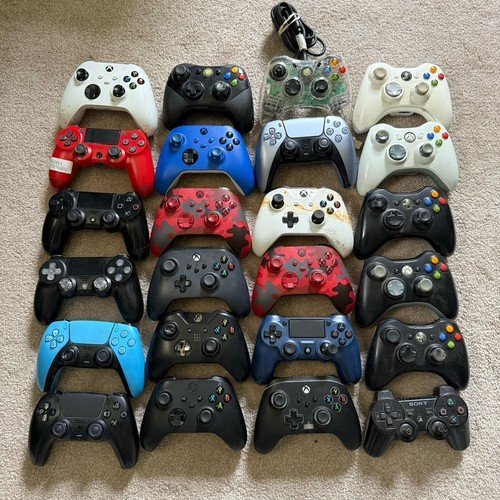
Controllers are expensive — $70 for a DualSense — so test them thoroughly. Pair each controller and check every button, both sticks (full range of motion, no drift), triggers, and vibration. Drift is the plague of modern controllers; slowly move each stick and watch for phantom input. Ask how many controllers are included and whether they’re official — third-party controllers are worth a fraction.
Run a real-world test: play an actual game for 10–15 minutes, not just the dashboard. Dashboard looks fine on dying consoles; gameplay reveals overheating shutdowns, disc read errors, and graphical glitches. Test Wi-Fi connectivity, and if it’s a digital-edition console, confirm it connects to the store. Bring a game disc and, if possible, test at the seller’s place with their TV — or bring a small monitor. Never buy a console you haven’t seen running a game.
Price, Safety, and the Ban-Check Paper Trail
Know fair prices before you go: check eBay sold listings (not asking prices — sold prices) for your exact model. Used PS5 disc editions typically run $300–$400, Xbox Series X $300–$380, Switch OLED $200–$260, Steam Deck varies wildly by model. If the deal is way under market, something’s wrong — stolen consoles get banned eventually, and that ban follows the hardware.
Meet in a public place, but honestly, for consoles I prefer the seller’s home or a friend’s place with a TV — you need to test properly, which is hard in a parking lot. Bring a power strip and an HDMI cable just in case. Pay with cash or a protected method, get a simple bill of sale (even a text confirming the sale), and ask for the original receipt if they have it — it helps with any future warranty or ban-appeal issues. If the console market feels too sketchy, manufacturer-refurbished units (PlayStation Direct, Nintendo’s refurb store) cost a bit more but come with warranties.
Quick Answers
- Ban check: verify it signs in and plays online — banned consoles lose half their value.
- Factory reset: seller’s accounts fully removed before you pay.
- Listen: loud fans or overheating = neglected internals.
- Test the disc drive with a real game; check all ports.
- Controller drift test: slow stick movements, every button, triggers, vibration.
- Play 10–15 minutes of an actual game — dashboards hide dying hardware.
- Price check: eBay sold listings for your exact model; way under market = red flag.
- Switch extras: Joy-Con drift, kickstand, cartridge slot, screen scratches.
The Bottom Line
Before buying a used gaming console: verify it’s not banned, factory reset, test every port and the disc drive, check controllers for drift, and play a real game for 15 minutes. Ten minutes of inspection protects a $300 purchase.
The best deals are boring ones: a fairly priced console from a normal seller who lets you test everything, with original accessories. Skip the too-good-to-be-true listings — in the console market, they always are. And when in doubt, manufacturer-refurbished with a warranty beats a sketchy private deal every time.
Frequently Asked Questions
How do I check if a used console is banned?
Have the seller sign in and connect to PlayStation Network / Xbox Live / Nintendo eShop in front of you — a banned console can’t access online services. Also check: can it download a system update? Access the digital store? Play an online game briefly? If the seller refuses to demonstrate online connectivity or claims ‘I don’t have an account,’ treat it as banned until proven otherwise. Bans follow the hardware permanently; there’s no appeal for buyers.
Is it safe to buy a used console without the original box?
Yes — the box is packaging, not provenance. What matters: the console works (tested with a real game), it’s not banned, controllers are genuine and drift-free, and the seller seems legitimate. Original boxes are nice for resale value later but irrelevant to function. Don’t pay extra for a box; do pay attention to everything inside it. Some collectors care about boxes; players shouldn’t.
What’s a fair price for a used PS5 / Xbox Series X / Switch in 2026?
Rough private-party ranges: PS5 disc edition $300–$400, digital $250–$330; Xbox Series X $300–$380, Series S $180–$240; Switch OLED $200–$260, standard Switch $150–$200; Steam Deck varies by storage ($300–$500). Check eBay sold listings for your exact model and condition — sold prices, not asking prices. Way below market = stolen or broken; at market from a testable seller = fair. Manufacturer-refurbished units cost 10–20% more with warranties.
Should I worry about the console being stolen?
Somewhat — stolen consoles get banned when reported, and the ban follows the hardware to you. Red flags: price far below market, seller can’t show it working properly, no accessories or only mismatched ones, pressure to buy fast, meeting in odd circumstances. Ask for the original receipt if they have it. A normal seller with a tested console, controllers, and a reasonable story is almost always fine. The PlayStation 5 hardware details help you verify you’re getting a genuine unit with correct specifications.
Is buying a used console from a pawn shop okay?
Often yes — pawn shops test electronics and offer short return windows, and prices are negotiable. Apply the same inspection checklist: power it on, play a game, check for bans, test controllers. The same used-market logic from our guide to used iPhone prices applies — know the fair price before you walk in, and don’t let ‘today only’ pressure rush your inspection. And consider manufacturer-refurbished options as the safer middle ground between private sellers and new.