How Louis Tomlinson Turned One Direction Fame Into a $60 Million Solo Standing
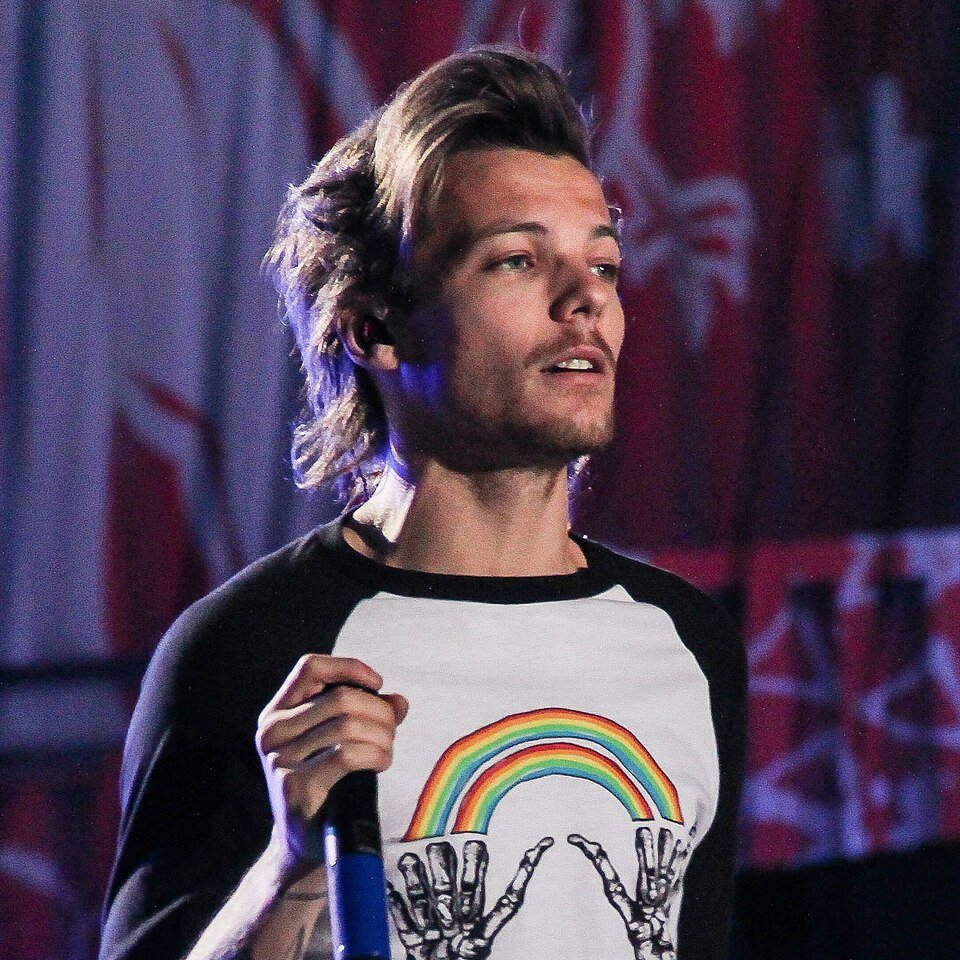
How Louis Tomlinson Turned One Direction Fame Into a $60 Million Solo Standing
Louis Tomlinson at a Glance
| Louis Tomlinson at a Glance | Details |
|---|---|
| Born | December 24, 1991, in Doncaster, England |
| Age | 34 |
| Height | 5 ft 8 in |
| Net Worth | $60 million (Celebrity Net Worth) |
| Weight | No reliable published figure |
| Partner | Zara McDermott (since March 2025) |
| Children | One son — Freddie Reign |
| @louist91 |
A Doncaster Boy With a Close-Knit Family
Louis Tomlinson was born on December 24, 1991, in Doncaster, South Yorkshire. His mother, Johannah Poulston, later Johannah Deakin, was the center of the family; his father, Troy Austin, remained estranged from him, as Tomlinson has acknowledged in reporting over the years; his stepfather, Mark Tomlinson, gave him the surname he performs under. He grew up in a large family: sisters Lottie, Félicité, Phoebe and Daisy, a further sister, Georgia, on his father’s side, and younger twins Doris and Ernest. He attended Hall Cross School in Doncaster and appeared in school productions, working ordinary part-time jobs alongside — the biography of a teenager from a northern town with no industry connections at all.
The family’s later history is part of the public record because Tomlinson has spoken about it himself. His mother died of leukemia in December 2016, aged 43, at the moment his solo career was beginning. His sister Félicité died in March 2019, aged 18; an inquest recorded an accidental overdose. Both losses came in full public view, and his decision to keep working through them — and to write about his mother directly in his music — became a defining element of how audiences understand him. The upbringing matters to the career in a simpler way too: Tomlinson himself consistently traces the work ethic of the solo years, the relentless touring and the hands-on control of his own operation to a Doncaster childhood in which nobody handed him anything.
How The X Factor Built One Direction
2010–2016: One Direction
Tomlinson auditioned for the talent program The X Factor in 2010 and, like his future bandmates, took the show’s redirection from solo contestant into a group the producers formed on the spot. One Direction finished third and then became the biggest British pop export of their decade: five studio records in five years, from Up All Night (2011) to Made in the A.M. (2015), stadium tours on every continent, and group revenues that Forbes measured at $75 million and $130 million in peak years, with one tour grossing a reported $282 million. Those are group totals, earned by five members and a large organization, and this profile flags them as such — they explain the foundation of his wealth without being his personal figure. The singles from those years — “What Makes You Beautiful,” “One Thing,” “Live While We’re Young,” “Best Song Ever” and “Story of My Life” — remain among the most streamed recordings of the decade, and Tomlinson’s writing credits across the later records gave him a songwriter’s stake in the catalog as well as a performer’s. The group entered an indefinite hiatus in 2016. Harry Styles’s net worth profile examines the bandmate whose solo career has run largest.
2016–2022: Grief, Singles and Walls
His solo career began in the hardest circumstances: he released his debut single, “Just Hold On,” a collaboration with Steve Aoki, in December 2016, days after his mother’s death, and it reached number two in Britain. Singles including “Back to You” and “Miss You” followed, along with a return to The X Factor as a mentor. His debut solo record, Walls, arrived in January 2020 and reached number four in Britain — a correction worth printing, because later low-quality coverage has claimed all three of his records topped the chart; Walls did not. The pandemic interrupted touring, and Tomlinson used the interval to restructure his career, taking greater control of his recording arrangements and building the live operation that would define his solo years.
Two solo singles from the Walls period mark the emotional poles of that operation. “Two of Us” (2019), written for his mother, addressed bereavement with a directness that his audience answered in kind, and it remains the defining recording of his solo catalog. “Kill My Mind” and “We Made It” showed the other direction — guitar-led, festival-minded songs built for the live rooms he meant to fill. In 2021 he founded his own festival, Away From Home, curating lineups in which he headlined alongside acts he personally championed; the festival has returned in multiple countries since. A feature-length documentary portrait, All of Those Voices, followed in 2023, tracing the solo rebuild in his own words. Each venture shared a structure: Tomlinson as owner and curator, not merely as the name on the poster.
2022–2026: Faith in the Future and How Did I Get Here?
Faith in the Future (2022) gave him his first solo number one in Britain, and its world tour played arenas and festival stages across multiple continents. The live operation deserves a closer look, because it carries the solo career commercially. His first solo world tour, behind Walls, grew from theater dates into arena bookings as demand held; the Faith in the Future tour scaled up again, running through 2023 and 2024 across Europe, the Americas and Asia. Tomlinson books these tours the way he runs the festival he founded: hands-on, loyal to the crew and support acts he rates, and aimed squarely at the fans who stayed after 2016. Promoters learned that his audience travels, buys early and fills rooms in markets most British solo acts skip — the kind of live reputation that takes a decade to build and pays for everything else. His third record, How Did I Get Here?, released on January 23, 2026, became his second solo number one, and in May 2026 he performed at Radio 1’s Big Weekend. This profile records the death of his former bandmate Liam Payne on October 16, 2024, in a single sober sentence, as the group’s shared bereavement: it prompted public tributes from all four surviving members and renewed attention on the five young men the industry had made famous as teenagers. Tomlinson’s solo position at 34 is that of an established headline act whose audience has demonstrably followed him out of the group — the outcome that the economics of boy-band fame usually deny.
Zara McDermott, a Son and Life After Loss
Tomlinson’s partner is Zara McDermott. They have been together since March 2025, publicly confirmed the relationship in August 2025, and were still together in reporting of October 2026. His earlier relationships were with Eleanor Calder, from 2011 to 2015 and again from 2017 until a separation reported in early 2023, and with Danielle Campbell, from 2015 to 2016. Work fills most of the space around the family record: he returned to The X Factor in 2018 as a judge and mentor, and he guided his act, Dalton Harris, to victory that year — the former contestant closing the circle on the show that made him. In 2023 he launched 28, his own clothing label, named for the number he wears on stage and in charity matches. The label follows the festival model: his name, his design calls, his risk. His son, Freddie Reign, was born on January 21, 2016; Freddie’s mother is Briana Jungwirth. The family section of his life is inseparable from loss: his mother Johannah’s death in 2016 and his sister Félicité’s in 2019 are the events he has most often cited as reshaping him, and his sisters — Lottie, Phoebe, Daisy and Georgia, and the twins Doris and Ernest — remain a visibly close unit in his public life. His Instagram account, @louist91, where he has more than eighteen million followers, is his main channel to that audience.
Solo Albums, Tours and a $60 Million Fortune
Celebrity Net Worth puts Louis Tomlinson’s net worth at $60 million, read directly from its page in November 2026, and that is the figure this profile carries. Two cautions accompany it. First, the tracker’s own early-life text has carried a birth year of 1990 for him; the correct date is December 24, 1991, and this profile notes the error because it reveals how tracker teams assemble their pages. Second, higher figures around $70 million circulate on tracker sites that this profile does not treat as sources, and this profile does not use them. Forbes publishes no net-worth total for him, and no current Sunday Times Rich List figure exists; the profile says so plainly rather than filling the gap.
The structure of the fortune has two tiers. The foundation is One Direction: five years of recording royalties, songwriting shares — Tomlinson was one of the group’s more active writers — and touring income from one of the highest-grossing live acts of the 2010s, with the group totals flagged above kept firmly separate from his personal share. The second tier is entirely solo: three records, two of them British number ones, extensive international touring under his own name, and a live business he restructured to control more closely after 2020. It is the second tier that distinguishes his position from simple boy-band residue; the solo operation is a going concern with current releases and current tour dates, and readers should read the $60 million estimate as group foundation plus solo earnings retained across a decade of continuous work. His ventures add a third, smaller tier: the Away From Home festival and the 28 clothing label both trade on his name and his taste, and both give him ownership positions outside the record-and-tour cycle. Neither venture has a published valuation, and this profile counts neither — but they show the same instinct that rebuilt the solo career, applied to businesses he can run between albums.
The Boy Band Star Who Refused to Fade
The standard story of a boy-band member is a short peak and a long decline. Tomlinson’s record argues otherwise: the solo career that began in bereavement has produced two number-one records and a durable international live audience, built slowly and largely on his own terms. The $60 million published by Celebrity Net Worth reflects that second career as much as the first.
What lasts is the songwriting and the loyalty of the audience that grew up with him. At 34, with a third record at number one and festival headline slots in 2026, Tomlinson occupies the position adults promised his teenage self and his adult self had to rebuild: a solo artist whose name, alone, fills the room. The Doncaster thread completes the picture. He funds and fronts local causes, returns for the charity matches, and talks about the town the way other stars talk about a brand — except that in his case the loyalty predates the fame and survived it. The audience reads that consistency as character, and character, in the long economy of a music career, converts directly into the loyalty that keeps tours sold out a decade after the group stopped.