Lil Wayne’s Net Worth, Explained: The Fortune Behind Tha Carter
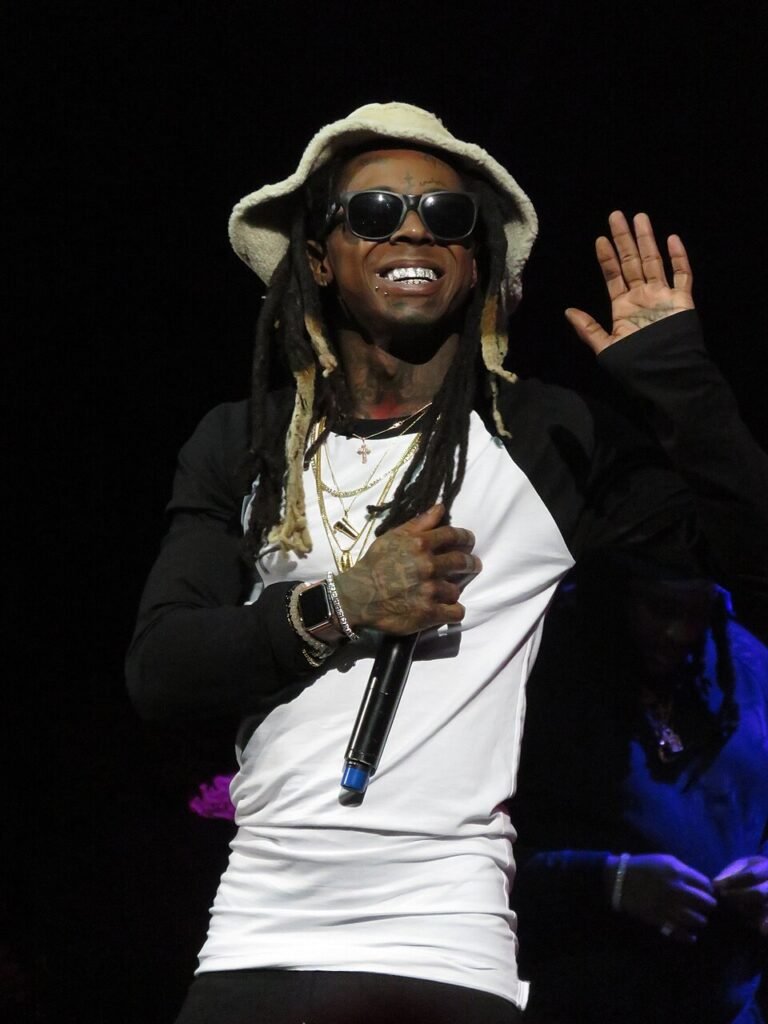
Lil Wayne’s Net Worth, Explained: The Fortune Behind Tha Carter
Lil Wayne at a Glance
| Lil Wayne at a Glance | Details |
|---|---|
| Born | September 27, 1982, in New Orleans, Louisiana |
| Age | 44 |
| Height | 5 ft 5 in |
| Net Worth | $170 million (Celebrity Net Worth) |
| Weight | No reliable published figure |
| Partner | No current partner publicly confirmed |
| Children | Four — Reginae, Dwayne III, Kameron and Neal |
| @liltunechi |
A Hollygrove Kid Raps at Eleven
Lil Wayne was born Dwayne Michael Carter Jr. on September 27, 1982, in New Orleans, Louisiana, and he grew up in the city’s Hollygrove neighborhood. His mother, Jacida Carter, was a cook; his father, Dwayne Michael Turner, left the family during Wayne’s childhood. His stepfather, Reginald McDonald, became a central figure in his upbringing. The defining fact of the early biography is how young the career started: he was writing rhymes as a small child; Cash Money Records took him on at around the age of nine after leaving freestyle recordings on the label founders’ answering machines, and was recording professionally in his early teens.
He attended Eleanor McMain Secondary School and later Marion Abramson High School in New Orleans, leaving formal education as the recording career took over. By his mid-teens he was a working member of the Hot Boys, the Cash Money group whose success at the end of the 1990s made the label a national force and made its youngest member a star before he could legally drive. The education he received instead was the recording studio: hundreds of sessions, an apprenticeship in prolificacy that produced the work rate — mixtapes, guest verses, albums in quick succession — on which the entire fortune would later rest.
How Tha Carter Made Lil Wayne a Superstar
1999–2005: Tha Block Is Hot and the First Carters
His solo debut, Tha Block Is Hot (1999), released when he was seventeen, went platinum and announced a solo career alongside the group work. Lights Out (2000) and 500 Degreez (2002) kept the momentum inside the Cash Money system. The turning point was Tha Carter (2004), the first of the series that would define him, followed by Tha Carter II (2005), which critics treated as the arrival of a major artist rather than a successful one. Between albums, a run of mixtapes — above all the Dedication series and Da Drought 3 — built a reputation and circulated free, in a way no marketing budget could have bought: by 2007 critics widely described him as the most prolific and most imitated rapper alive.
2008–2012: Tha Carter III and the Peak
Tha Carter III (2008) sold more than a million copies in its first week in the United States, won the Grammy Award for Best Rap Album, and produced “Lollipop,” “A Milli” and “Got Money.” At the 2009 Grammy Awards he won four prizes in a single night, including Best Rap Song for “Lollipop” — the industry’s formal confirmation of what the mixtape circuit had been saying for three years. The album’s success also completed a commercial arc almost without precedent: a child signee, a teenage group star, and now, at twenty-five, the best-selling rapper in the world, on his own label imprint’s parent system but increasingly its most valuable asset. It remains the commercial summit of his recording career. Rebirth (2010), a rock-influenced detour, and I Am Not a Human Being (2010) preceded Tha Carter IV (2011), which again sold close to a million copies in its first week. In parallel he built Young Money Entertainment, the label imprint through which he signed and launched Drake and Nicki Minaj — a business decision worth as much to his long-term position as any record. The imprint’s wider roster across its peak years included Tyga, Gudda Gudda and Jae Millz, and its compilation releases placed the label itself on the charts. Wayne’s own presence in these years extended far beyond his albums: his guest verses — on records by Drake, Eminem, Chris Brown and dozens of others — made him the most ubiquitous featured voice in rap, a parallel income stream and a continuous advertisement for the catalog. The featured-verse economy he pioneered, in which a sixteen-bar appearance could carry a single, became standard practice for the generation that followed him. Drake’s net worth profile profiles the artist he signed first and championed longest.
2013–2020: Label Disputes and Tha Carter V
A long and public dispute with Cash Money followed I Am Not a Human Being II (2013), over the release of Tha Carter V and over money he said the label owed him. The album finally appeared in September 2018, after a settlement, and debuted at number one, carried by “Uproar,” “Don’t Cry” and “Mona Lisa,” a collaboration with Kendrick Lamar that critics treated as the record’s centerpiece. Funeral (2020) repeated the chart result. The Carter V episode is instructive for readers of the fortune section: an artist can be, simultaneously, one of the biggest earners in his genre and locked out of his own flagship release for four years by a contract dispute. The settlement that freed the album also restructured his relationship with the label that had signed him as a child — the business education of the Hollygrove teenager completed, at considerable cost, in his thirties. The dispute years are relevant to the fortune: they froze his flagship release, generated litigation, and ended in settlements whose terms nobody fully published — a reminder that headline earnings and retained wealth diverge sharply in this industry.
2021–2026: The Catalog Years
In 2020, court reporting confirmed a transaction involving his masters — and elements of the Young Money catalog — at more than $100 million. That was an asset sale, not a net-worth figure, and this profile records it strictly as the conversion of catalog into capital. Tha Carter VI arrived on June 6, 2025, debuted at number two in the United States, and he supported it with a North American tour continuing into 2026; his son Kameron contributed vocals to the record. New Orleans keeps its own place in the operation: since 2015 Wayne has staged Lil WeezyAna Fest in his home city, an annual festival that carries his name and brings his touring machine back to the neighborhood economy that produced him. At 44, Wayne’s career has settled into the catalog phase: the recordings earn continuously, the live work remains in demand, and the label legacy compounds.
The influence ledger runs alongside the financial one. The melodic cadence he developed across the Carter series and the mixtape run — singing and rapping within the same verse, dense internal rhyme, a producer’s ear for space — is audible in virtually every major rapper who emerged after 2010, including artists he never met. His work rate reset expectations of output: where an earlier generation released an album every two years, Wayne’s mixtape years produced hundreds of recordings, and the streaming era’s release cadence is his model industrialized. Critics who once treated the volume as a lack of quality control now treat the run from Tha Carter II through Tha Carter III as one of the defining peaks in the genre’s history. That reassessment matters financially as well as critically, because catalog value follows critical standing: the recordings at the center of the reassessment are the same recordings whose rights and royalties anchor the fortune described below.
Toya Johnson, Four Children and No Marriage Now
Wayne’s only marriage was to Toya Johnson, from 2004 to 2006. He has four children: Reginae, born in November 1998, whose mother is Toya Johnson; Dwayne III, born in October 2008; Kameron, born in September 2009; and Neal, born in November 2009. On his current position, the verified record requires care: reports in May 2026 claimed an engagement, and in July 2026 Wayne publicly denied those reports and said the relationship in question had ended, as reported by E! News. Accordingly, this profile records no current partner as publicly confirmed, and prints neither claim as settled fact. His parents — his mother Jacida Carter, his father Dwayne Michael Turner, and his stepfather Reginald McDonald — are the family foundation of the early story, and his public statements about Hollygrove and New Orleans have remained constant across three decades of fame. His Instagram account is @liltunechi.
Young Money, Mixtapes and a $170 Million Fortune
Celebrity Net Worth estimates Lil Wayne’s net worth at $170 million, in a November 2026 snapshot, and that is the figure this profile carries — with the artist’s own objection printed beside it, as it should be. In March 2023, Wayne publicly disputed the estimates then circulating, which put him in the $150 million to $160 million range, saying he did not have anything close to that. No Forbes net-worth total exists for him. The honest summary is that a named tracker says $170 million, the subject says the trackers overstate him, and no audited figure exists to settle the argument; readers should hold the number accordingly.
The components are not in doubt even if the total is. Recording royalties and publishing from one of the most extensive catalogs in rap; the 2020 masters transaction of more than $100 million, an asset sale that converted future royalties into present capital; Young Money’s success with two of the biggest artists of the following generation; and touring income across twenty-five years. Set against the accumulation, the record also includes a reported tax debt of about $14 million owed to the IRS and settled in 2019 — included here because it illustrates the central distinction of this profile: gross earnings in rap can be enormous while retained wealth depends on taxes, settlements and management. The $170 million is an estimate of what the structure retained, not a sum of what passed through it.
Cars
Years of reporting document his enthusiasm for cars, and vehicles reported in connection with him include a Bugatti Veyron, a Rolls-Royce Phantom Drophead Coupé, a Maybach 62 Landaulet, a Bentley Mulsanne and a McLaren 720S. No source has published a verified current inventory or total collection value, and this profile claims none; the list records reported examples, not an audited garage.
The Rapper Who Rewrote How Rap Sounds
Lil Wayne’s lasting position in music is double. As an artist, he reshaped how rap sounds — the melodic, densely metaphorical style he normalized in the 2000s is now the genre’s default setting. As a businessman, his signing and development of Drake and Nicki Minaj through Young Money gave him a stake in the generation that succeeded him, an achievement few performers in any genre can match.
The fortune follows the same double shape: a performer’s income, very large and partly disputed in its measurement, underpinned by catalog and label assets that continue to earn whether or not he records another verse. That structure, more than any single album cycle, is what the $170 million estimate ultimately describes. His New Orleans roots close the story where it began: the child who left freestyles on a label’s answering machine now runs an annual festival in the city, owns one of its most valuable cultural exports, and watches a third generation of rappers build careers on a style he drafted in Hollygrove as a teenager.