How to Reduce Your Heating Bills Sustainably (and Stay Warm)
Winter’s heating bill arrives like a punch — and the standard advice (plastic over windows! wear a sweater!) feels like a list of small sufferings for small savings. But reducing heating bills sustainably is not about shivering nobly. It is about understanding where your heat actually goes and plugging the biggest leaks first, in an order that maximizes both savings and comfort. Done right, you spend less, feel warmer, and cut carbon simultaneously — the rare trifecta where the green choice is also the comfortable and economical one. Here is the prioritized playbook.
First: Find Where Your Heat Goes (The Audit)
Heating is typically 40–60 percent of a cold-climate home’s energy use, and most of it escapes through a predictable hierarchy: air leaks (the top thief — the average home leaks as much air as an open window), insufficient insulation (especially attics), inefficient equipment, and behavior (thermostat settings, unused spaces heated). Many utilities offer free or subsidized energy audits with blower-door tests that quantify your leaks precisely — call and ask; these programs are criminally underused.
The DIY version: on a cold windy day, hold incense near windows, doors, outlets, and baseboards — wavering smoke marks the leaks. Check attic insulation depth (less than 10–12 inches of fiberglass means you are under-insulated), and look at your furnace’s age and efficiency rating (pre-1990 units waste 30–40 percent of fuel). This 30-minute audit tells you exactly where your dollars are going, so every fix targets real waste instead of guesses. For the full-home context, reducing your electric bill covers the year-round companion strategies.
Air Sealing: The Highest-ROI Project in Your Home
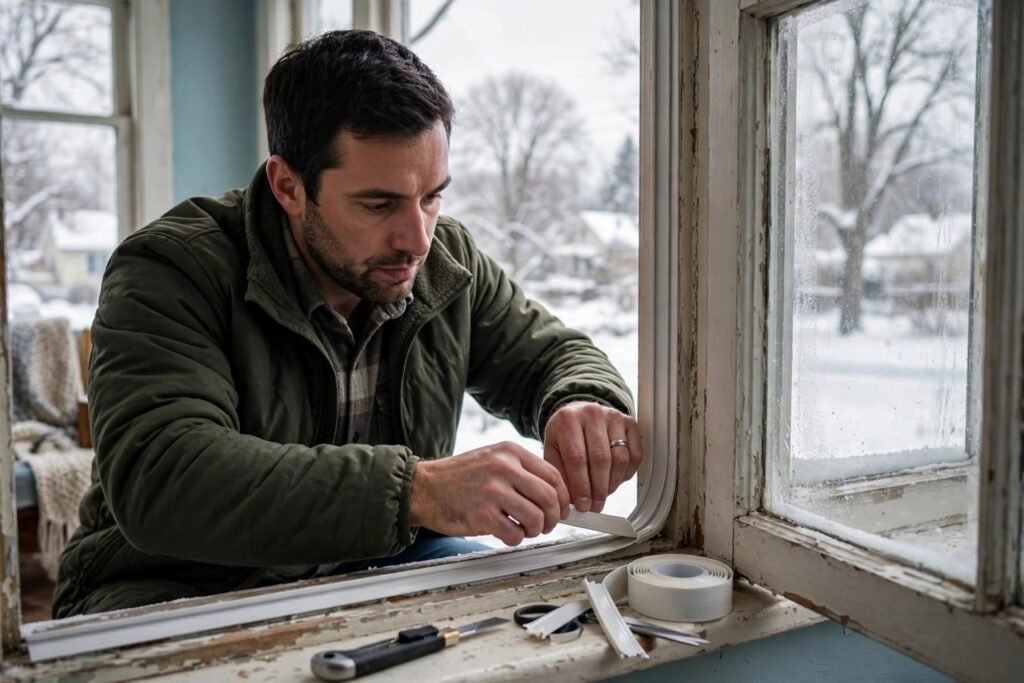
Sealing air leaks typically cuts heating costs 10–20 percent for a few hundred dollars — no other project touches this payback. Priority order: attic penetrations (plumbing stacks, electrical runs, the attic hatch — the biggest leaks hide where you never look), basement rim joists (spray foam or rigid foam cut to fit), windows and doors (weatherstripping plus removable window film), and exterior outlets/switches (foam gaskets, $5 for a whole house).
Caulk the small stuff, foam the medium stuff, and hire out the attic if it is extensive — many utilities subsidize professional air sealing because it is so cost-effective. One caution: seal deliberately, not randomly — combustion appliances (furnaces, water heaters) need makeup air, and over-sealing without considering ventilation creates safety and moisture issues. The audit’s blower-door test guides safe levels. Done right, the house feels noticeably less drafty within days — comfort you feel, not just savings you calculate. The same sealing logic applies indoors: stopping winter drafts room by room is the renter-friendly version of this project.
Attic Insulation: The Second Priority
Heat rises, so the attic is where insulation matters most. If yours is thin, blowing in cellulose or fiberglass to R-38/R-49 (12–16 inches) typically pays back in 2–4 years and is often DIY-able in a weekend with rented equipment. Air-seal first, insulate second — insulation over leaks is like a sweater over an open window.
Heating Smarter: Thermostats, Zones, and Equipment
Thermostat discipline: 68°F when home and awake, 60–62°F when asleep or away — each degree of setback saves ~3 percent. A programmable or smart thermostat automates this; the savings pay for the device in months. Zone the heat: close vents and doors to unused rooms, use space heaters only for occupied spaces (and only modern, safe models — never as primary heat), and reverse ceiling fans to push warm air down.
Maintain the equipment: annual furnace servicing, monthly filter changes in heating season (a clogged filter can raise fuel use 15 percent), and bled radiators in hot-water systems. When replacement time comes, the sustainable choice is a cold-climate heat pump — 300 percent efficient versus 80–95 percent for combustion — with current incentives often covering much of the premium. Even without replacing, a heat-pump water heater or mini-split for the most-used rooms can shave the main system’s load dramatically. Right-size everything: oversized furnaces short-cycle, wasting fuel and wearing out faster.
Behavioral Wins That Do Not Feel Like Sacrifice
The no-suffering list: open south-facing curtains on sunny winter days (free solar heat — surprisingly significant), close them at night (an extra insulating layer), use the oven’s residual heat by leaving the door ajar after baking (with kids/pets safety in mind), take advantage of internal heat gains (cooking, showers, even bodies warm the house — schedule accordingly), and dress for the season indoors (the cozy sweater is not suffering; it is hygge).
Humidity helps: winter air at 68°F and 40 percent humidity feels warmer than 70°F and 20 percent — a humidifier lets you drop the thermostat a degree or two with no comfort loss, while protecting woodwork and sinuses. And the deep win: when you move or renovate, prioritize the building envelope — the efficient house you buy or build pays dividends for decades, while the inefficient one taxes you every winter for life. Sustainability that compounds is the best kind.
Free Government Tools for Deeper Savings
Two federal resources go far beyond generic tips. The Department of Energy’s Energy Saver guide provides room-by-room efficiency recommendations with estimated savings for each measure, plus calculators that size the right insulation and equipment for your climate zone. And the ENERGY STAR home improvement portal identifies certified products and connects homeowners with local rebate programs — many utilities offer hundreds of dollars for insulation, air sealing, and heat-pump installations that residents never claim.
Before spending on any major upgrade, check the Database of State Incentives for Renewables and Efficiency for your state’s current offerings, and get the subsidized energy audit first. The audit typically costs little or nothing and produces a prioritized project list — the closest thing to a professional wealth manager for your home’s energy dollars.
Conclusion
Reducing heating bills sustainably follows a clear priority: audit to find the waste, air-seal the leaks (highest ROI), insulate the attic, heat smarter with setbacks and zoning, maintain equipment, and layer in the behavioral wins. Most homes cut 20–30 percent for under $1,000 — often under $200 for the sealing alone. The house gets warmer, the bill gets smaller, and the carbon stays in the ground. Winter does not have to be expensive. It just has to be sealed.
Frequently Asked Questions
What is the cheapest way to reduce heating bills?
Air sealing: caulk, weatherstripping, window film, and outlet gaskets cost under $100 total and typically cut heating costs 10–20 percent. Thermostat setbacks (68°F day, 62°F night) are free and save ~3 percent per degree.
Is it cheaper to leave the heat on all day or turn it down?
Turn it down — the “reheating costs more” myth is false. The energy saved during setback always exceeds the reheating energy, because heat loss is proportional to the indoor-outdoor temperature difference. Setbacks of 8+ hours save the most.
Do space heaters save money?
Only for zone heating: warming one occupied room with a space heater while dropping the whole-house thermostat can save money. Heating the whole house with space heaters is the most expensive heat available — electric resistance at its worst.
When should I replace my furnace with a heat pump?
When the furnace is 15+ years old, needs major repair, or your fuel is oil/propane/electric resistance (where heat-pump savings are largest). With current federal and state incentives, the lifetime economics favor heat pumps in most cold climates — get quotes before the furnace dies so you decide rather than panic-buy.